
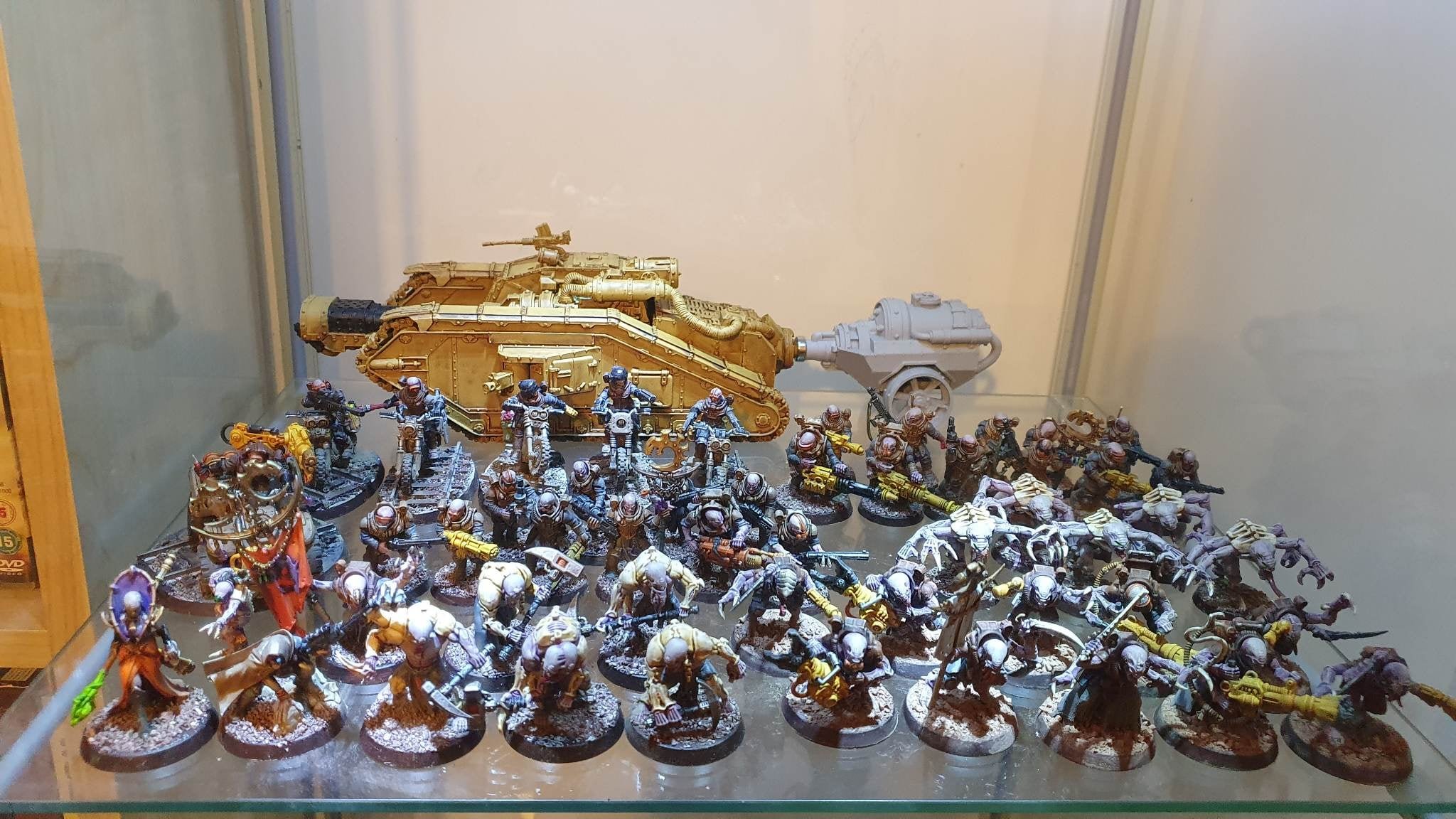
Comes The Sandstorm - Chapter Two
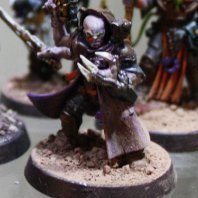
Entry posted by GSCUprising in Prawa V Background
36 views
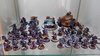
So, here's chapter two. Firstly, my apologies for the formatting. Apache Office and this forum really don't like playing ball together and it seems to remove all the line breaks, etc. Constructive criticism is as always most welcome.
=====
The carrier left the district roads behind before dawn and kept going until the sky paled from black to iron grey. I must have slept in snatches, because I remember the engine note changing more than I remember the ground we crossed. Sometimes I woke to the track noise hammering up through the floor and the red compartment light swaying across faces I did not know. Sometimes I woke with my hand already at my chest, fingers over Ida’s tags through the cloth, as if I had been checking in my sleep that she had not been taken from me a second time.
Nobody said much. When they did, it was low and brief, the sort of speech meant to get something done rather than fill the dark. Once, Łaska moved along the bench and cuffed a man lightly on the shoulder for letting his rifle butt knock against the hull. He grunted an apology and shifted it in closer. She said nothing more. That seemed to be enough.
By the time the carrier slowed, the sun had edged its way up behind the dunes and turned the desert the colour of old bone. I heard the driver shout to someone up front. A moment later the hull slewed, corrected, and rolled down what felt like a packed-earth ramp. The engine dropped to a rough idle.
The ramp came down with a metallic groan.
Heat pushed in at once. Not the clean morning cold of the transit yard, but dry, used heat, already carrying the promise of a bad day. I rose with the others and slung my bag over one shoulder. My legs felt wooden. For a second I stayed where I was, waiting for someone to tell me what came next.
Nobody did.
Men were already moving past me and down the ramp, taking kit, hauling crates, stepping into the sun as though the place outside had been waiting for them all along. Łaska went first. Czajka followed without looking back. That was enough. I hit the deck after them.
The position sat in a fold of the land where the dunes thinned and the stone began to show through. It was no parade-ground camp. There were no neat rows, no bright pennants, no polished command signs hammered into the ground. A low wall of poured rockcrete and stacked scrap marked the perimeter on three sides. Beyond it, the desert ran away in wavering bands towards a broken ridge. Inside stood a scatter of prefabricated huts, a motor shelter stitched together from corrugated plates, two fuel bowsers, a water tank squatting on a steel frame, and a cook fire under a canvas awning darkened with old smoke. Netting had been thrown over the vehicles and weighted down with stones. Ammunition boxes served as stools. A washing line had been rigged between two bent poles, and fatigues hung from it stiff with dust.
Nothing matched. Everything worked.
A man I had not seen before took the crate from the trooper in front of me without breaking stride and called for it to go to stores. Someone else was already checking the fuel levels on the carrier with a dip rod and a slate. Another pair had the engine deck open and were arguing over a fan belt in voices too low to follow. Nobody stood around welcoming the sunrise.
Czajka stopped beside the ramp and jerked his head at me. “Bag down by the hut with the blue stripe. Then wait.”
That was all.
I did as I was told and set the bag where he’d said. The hut was little more than a box of patched wall panels bolted together, but it had been swept out recently. There were bunks inside, shelves cut from packing timber, and footlockers with names and numbers chalked on their lids. Some of the names had been rubbed out and written over. One locker still had its old name half-visible under the new one, the chalk not quite scrubbed clean enough to forget.
When I came back out, Czajka was gone.
For a moment I stood alone in the middle of the compound with my rifle in one hand and no idea who I was meant to report to. Around me, the place carried on as if I had been there for years and was simply slow that morning. I felt the old instinct rise in me — keep still, keep quiet, don’t draw eyes — but there was nowhere to hide in that yard, and not much point trying.
“Here.”
The voice came from my left. Gruff, not loud. I turned.
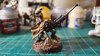
He stood by the motor shelter with one boot up on a crate, signing something on a slate held flat against his thigh. He was broader through the chest than most of the men around him, his face weathered into lines the desert had made permanent, his jaw thick, sleeves rolled to the elbow. He had a manner I recognised from foremen and old squad leaders in the mine convoys, men who did not need to prove they were in charge because everyone else had already agreed to it. A laspistol sat low on his belt. A knife handle showed at the small of his back. When he looked at me, his left eyebrow lifted a fraction, not in surprise, but as though I were an item on a list he was checking against what had been delivered.
“This him?” he asked.
Czajka appeared from somewhere behind me, as if he had never moved far at all. “That’s him.”
The sergeant looked me over once. Boots, rifle, posture, face. He eyed me, his gaze thorough.
“You know how to clean that thing?”
I looked down at the rifle in my hand. “Yes.”
“Good.” He jerked the slate at me. “Then you know enough to stop holding it like a bloody shovel.”
I shifted my grip. He watched me do it and gave no sign whether I had improved the matter.
“Name?”
I told him.
“Mine before labour conversion, weren’t you?”
It was not really a question. I nodded once.
He lowered his boot from the crate and tucked the slate under his arm. “I’m Rakoczy. Sergeant. You answer to me. If Łaska tells you something, you listen as though I said it myself. If Czajka tells you something, use your ears before your tongue. You understand?”
“Yes, Sergeant.”
He lifted that left eyebrow again, only slightly. “That ‘yes, Sergeant’ wants sanding down. You’re not on a square in Prawa Prime. We do the job right and we do it quick. Save the polish for someone who likes hearing it.”
“Understood, sir.”
“Better.”
He passed the slate to a waiting trooper, scratched at the stubble along his jaw, and looked past me towards the hut where I had dumped my bag.
“You’ve got third bunk, left side. Locker underneath. Don’t leave kit lying about or it’ll grow legs. Water ration’s posted by the tank. Don’t wash anything but yourself till told otherwise. We’ve got enough fuel for the carriers and not much more. You can eat when the noon pot’s up. Until then, you make yourself useful.”
He said it as if usefulness were the only test that mattered.
A man with grease black to both wrists came jogging in from the perimeter wall and muttered something about a cracked road wheel on the second carrier. Rakoczy swore under his breath, left-handedly snatched the slate back from the trooper who had taken it, scrawled a note, and shoved it at him.
“Tell Wrona he gets one chance to prove he isn’t blind. If he can’t, I’ll have him cleaning sump trays till winter.”
The trooper grinned and went.
Rakoczy looked at me again as if remembering I had not vanished.
“You can strip an engine?”
“No.”
“Can you dig?”
“Sir..”
“Can you keep watch without falling asleep on your feet?”
“Yes sir..”
“Can you keep your mouth shut?”
There was no change in his tone. That made the question feel heavier than the rest.
“Sir.”
He studied me a second longer. Then he nodded once, apparently satisfied enough for the moment.
“Good. Take that bag of lime over to the far side of the wall and give it to Łaska. And don’t spill it.”
I looked around until I found the sack leaning against a fuel drum. It was heavier than it looked. I hefted it under one arm and headed for the far side of the perimeter.
The wall dipped lower there, following the line of the ground. Beyond it the land fell away slightly into a hard pan of stone and packed sand. At first I thought the posts set out there were range markers or a survey line. Then I got closer.
They were grave markers.
Not grand. No carved angels, no polished stone, no names cut deep enough to last a century. Just iron rods driven into the ground with scrap metal tags wired to them, some stamped, some scratched by hand. A few had helmets resting upside down at the base. One had a strip of cloth tied beneath the tag, bleached almost white by the sun. Someone had lined the graves carefully, each spaced the same as the next, the ground raked and tamped around them to keep the drift from covering them too quickly.
Łaska was kneeling beside the newest one with a tin of black paint and a stencil plate. A flat spade lay across the ground beside her. She did not look up when I approached.
“Sergeant sent this,” I said.
“I can see that.”
Her voice was as level as the horizon. She took the sack from me with both hands, set it down beside the open tin, and only then looked up.
Close to, she looked older than I had first thought and harder than that still. Not old. Just worn into sharpness by use. There was nothing ornamental about her. Even at rest she seemed arranged for work.
She glanced at the graves, then at me. “You know what this is?”
“Lime, sir.”
That earned me the faintest twitch at one corner of her mouth. It was not quite amusement. "Brilliant. We should put you in intelligence. And don't you 'sir' me.”
She dragged the sack closer and hooked a thumb towards the line of markers. “This is where our dead go. Ground’s hard. Lime helps.”
I looked back at the markers. There were more than I had thought at first glance. Eight. No, ten. One at the far end had sunk slightly to one side where the earth had shifted beneath it. Someone had propped a flat stone under the leaning post to set it right again.
Łaska saw me looking.
“Don’t walk between them,” she said. “You go round.”
I nodded.
She set the stencil plate over the fresh tag and dipped the brush. “You got a name?”
I told her.
She painted in silence for a few strokes, black letters appearing clean against the metal. Then she asked, “Can you dig straight?”
“Yes.”
“We’ll see.”
There was no contempt in it. Just fact.
I stood a moment longer, unsure whether I was dismissed. She noticed, because of course she did.
“If you’re waiting for a sermon, you’ll die thirsty. Go find a shovel.”
I went.
Two men were already at the tool rack by the water tank, one sorting picks, the other mending a split handle with wire and resin. Neither looked especially pleased to see me, but neither objected when I took a shovel. By the time I returned, Łaska had finished lettering the tag and was driving the post in with the back of the spade. The sound rang out thin and hard in the open air.
Rakoczy arrived while I was still three paces away. He came without hurry, carrying a canteen in one hand and a folded cloth in the other. He looked from me to the shovel, from the shovel to the ground, and grunted.
“That’ll do. Not there.” He pointed with the canteen to a patch of hardpan a little way down from the last marked grave. “There. Two foot wide. Four deep if the ground lets you. If it doesn’t, you keep arguing with it till it does.”
I set the blade to the earth.
The first strike bounced more than it bit. The second found a seam between stone and compacted sand and shaved a curl of pale dust loose. By the fourth, the muscles in my shoulders had begun to wake. The ground was ugly work, the sort that punished the hands more than the back. I kept at it. Nobody offered encouragement. Nobody told me to pace myself. A man either dug or he did not.
Around me, the compound breathed on. Engines coughed. Someone shouted for a missing socket wrench. Tin cups knocked together near the cook fire. The smell of onions and something salted drifted over on the hot air. Above it all lay the dry hiss of the wind moving over the rock and the muted, regular thunk of Łaska setting the fresh marker in place behind me.
After a while a shadow fell across the pit.
I looked up. Rakoczy stood over me, canteen dangling from two fingers.
“Deep enough?”
“Not yet.”
“Good answer.”
He tossed the canteen down. I caught it one-handed and drank. The water was warm, metallic, and better than anything I had tasted in days.
He waited while I handed it back. “Czajka says you kept your wife’s tags.”
My grip tightened on the shovel shaft without my permission. Rakoczy saw it. He saw most things.
“Yes.”
He gave a slow nod. “Then don’t lose them.”
That was all. No sympathy. No talk of grief. He turned and walked back towards the motor shelter before I could think of any answer.
When I climbed out at last, palms burning through the thin fabric of my gloves, Łaska stepped over to the pit, looked down into it, and judged it with the same expression she might have used on a repaired wheel hub.
“It’ll do.”
I had the absurd urge to feel relieved.
She passed me the shovel and nodded towards the line of markers. “Put that back. Then get cleaned up. Noon pot in ten.”
I took the shovel to the rack and found a tap behind the water tank where men were already washing dust from their hands and faces in turn, no one using more than a trickle. I splashed water over my wrists and the back of my neck and watched the mud run off brown. Beside me, the man who had mocked my boots in the carrier glanced over.
“Fresh one,” he said again.
Before I could answer, another voice came from behind us.
“And you’re still thick as axle grease.”
A few men nearby snorted. The trooper at the tap grinned despite himself and moved off with his hands still dripping. Łaska stepped in beside me, scrubbed her fingers with a strip of rag, and gave me a look in the reflection off the tank’s dented side.
“Eat while it’s hot,” she said. “You’ll work better.”
That was the nearest thing to kindness I had heard all morning. I was not entirely sure it counted.
The noon meal was stew ladled from a blackened pot into tin bowls dented from long use. Men sat where there was room on crates, and spare track links, and the carrier hull, and the ground. Rakoczy ate standing up with his left hand, reading from a slate between mouthfuls and asking for a fuel count without once looking up. Czajka was there but no longer near me. He sat with two others under the shade netting, speaking in low tones over a map weighted at the corners with bolts. Whatever part he had played in bringing me in, it was finished for now. I had been handed over.
Nobody asked me to tell my story. Nobody asked how Ida died. Nobody asked whether I missed the mine or whether I was grateful for the transfer. They made room on a crate, passed me a bowl, and went on talking around me about bearings, routes, a broken condensator at one of the pump stations, and whether the wind would strip the netting before nightfall.
It should have felt cold.
It did not.
Cold was the orderly saying Subject 07-B into his terminal while my wife lay under a sheet. Cold was a slip of paper shoved under the door telling me I belonged now to labour conversion. Cold was the pump station, where a man could sit two watches and not hear his own name once.
This was something else.
Hard, yes. Dry, yes. Unwelcoming in all the ordinary ways men can be when they have no time to waste. But not empty. Not indifferent. The place had shape to it. Standards. Memory. A line of graves beyond the wall that somebody repainted and kept straight.
After the meal I carried my bowl to the wash barrel and found myself looking again towards the far side of the perimeter. The markers stood there in the white heat, black names drying on metal, each one held upright against the wind.
No one had needed to explain what kind of unit this was.
I was still staring when Rakoczy’s voice sounded from behind me. “You planning to stand there till dark?”
I turned. “No, sir.”
“Good. Then pick up that ammo crate and take it to stores. After that, Wrona wants hands on the second carrier.”
I bent for the crate. As I lifted it, the tags beneath my tunic knocked lightly once against my chest.
For the first time since boarding, I had the sense that the place was beginning to take my measure, and that I was doing the same to it. Not trust. Not yet. But something with the same bones.
Rakoczy had gone back to his slate. Łaska was already at the vehicle line. Czajka did not look over.
The day carried on around me, hard and ordinary.
I picked up the crate and went where I was told.



Edited by GSCUprising
0 Comments
Recommended Comments
There are no comments to display.
Create an account or sign in to comment
You need to be a member in order to leave a comment
Create an account
Sign up for a new account in our community. It's easy!
Register a new accountSign in
Already have an account? Sign in here.
Sign In Now