
Search the Community
Showing results for tags 'Genestealer Cult'.
-
So, firstly, may I take a moment to thank those who have followed my blog and the story of Prawa V. I am truly grateful for your feedback and support. It has spurred me on to continue writing. Now, for the hard part. I've not received any negative criticism. I would like to invite you to take my writing apart and really lay the hammer down on me. Where am I am going wrong? What doesn't make sense? Which character(s) just doesn't make sense? I ask this because, while positive praise is great, and it is appreciated, I want some criticism. I want to know how I can improve. Go ahead. Do your worst. And I will say thank you. I appreciate your time!
- 3 comments
-
- 3
-

-
- Imperium
- Genestealer Cult
- (and 1 more)
-
I've been going through and editing the first story of Prawa V, Comes The Sandstorm, and making changes to it, such as adding to the story with things such as physical descriptions, and so on. I've completely changed the beginning and given the Narrator a far better motivation. We've all lot someone precious and I hope I can convey the numbness one feels in such a circumstance. As always, constructive criticism and thoughts most welcome. Ida is a Danish name. Czajka is a Polish name meaning 'lapwing,' a type of bird, for those not familiar. I thought it was important to establish the two languages in the opening passage, even if the reader doesn't immediately understand the differentiation. I do try, when using other languages, to ensure I give context, as I don't wish to alienate anglophones. Regarding myself, I am a Brit, but speak several languages as I am a bit of a mongrel! I won't curse you guys with Welsh, haha! Anything in my writing that doesn't have sufficient context, please do tell me. I want my writing to be accessible. Thank you. ===== I gave a reluctant nod, jaw clenched, lips tight, and glanced at the orderly. He carefully replaced the sheet over her face. The chill of the morgue was nothing compared to the cold inside me. She lay there on the slab, bruised and swollen, eyes shut. She’d left me months ago. The mines took all my time. She was lonely. I don’t blame her for that. I just wish we could’ve talked before she found him. A soldier, one with time for her. My Ida. And now she was dead. Now she was gone. I stood there, unsure of the protocol. So, I just stood. “Subject 07-B, confirmed as the deceased by husband,” the orderly muttered into his terminal. He paused, then looked at me. I barely noticed. “We’re finished here. Please go to the office for the paperwork.” I nodded, slowly, then walked numbly to the door. The sand scratched at the windows, a soft, steady hiss that hadn’t stopped in two days. The light outside was the colour of rusted brass, sky and ground smeared together in the wind. I didn’t go back to the mine and no-one came looking. There were no calls nor knocks, just silence, and the low hum of the building’s backup generator when the grid dropped for an hour. I sat on the floor, back against the wall, Ida’s tags in my hand. On the third morning, a slip pushed under the door. No name was on it, just block lettering: FAILURE TO REPORT – WORK CONVERSION ENACTED - MANDATORY SERVICE REASSIGNMENT - BLOCK C-7 – 0900 HOURS I read it once and folded it. I didn’t pack. Just slipped the tags around my neck and left the flat as it was. The conscription hall was a prefabricated block off the railway line. Rows of benches, dust in the corners. A machine-voiced clerk read names from a slate while two enforcers handed out equipment bags. No-one spoke. They gave me a PDF uniform that didn’t fit, stained boots, and rifle with "Nowicki" scratched into the stock. No instructions, just a sector map, a bunk number, and a duty rotation I couldn’t read properly. My post was a wire-fenced pump station on the edge of the district. Nothing ever happened. No one even passed by. On the fourth night, Czajka sat down across from me in the mess. He didn’t introduce himself. I had already asked who he was. I’d seen him watching me. "Heard about your wife." I nodded, eyes on the table. "Can't have been easy." Another nod. "They... uh..." He paused. Searching. "She didn't get a burial. That's not right." My jaw tensed. I kept my stare fixed on the scratches in the metal surface between us. "It didn't have to be that way." He stood. He didn’t look at me when he spoke again. "There’s a unit. 280th. Rough posting. Not for everyone." He paused. "But they bury their own." He walked out without waiting for a reply.
-
Hi all, I wrote this small scene as an experiment. It features a man guarding the nursery in Nowa Avestia, the headquarters of the Resistance. Now, I will confess, it is a little self-indulgent as the name Wójek is what my Polish little goddaughter and nieces call me - it means "uncle". My heart melts a little when they call me that. If I decide to include this in the story of Comes The Sandstorm, he'll only appear in this one scene, otherwise I think it'll become redundant. Sorry I am not publishing so much of late. Bit of an injury issue that impairs typing, painting, driving, etc. at the moment, but I am on the mend! Thoughts, commentary, and constructive criticism, as always, most welcome. ===== The nursery hallway was quiet, its padded walls dulling the sounds from within. Wójek sat just left of the entrance, boots planted square, hands resting on his thighs. Fatigues crisp. Plate carrier in place. His rifle was mounted above, secured high on the wall, well out of a child's reach. A woman arrived with a girl in tow. The child spotted him instantly. “Wójek!” She bolted forward and climbed clumsily onto his knee. He caught her with one hand, gently but firmly, steadying her as she wobbled, then rested his palm lightly on her shoulder. The other hand stayed relaxed on his thigh. He smiled. Just for her. A flicker of warmth behind a face built for silence. Her mother returned his nod, quiet and grateful. Another parent joined her, watching the scene. Her gaze lingered on him for a moment. “Have you ever seen him in civvies?” The woman shook her head. “Not once.” Footsteps approached. Another fighter passed down the corridor. Wójek’s expression dulled, the smile gone, replaced by the blank composure of a man back on duty. He gave a short nod to the soldier. The girl hummed something tuneless, kicking her boots against his leg in time. He didn’t move. He just kept watch.
-
Hi all, I realise I have not written here for a bit nor have I started on my pledges for the Call To Arms (for shame!). Been a bit occupied travelling and with new job, etc. I've set aside Prawa V and my beloved Resistance for a little. I've finished the story and am going to go back in a month or so with a big, fat, red pen and edit, whilst mostly muttering "what the heck was I thinking?" In the meantime, I've started on a sequel set some 50 years later. Here's a small sample. I've leant into the Danish a little more for flavour this time. And, speaking of other languages, when I use Polish and Danish, they're not supposed to be literally those languages, more they are placeholders for other languages spoken by the people there, much as English is not likely the actual tongue people speak in either. Danish and Polish are such radically different languages. Polish is very structured and has clearly defined rules. The idioms tend to be a little bleak, haha, but they reflect centuries of being conquered, then freed, conquered, then freed. You get the idea. Danish, in contrast, appears to have no rules at all. You either know how to pronounce something or you don't. And their idioms are a lot more whimsical. I've also taken the liberty of using local dialects from the places I've lived. The Polish is of the Silesian/Śląske dialect while the Danish, which I am nowhere near as good at, is Fynske. Anyhow, enough of me prattling on about languages. Here's Freja, an up and coming mid-level functionary, born and raised into the system, now known as The Concord, some fifty years after the events of Prawa V. She has led a fairly sheltered and privileged life with a good education and her career path mapped out before her. The Concord arose as a result of a treaty between the Resistance and the Imperium, ostensibly giving more rights and freedoms to the ordinary people of Prawa V. However, Freja is noting little inconsistencies and investigating so she can fix the errors. She was not expecting to find this... ===== The vidcomm unit's screen went blank for a moment. Then green text appeared on its dark display, overlaying the video capture: Classified Footage | Designate: A-329 | Complex 73 Engagement Timestamp: [REDACTED] Audio: ENABLED Playback: Begin Freja leaned forward, her breath fogging slightly against the glass of the console monitor. The footage was grainy, pulled from a static-mounted vox-cam overlooking the southern approach to Complex 73. The weather was overcast. Figures moved across the dust-choked plain, Imperial troops advancing in loose formations, fanning out around ruined emplacements and moving toward the shattered gates of the outpost. She keyed the volume up a notch. At first, only wind. A dry hum across the microphone. Then, low and distant, the sound. A rising howl. She could not discern its source at first. It came from somewhere beneath the camera, rising like pressure forced through a tunnel. A mechanical scream like some chained and tortured banshee. It built until distortion clipped the audio. Freja instinctively winced. Then came the first burst. Two seconds of staccato hammering, each round a fist slamming against the the very fabric of the land. The Vulcans spoke with all the fury of a storm battering a shore. On-screen, an entire forward squad simply vanished. One moment they were crouched by a barricade. The next moment just mist, and parts, and ruin. The earth behind them erupted upward in blood, and mud, and flame. She held her breath. Another burst. This time it tore through an armoured personnel carrier. The vehicle buckled in place, armour peeling backward like fruit skin, then erupted from within. Screams lanced through the audio feed, brief, and wet, and silenced too fast to linger. Between each burst, she could hear the sound of shell casings hitting the floor. The camera shuddered as something passed it, a dark shape, fast, tracked only by its wake and the blur of hull. It pivoted mid-frame with unnerving speed for something of its bulk. There was a pause. Then three more staccato bursts. Bunkers detonated like oil drums. Earthworks collapsed inward. The footage blurred again as debris smashed against the lens. Freja flinched. Not from the violence, but from the sound the deliberate rhythm of it. The way each burst was spaced, measured, and executed. She watched a nightmare given form. She reached for the controls, and paused. Her hand was shaking. More footage followed. Distant shouts. Vox-commands from officers trying to rally their troops. Then came the flame. The side-mounted weapons ignited, torrents of liquid fire scouring trenches. Shapes ran and burned. The beast moved through it all, steady and purposeful. It did not halt. It did not hesitate. The howl rose again as the cannons spun, a keening shriek as it unleashed its rage. And Freja, who had grown up beneath silver and white banners, who had believed in census codes and public order, watched everything she understood burn beneath its barrage. On-screen, a final burst tore across the horizon, cutting down the retreating line like stalks at harvest. Then static. Freja sat back in her chair, pulse roaring in her ears. Her voice, when it came, was small. "Emperor's name..." But the file gave no answer. Only a final tag in the corner of the screen. Designate: A-329 [NO FURTHER RECORDS FOUND] ===== I did think about having Freja's final line be "Holy Emperor on a bicycle..." but I thought that might break immersion a little. I've just recently watched the Fallout series and love the naïvety of the main character (okey dokey, then!) As for 329, it's based on the Macharius Vulcan and I took the name Vulcan and ran with it. The Avro Vulcan, a jet bomber from the 50s and onward, is famous for its 'howl'. There's plenty of vids on YouTube out there demonstrating it and I remember seeing one at an airshow in my teens. If I knew I was going to be on the receiving end of its wrath, hearing that sound would make me reconsider my life choices. So, I built it into 329 as a psychological weapon. Just hearing those cannons spin up would have many doing an about-face and heading in the other direction. I do appreciate the game 'meta' with this particular model isn't great, but it is rather one of my favourites! I do rather imagine the sound of 329's cannons sounding like a deeper, bass rumble variant of the smart guns in Aliens, though I have struggled to put that sound into words. Suggestions gratefully received! Anyhow, thoughts, as always, most welcome.
-
Nowa Avestia loomed ahead, washed in the pale glow of the setting sun. Marek sat atop the Chimera’s hull, arms folded, eyes scanning the familiar silhouette of the outer walls. The station was as he’d left it — quiet, unassuming. Yet, as the squad dismounted and rolled through the gates, something gnawed at the back of his thoughts. The yard should have been busy. The 280th, ever a fixture at the outpost, were nowhere to be seen. No idle banter, no groups lingering near the vehicle bays. Marek’s brow furrowed. “Where’s Rakoczy’s lot?” one of his troopers muttered. Marek waved him off. “Probably dug into some menial sweep. Nothing to worry about.” But the unease lingered. He hopped down from the Chimera, boots clanging against the cracked concrete. The garrison’s bustle was there — PDF guards on duty, traders arguing over cargo — but the absence of the 280th pressed at him. He made his way to the barracks, eyes subtly scanning the faces of passing soldiers. No familiar insignias from Rakoczy’s squad. Only the station’s regulars. Later, seated at his bunk, Marek flipped open his battered dataslate. His thumb hovered over the encoded message he’d prepared before setting out. It was ready to send — coordinates, maps, supply routes, the lot. He stared at it for a long time. His instincts, dulled by years of routine, were now fully awake. Something wasn’t right. Still, orders were orders. He clenched his jaw, weighing it in his mind. Nearby, laughter and the scrape of boots on metal floorboards echoed from the adjoining hall. Normal sounds, nothing more. But Marek knew better. He tapped the dataslate off and set it aside. “Maybe in the morning,” he muttered to himself, trying — and failing — to shake the sense that the desert had shifted while he’d been away. ----- Kasnyk’s office hummed faintly with the mechanical churn of the outpost’s life-support systems. Bright, artificial lighting left no shadows to hide in — a deliberate choice. The walls were bare save for a single shelf stacked with dataslates, parchment rolls, and battered binders. His desk was equally sparse, occupied only by a flickering cogitator terminal, a potted plant sagging from neglect, and a small globe — worn and faded — of his homeworld, Verdanos. It spun lazily under the ventilation draft. He sat stiffly in his chair, stylus tapping rhythmically against a half-finished report. A stack of investigations awaited, each more tedious than the last. “Case 39-14,” he muttered. “Water ration disputes again.” The file detailed a theft from the eastern cistern — a group of off-duty PDF accused by a local informant. No violence, just a missing shipment and too many conflicting testimonies. He sighed. “Nothing but thirsty opportunists.” The report, as always, was thorough — and suspect. “Smugglers disguised as wandering preachers,” Kasnyk read aloud, lips thinning. “Found near the southern ridge. Again.” He leaned back and rubbed the bridge of his nose, letting his eyes wander briefly to the potted plant. He should have watered it yesterday. Next came routine shipping manifests. Supplies inbound from Prawa V Prime. He cross-checked them with requisition logs, frowning slightly. Minor discrepancies, nothing to lose sleep over. Yet. Finally, the next slate slid beneath his hand. Kasnyk’s monocle flickered to life without prompting, scrolling data across its lens. Material composition: standard dataslate alloy. Typeface: Imperial Gothic, Sub-Type 7-B. Handwriting: Sergeant Sobczak. Cross-referenced and confirmed. He skimmed the contents — coordinates, route reports, asset listings. On the surface, routine. But a knot settled in his stomach. He tapped the monocle. “Correlate.” The system displayed movements matching Sobczak’s unit. The 280th Sunward Watch had passed through the same region shortly before. His memory flashed back — Rakoczy and his squad standing stiffly during their debrief. He rose from his chair, pacing slowly. Why had the 280th shifted their patrol pattern? Why hadn’t he pressed harder at the time? He circled the desk once, fingers tracing the globe absentmindedly. “No,” he muttered. “Not enough yet.” Still, the discrepancy was filed, noted carefully in the margins of his investigation ledger. Kasnyk returned to his chair, but the silence of the office felt heavier than before. ----- The canyon appeared suddenly, like a scar split open across the earth. From the rise where we first saw it, it stretched beyond the horizon, a jagged wound deep enough that the morning haze concealed its depth. The desert sands broke off in sheer cliffs, and nestled against the cliff's edge was the narrow, winding trace of the old service road. We paused, engines idling, watching the worn track snake down into the depths. I could feel the unease ripple through the men, unspoken but clear. I gave the order to advance, and the column crept forward, single-file, our lead Chimera — 312 — taking point, with 376 following close behind. The first stretch was manageable. The canyon walls sheltered us from the worst of the desert wind, but as we descended, the temperature began to climb. The deeper we went, the less air moved. It became a trapped heat, like the blast of a furnace, dry and oppressive. Then came the grinding sound. "Stop," Krystan called from the driver's seat, voice edged with frustration. "Something's off." A brief check revealed the truth — 376's transmission had seized. The backup vehicle was crippled halfway down the descent. I climbed out, squinting up at the canyon rim as fine dust sifted down lazily from above. "What are we looking at, Laska?" I asked, wiping sweat from my brow. Laska, who had hopped over to peer into 376’s exposed engine compartment, wiped her hands on her fatigues. "Transmission's blown, Sarge," she said, deadpan. "Properly. She's not getting home under her own power." Her tone was so casual it might’ve been a joke, but there was no grin this time. Krystan cursed under his breath. I could feel the squad shift, eyes darting nervously to the cliffs above. Exposed like this, strung along a brittle road, every ridge and rock seemed to be watching. "Abandon it. Everyone on 312," I said. The order tasted bitter. It wasn’t just the heat making us sweat. We packed ourselves tight, soldiers and engineers perched awkwardly atop the hull, gripping onto straps and welded handholds. With the extra weight, 312 groaned in protest, her suspension creaking with every shift of momentum. We threw open the hatches, letting the oven-hot air sweep through. A poor trade — cooler, but now exposed. Every eye scanned the jagged canyon walls, watching for the flash of a scope or the glint of movement. There was nothing, only the rovfugl wheeling high on thermals, circling lazily. A scavenger by nature, it rode the rising heat without urgency, as if patiently waiting for something to die below. Krystan worked the controls like a man nursing an injured beast. The brakes squealed occasionally, a high, sharp note that echoed too well. Czajka sat beside me, silent as always, but his gaze never left the ridges. His marksman’s eye picked out every likely firing position, but he gave no voice to what we all knew — if someone waited up there, we’d never make it to the bottom. The descent grew harsher. Sparse desert scrub gave way to cracked stone, the last defiant plants replaced by small clusters of squat, purple succulents clinging to life. The heat was unbearable, the air unmoving and thick. Sweat pooled inside armour, and tempers flared. A sharp comment from one of the engineers drew a snap from Laska. Another soldier barked back, and I could see the tension boiling just beneath the surface. “Enough,” I said firmly, voice steady. “Keep it together. We're almost there.” They quieted, but the mood remained tight. As we wound lower, I found myself staring at the track ahead, then to the walls hemming us in, and back again. My stomach tightened in ways the heat couldn’t explain. This was the first time I was truly leading them — my squad, my responsibility. No sergeant to defer to. No Rakoczy to give the word. Just me. I tried to push the thought down, but it clawed its way back up like the dust coating our boots. Was I leading them into some forgotten treasure trove... or a grave? Finally, the trail widened as we emerged onto the canyon floor. The world pressed in around us — towering walls hemming us in on every side. Before us, half-hidden by a natural overhang, was the entrance: a vast cavernous maw where rock and machinery fused together. The outline of the bunker was unmistakable, its doors sealed and ancient. We dismounted. The heat down here felt heavier still, dead and oppressive. The squad gathered, looking to me for direction. Inside, the bunker waited. And none of us liked the feel of it.
- 2 comments
-
- 2
-
-

-
- Brood Brothers
- Genestealer Cult
- (and 1 more)
-
Hi all, Following a suggestion from @W.A.Rorie, I'm going to summarise the main characters in each of the two stories I have written. This came about because I've been posting passages out of chronological order and a mix of the two stories. I hope this helps clear things up. As my readers will know, I do enjoy my languages and will provide some context for their names. The meaning of the names isn't terribly important, but thought it might make a point of interest. I've spent time in Śląske (Silesia), Poland and lived on the island of Fyn, Denmark and, where possible, I've used local dialects from those places as opposed to the standard Polish or Danish. Polish is easy. Danish has a lot of glottal or rear throat sounds and I am really not sure how to describe them, so will do my best. Hopefully there's a Dane here who can help! Anyhow, enough language waffle - I'll bore you to sleep if you let me carry on! So, to begin, the first story: Comes The Sandstorm Characters: The Narrator - Age approximately 25. Worked in the mines to provide for his wife and home. He spent every waking hour there and she found affection in the arms of another man. However, he was a brute, and the new opening passage details our Narrator identifying his wife in the morgue after she was beaten to death. He didn't return to the mines and was punished through conscription. He is later noticed by Mona, who sees promise, and chosen to be the new squad sergeant of the 280th after the death of Sgt. Rakoczy. He is a reluctant leader, but grows into the role. Laska Nowak - [lass-KA noh-VAK] - Age approximately 24. Her name meaning 'grace' or 'mercy,' she's the squad's lance corporal, so second officer under the Narrator. She is passionate, but disciplined. She put on the tough front, but, in moments of silence, she reveals her loneliness. She is fiercely loyal but I have tried not to step too much into the 'tough gal' trope. She is the special weapons member, wielding a grenade launcher. She and the Narrator eventually get together, which firms up her loyalty even more. She's strong, mentally, and has a rather sardonic sense of humour. Krystan Jensen - [kri-STAN yen-SEN] - The 280th's Chimera driver. He is, like myself, on the spectrum, but quite a bit further along. Like me, he loves logic and things being 'just so.' When he is seated inside the cockpit of a machine, nothing else matters; only he and the machine. Develops a relationship with the unsolvable puzzle that is 329. Czajka Gorski - [chy-KA gor-SKI] - Age approximately 24. His first name meaning 'lapwing,' a type of bird. For those not familiar: https://www.rspb.org.uk/birds-and-wildlife/lapwing. His surname means, approximately, 'of the mountains.' Squad sniper. A man of few words. Not distant, but certainly observant. He does have some heart-to-hearts with the Narrator. He is a good advisor, doesn't give up much about himself, but, as he has been with the 280th since his late teens, he knows how the squad works. Zofia Malmgren - [zo-FEE-ah mal-GREN] - Age approximately 38. Polish first name, Danish last, so a mixture of cultures. No nonsense medic. She is somewhat of a pacifist and does not like weapons, but understands the importance of the cause and is always on-hand to do her medical duties. She does carry a pistol, but we never see her use it. There is a frisson of sexual tension between she and Róża, but nothing explicit. Róża Makówska - [roo-JA mah-KOOF-ska] (the 'J' is pronounced like the French 'je'] - Approximately 28 years old. First name meaning 'Rose.' Sergeant of squad 265 and career military. Initially eyes the Narrator with caution, maybe even looking down on him, but grows to respect him. Holds her own during the assault on Complex 27, scruffing a young soldier and snapping him out of his fear. Unspoken attraction to Zofia. I leave the idea they are intimate to the imagination. Marek Sobczak - [mah-REK sob-CHAK] - Approximately 35 years old. Lance corporal of 265. Not entirely won over by the Resistance. Betrays the Resistance to Lieutenant Kaśnyk, providing intel. Slain by the Fennec. Lieutenant Kaśnyk - [LEF-tenant cash-NIK] - Approximately 40 years old. I've tried to write him like a film noir gumshoe detective. As exemplified by his interview of the functionary, he is normally given mundane investigations and, while he completes the job at-hand, he yearns for a challenge. When the Resistance start to act, strange movements, stealing old, mothballed war engines, he gets fired up. He follows the rules to the letter. He is bureaucratic to a fault and sees everything in black and white, though he is aware of the value of a bribe. Possesses a monocle that projects information onto his left eye that provides information on whatever he looks at. His henchman, Barcza, is his last resort and he is reluctant to use him, but he knows the value of the use of a little force. Barcza - [bar-CHA] = Approximately 35 years old. Spec Ops commander (read: Kasrkin). Launches a stealth attack on Nowa Avestia (the Resistance's HQ) after Lieutenant Kaśnyk gave him his orders. Mission failed due to 329 and he itches to go back and fix the problem. Barcza is the soldier the Narrator's wife, Ida, fell into the arms of. But, he is not only a highly professional solider - he is also a brute. The Narrator gets his justice, but have not revealed that, yet. ;) His team, Raven, Lis, Gauge, and so on, infiltrate in a stealth modified Valkyrie named the Night Rovfugl [Night roh-FOOL] - meaning 'Night Bird of Prey.' I'm working on a model for this at this time incorporating LED lighting, engine modifications and a few other things inspired by stealth aircraft such as the F-117 and F-22. Mona - [MOH-NAH] - Effectively the GSC Magus. We never see her be violent nor use her psychic powers. She uses her powers of seduction, that soft scent of cinnamon and cloves, her guile, and, on occasion, womanly charms. She is extremely manipulative and has lived for an undetermined amount of time. She was there for the previous uprising, approximately 80 years ago, and has not changed since. One of three touched by the Genestealer's Kiss. Jagiello - [yag-GEE-EH-woh] - Age unknown, though likely 40-50 years old. Effectively, the GSC Primus. Cunning, tactical commander. Supremely confident. He listens to Mona when it is convenient and matches up with his plans. His confidence as a military commander inspires others and it was he who organised the current Resistance....but this begs the question: is he pulling the strings or Mona? One of three touched by the Genestealer's Kiss. The Fennec - [FEN-ECK] - Approximately 30 years old. Based on the Jackal Alphus, but she acts alone. She wields a rifle based on the Denel NTW-20 with the .50 cal barrel. She is not loyal to a particular leader, but 100% loyal to the cause. She is the final tool in Jagiello's armoury and she silences Marek Sobczak with a round through he and his vehicle. One of three touched by the Genestealer's Kiss. I am looking forward to making a conversion to represent her. The Patriarch - The Patriarch only appears twice in the first story and only in the shadows. I wanted to keep him out of the way, as I am far more interested in the stories of the people than him. He may show up more in the future. Vehicles: Brutus - Based on the HH Malcador with the battle cannon. Brutus is the epitome of reliability, determination, and standing ground. If something needs doing, Brutus will be there by their side, a steadfast ally, her crew confident in her abilities. The Iron Duke - The mighty Minotaur, its huge frontis shield makes it an impenetrable target, protecting those sheltering behind it, all the while its mighty twin Earthshakers launch shells, shattering enemy fortifications. While Brutus is the all-rounder, The Iron Duke is the shield. 329 - The unknown. This is where I break canon. It is autonomous in the sense it can function without a crew. No AI. just programming. The problem is, no-one quite knows what that programming is, so it is unpredictable. The closest person to finding out its secrets is Krystan. And even he is still scared of it. Detects the danger from Barcza's team when they try to lay demo charges on it and obliterates some of them, forcing a retreat. The Night Rovfugl - [nite roh-FOOL] - Barcza and his team's unique, customised Valkyrie, built with additional modifications to simulate stealth features found in F-117, F-22, F-35, including exhaust baffles, matte black radar-absorbent paint, intake baffles, modified tail plane, etc. The model is still the flying brick of a Valkyrie we all know and love, but it was a fun challenge to try to do something about it. ===== Thank you for coming to my TED talk. I will work on the characters from the second story next week. In the meantime, have you any questions, please feel free to reply.
-
So, this one follows on from the Death of 329 blog, but occurs before it, as regards timeline. As with that one, it's not set in stone, this is all first draft stuff. For some context, at the end of the previous story, the Resistance and bureaucracy ruling Prawa V made a kind of pact which benefitted both, but was ultimately not what either wanted. Reformed into the Concord. Read through previous blogs for more info. This story takes place about 50-odd years after the first story. Characters: The Narrator - name is Michał (Michael, pronounced in English like Mi-HOW). He is the Sergeant. His partner is Łaska (pronounced in English like Was-KAH - means 'grace' or 'mercy'). Age approx 76. Łaska - Tough as nails, but, although you don't see it in this sketch, deep of feeling. Before they retired, she was Michał's second in the 329 squad. Age approx 70. Freja - (pronounced fry-yah) - a mid-level analyst in the Concord who has uncovered certain secrets they'd rather not be discovered. Age approx 24. Krystan - neurodivergent, and I hope that comes across in the writing. Socially awkward; great with machines. I really hope I have avoided the 'gifted' tropes with him and would value any constructive criticism on him, or anything, to be honest. 329 - If you want to know about 329, I strongly recommend reading previous blog entries. It is not sentient, none of that anthropomorphising here. It has programming. But, no-one knows what that programming is, entirely. Background: The Concord has a data centre with records on all citizens and maintains a watchful, intrusive eye on them. I leave it a bit ambiguous. Interpret it as you will. Freja needs to get there to destroy it. Yes, basic, I know, but this is first draft, so am working on refining it! Anyhow, here goes. All constructive feedback welcome! EDIT: Please do excuse the formatting. The platform I write on and paste into this forums doesn't seem to want to play nice. Have tried to clear it up, but apologies in advance. Also, apologies to @W.A.Rorie, haha ===== “We need to wake it up," I said. “Hmm?” “You know what I’m referring to.” Krystan didn’t answer straight away. He looked down at his boots, then back up. “I know.” “Can you do it?” He drew a slow breath through his nose, then exhaled. “Yes.” “You know where it is?” Another pause. “Yes. But… does it have to be that?” “I wouldn’t ask, my friend, if it wasn’t our last resort.” Krystan’s jaw tightened. He stared past me, eyes fixed on nothing and everything. Already, his mind was clicking through the routines: fail safes, heat limits, fuel mix ratios, coolant tolerances. He blinked and nodded once. “OK.” We didn’t say anything else. There was nothing else to say. The descent into the vault was quiet. Dust clung to the walls, a shadow of how long it had been since anything had moved here. There were no lights but for the ones they brought. No sound but the echo of their steps. 329 was exactly where he’d left it, resting on the ferrocrete, half-shadowed, its armour pitted with time. The numerals still visible on the flank: 329. Faded, but not forgotten. He spoke to his crew without turning, "Stay here." A few nods. He continued, “Primary ignition sequence is triggered from the command cradle. I’ll do it myself.” He gestured at the sponsons without looking, his mind already seated in the cradle, mapping arcs from 329’s point of view. “Targeting gimbals will sweep. Don’t stand in their arc. Don’t wave. Don’t speak. And, please, do not draw attention to yourself. If it doesn’t like you, it won’t fire. If it really doesn’t like you, well, it might.” His voice was calm but inside, his heart was racing. A young tech shifted uneasily. Krystan didn’t look at him. “Cooling feeds are bypassed. It'll overheat within minutes unless I balance them. That’s expected. Please, do not attempt to intervene.” Krystan moved, stopped ten metres from it, then softly stepped forward. Climbing the hull was slower now. His knees weren’t what they had been, but the handholds were still there. Muscle memory guided him, a grip here, a twist there. The panel lift was stiff but intact. He dropped into the command cradle with a grunt and sat for a moment, feeling the worn metal beneath his palms. He ran a hand across the console. “Right,” he muttered. He flicked the manual override. Static. He reset the breakers, one by one. Then, finally, he slid the boot key into its old port, turned it ninety degrees, and waited. A low hum, barely audible, came from one of the secondary generators. Then the panel lit, faintly at first. One diode at a time. Red. Amber. Green. His eyes fixed on the console. The logic lattice unfolded. A systems handshake. Diagnostics spooled into view. Familiar, painfully so. He’d spent years trying to map the full chain, to coax it into transparency. He'd never had succeeded. But now, it welcomed him. He felt it under him, that vibration that wasn’t just sound, but a presence. Deep in the hull, turbines shifted while logic relays cascaded. Krystan swallowed. And despite himself, he grinned. Joy tinged with something sharper, fear and awe. The raw rightness of it. He knew power. He knew engines. But this, this was control. Brutal. Absolute. It sang under his spine. And still, he didn’t understand it all. It was the unsolvable question. The puzzle with pieces he would never fit. But it answered his call now, in this moment and that was enough. “Hello again,” he said softly. A line of text scrolled across the upper display: CRADLE OCCUPIED – IDENTIFICATION REQUIRED He placed his palm on the reader. KRYSTAN/R/1 – RECOGNISED SECURITY PROTOCOL OVERRIDE AUTHORISED WAKE SEQUENCE INITIALISED The hull trembled beneath him. A long, low vibration, rising through the floor, the walls, the air. From far off came the whine of priming hydraulics. He braced his elbows against the console, steadying himself. Then the sound, oh the sound that sent a shiver up him. A bass-deep roar, both mechanical and animal simultaneously. A howl of turbines long dormant, now stirring. The Vulcans twitched and pilot lights flared. Smoke hissed from the exhaust vents. 329 was stirring from its slumber. The systems stabilised and the console stopped flickering. Krystan exhaled, slowly and silently. He leaned in, one gloved hand resting against the warm metal rim of the cradle. “I need you to do something for me.” He entered the coordinates by hand. No macros this time; it had to be right. There would be no second chances. OBJECTIVE: CORE FACILITY DOORWAY PRIORITY: OVERRIDE – IMMEDIATE EXECUTION CONDITIONALS: DISREGARD RETREAT PATH He hesitated and let the final line sit there, the cursor blinking. RAID PROTOCOL: KRYSTAN/1/R – AUTHORISED EXECUTE? Y/N He hit Y. The machine responded. The primary generator kicked in, spooling up and adding to the raw noise. The Vulcans spun up, a mechanical howl that shook dust from the rafters. Krystan flinched. The sound wasn’t for him. It was an awakening and a warning. He stood, knees crackling under his weight, and hauled himself up through the hatch. He didn’t look back into the cradle, just climbed down the hull, one handhold at a time. He was slower now, but still steady. He dropped to the vault floor with a grunt and stepped back. 329’s drive motors spooled to full torque. The hull shifted and treads bit into decades of settled dust. The outer blast doors groaned open. Light poured in. Krystan stood to the side as the beast began to roll forward. Slowly at first, then with growing purpose. The was no hesitation. It had its task. And it would complete it or die trying. As 329 passed the threshold, Krystan murmured, “Last job. Make it count.” In the silence it left behind, the dust hung weightless in the air. For a fleeting moment, Krystan stood, distracted by the movement of the motes in the air. He stood beside the blast door, watching 329 roll into the half-light. The ground trembled under its treads. He didn’t speak. His eyes tracked the machine until it passed from view, swallowed by sun and dust. Then he turned, slightly. Freja was watching. Something passed across his face, a quiet sadness. The kind you carry when something precious slips beyond reach. He looked away from her, down at floor, and paused. He looked up again, meeting her gaze. He gave her single nod and then left without a word. I moved toward the blast doors and stepped up beside Freja. She hadn’t moved. Just stood there, eyes fixed on where the machine had gone. I unbuckled the sidearm from my belt and held it out to her, grip-first. “For you.” She stared at it with uncertainty. Then took it, with two hands, a little too tightly. “You ever fired one?” She shook her head. “Keep it pointed down unless you mean it. And if you mean it… mean it. Nothing in between. And keep your finger off that trigger unless you do.” She nodded. I didn’t know if she really understood. But that was all I had time for. Behind us, the squad gathered, six of them. Younger, keen, and alert, but with the kind of quiet I respected. Not showy. Just ready. Łaska joined last, her launcher low, eyes sweeping the soot-streaked vault. Even she paused, and if she paused, I knew something was shifting. She caught my eye, glanced at Freja still holding the pistol, and gave the smallest shake of the head as if to say "Really?" I just said, “Move.” I didn't shout. I didn’t need to. We passed through the vault mouth, into the access tunnel. No banners here nor signs. Just the wet-metal smell of old air and concrete that hadn’t breathed in decades. The slope took us deeper. Behind us, the door clanged shut and light vanished. Our headlamps clicked on one by one, narrow cones cutting into stale dark. We kept walking. Then came the sound, distant, through layers of earth and steel. A rumble, almost like thunder. Then a howl. Longer than before and sharper. Like something tearing loose inside the walls. One of the young fighters stiffened. “What the heck is that?” “Our side,” I said. “Keep moving.” Even Łaska turned at that one, briefly. Just enough for me to catch it. “It’s still fighting,” I murmured. Then lower, so only I could hear: “Gods help them.” We went on. The tunnel constricted the further we went. The air had changed. It was less stale now, more processed and recycled. That told me we were getting close to something still running. Something watching. The lights from our headlamps caught rust flakes clinging to overhead piping. Some markings on the walls, old Imperial codes, mostly faded. Others had been scorched off entirely. I kept count of the fighters behind me. Six when we entered, plus Łaska and Freja. Still six, for now. We pushed on, our steps muted by dust and grime. Every few metres, someone glanced upward, like they expected the walls themselves to shift.Ahead, the tunnel bent hard to the left. I slowed, held up a fist. The squad froze. Something felt wrong. I edged to the corner and peered around. A corridor beyond, straight and tight. No cover. A gantry overhead. Some kind of casing bolted into the ceiling. It was too clean to be old, too silent to be right. “Eyes up,” I said, quietly. Freja was breathing too loudly behind me. I tapped her arm once. She exhaled a little. She still held the sidearm too tight. I waved Czerny forward. Tall, lean, and sharp-eyed. He was our point man. He raised his rifle. He stepped past the bend... A bolt of blue light punched clean through his chest. He was dead before he hit the ground. We dropped instantly. Łaska swore through her teeth. A turret. Auto-linked. Something dormant that woke when it tasted movement. “Suppressive fire!” I barked. Two of the squad rolled grenades down the corridor, concussives. The blast slammed our ears and lit the walls in white. When it cleared, the gantry sagged, metal warped and blackened. I didn’t wait. We moved. Fast, tightly, disciplined. We passed Czerny’s body without a word. Gods love him, but we’d come back for him. Freja had dropped in the chaos. I reached back, grabbed her collar, yanked her to her feet. “Come on.” She stumbled after us. Eyes wide. Still shaking. A few hundred metres further, the tunnel split. A junction, one path descending, the other a maintenance passage running east. We paused. Only five now. Łaska leaned against the bulkhead, reloading her grenade launcher. Sweat on her brow. Even she looked rattled. Then the sound came again, that same long howl we’d heard before. But this time it changed, twisted mid-way into something worse, a scream. It was raw and mechanical. Full of fury. Echoing down through layers of concrete and steel. Łaska didn’t flinch. She glanced upward and slammed the bolt on her launcher closed. We didn’t speak. We kept moving. We reached the blast door to the Core. Freja crouched beside the console, muttering to herself, tapping in codes. Her fingers moved faster now, more certain. Whatever she'd found in the archives, it was working. I stood beside her, weapon raised, watching the corridor behind us and waiting. I could hear footsteps. Distant, but closing. Łaska came up beside me. One of the squad stood at her shoulder, the others farther back, rifle aimed down the tunnel. “They’re close,” she said. I nodded. “Time to move.” She didn’t flinch. She just looked at me. Really looked. “You want me to take them?” “No,” I said. “I do.” Silence. “You’ve got a squad,” I said. “You and them. That’s it. Take the east vent. Loop around. Make it look like we split. Draw them off. Give Freja the time she needs.” Her brow creased. “You’re not coming?” “I’ll be right behind you.” And there it was. That was the lie. And we both knew it. Still, I said it cleanly and evenly. Not a flicker in my voice. She stared at me a beat longer. Then her eyes shifted and her jaw clenched, but she didn’t argue. She knew me too well to believe it, and loved me too much to make me say it. Her hand came up and brushed my chest. Then dropped. That was all. She turned, gave the signal. The others moved. Quietly, professionally, fast. She hesitated one step longer. Then she was gone. Behind me, Freja’s voice was calm. “Almost through.” I turned back to the tunnel. Took position. Raised my weapon. The hallway stretched on, empty for now, but not for long. Let them come. ===== The blast door hissed. Freja flinched as it juddered, then began to part. “You got it?” I asked. She nodded, breath shallow. “We’re in.” The gap widened, revealing only dark beyond. No light. No sound. Just the dead air of the Core, sealed for decades. She hesitated. I didn’t. I caught her shoulder, firmly, and pulled her gently but decisively away from the console and pressed her back against the wall. Her breath caught. My face was close, my voice low and tight. “Do you hear that?” The scream of 329 carried faintly down through the layers above us. It wasn't just a howl now, it was something deeper. Fractured. Dying. A Banshee. Freja nodded. “You know what it is.” Tears rimmed her eyes. She didn’t speak, she didn’t need to. “It’s dying for you.” I stepped back. “Now go.” She went through the gap and into the dark. The door stayed open. Whether by design or decay, it didn’t matter now. I heard echoed bootsteps, dozens of them I dropped to one knee and raised my rifle. I went through the ritual: Breathe in. Hold. Exhale slowly. Squeeze. Black-armoured shapes rounded the corner — rifles up, visors gleaming. I let loose, full auto, the butt slamming into my shoulder. They stalled. That was all I needed. Grenade. Cap off. Rolled it into them. I paused a second as I saw Łaska rolling her eyes in my mind at my choice of words. “Eat this.” The blast lit the corridor in white. Screams. Scorched metal. I kept firing. They wanted Freja. They’d have to go through me. And I wasn’t moving. My rifle was empty. I dropped the mag, slammed in the last I had, and braced against the bulkhead. My side was slick with blood. One round had found me. Maybe more. I didn’t check. They were cautious now, the Concord bastards. I’d killed too many. A few rushed, and had died. The rest held back, thinking I might run out of ammo before they ran out of bodies. They might have been right. Another burst from their side. I ducked but shrapnel bit into my scalp. It didn’t matter. They weren’t getting through that door. Not while I was still breathing. I pushed forward on one knee, exposed for half a second, and took one in the throat. One of the younger ones. Maybe nineteen, twenty years old. His helmet popped off as he dropped. "I'm sorry," I said to myself. The next came roaring around the corner, bayonet raised and desperation in his face. I side-stepped, caught his collar, and drove him headfirst into the wall. His skull cracked. He slid down, a deadweight. I backed up, near the door. I heard the whine of their comms. There were more coming. Then sudden pain, sharp and hot, in my shoulder. I dropped again, my rifle clattering beside me. My fingers were too numb to grab it. My breath was ragged. My vision greyed at the edges. Still, I smiled. Above me, 329 still screamed. Still fought and still held. “Good,” I whispered. “You hang on, boy. Just a little longer.” Footsteps. Five of them. Six. I couldn’t lift the rifle now. I reached to my belt. My pistol was gone. Ah, I realised. I'd given it to Freja. Well, at least it might give her a chance. Not that she'd got a clue what to do with it. The first Concord soldier rounded the corner. And then the world detonated. Not me. Not my grenade. Łaska came in like a sandstorm. Launcher up, eyes blazing. One round. Two. Shrapnel tore through their line; legs gone, helmets split, screams swallowed by her thunder. She didn’t shout and she did not and would not stop. She advanced, firing again, calmly, brutally, until the corridor was painted in smoke and ruin. Then stillness. I saw her boots first. Then her silhouette through the haze. She walked to me and knelt. I lay on the ground, eyes fixed on the ceiling. I couldn’t move my head and my arms barely moved. I couldn't feel my legs. Blood pooled in my mouth. I could taste iron, sharp and bitter. I smelled damp earth. The kind that came after watering. Our crops were blooming. Reaching for the sun. I saw her, moja Łaska, her face above mine, blurred, trembling, and so beautiful. She was talking to me but I couldn’t hear it. "I dream of rain," I whispered. Łaska sat on her knees beside him, holding his hand. "Kocham Cię, my love."
-
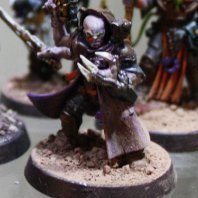
The enemy of my enemy is my friend
GSCUprising posted a blog entry in The building uprising of Prawa V
This passage harks back to the assault on Complex 73. I lost the original text (thank you old hard drive). The Narrator and Kaśnyk find themselves unlikely partners as they both hunt for Barcza, the spec ops commander who commands the Night Rovfugl. Barcza was the brutal soldier who the Narrator's wife, Ida, who sought solace in the arms of another man while he toiled away in the mines. Her murder was at his hands. More below. To Kaśnyk, he is far more methodical. He is an asset that has jumped the rails and need reining in. For reference, Kaśnyk is pronounced "cash - NIK" and Barcza is pronouced "bar - CHA". ===== The fighting in the outer ring had thinned to scattered shots and the hiss of settling dust. I moved through the breach in the wall, bolt pistol raised, ribs aching from the fall earlier. Barcza had come this way; blood streaked the steps, dark against the concrete. A shape flickered at the edge of my vision. I swung left. Kaśnyk stepped out from the opposite corridor, pistol already levelled. I froze. So did he. Two barrels aligned across six metres of ruin. Neither of us spoke. The air hummed with distant generators. Sand scraped along the firing slits. My pulse thudded in my teeth. Then I heard it, wet, broken breathing somewhere deeper in the tower. Kasnyk’s eyes flicked toward the sound. Mine did too. Neither of us lowered our weapons first. We just shifted, almost the same second, easing out of each other’s line of fire. We moved without agreement. He took the right side of the corridor; I took the left. His steps were measured and precise. Mine were quicker, angling for the corners before he reached them. Two men hunting the same target for different reasons. The breathing grew louder. We found Barcza slumped near a collapsed embrasure, armour scorched and split. A round had torn through his chest plate. He was still alive, though barely. His eyes tracked me as I stepped closer. He didn’t reach for his weapon. He didn’t speak. He just waited. I raised my pistol. I held it, the iron sights square over his forehead. I breathed out, then lowered it. This wasn’t a battle. This was a man dying in the dirt, and killing him wouldn’t change a damned thing. I backed away, jaw tight, heat building behind my eyes. Kaśnyk watched me without expression. I turned and started for the door Behind me, Kaśnyk's voice followed calmly, measured, carrying the weight of doctrine rather than anger. “He showed you mercy. The Emperor does not forgive.” I didn’t stop. I didn’t look back. A single pistolcrack tore through the tower. The sound hit me like a hammer blow to the spine. I flinched before I could stop myself, hand tightening around the grip of my weapon. Then silence. A long, cold silence. I kept walking.- 3 comments
-
- 5
-
-
-
- Imperium
- Genestealer Cult
- (and 1 more)
-
So, I thought I'd take another pass at this this evening. Starting a new job tomorrow, so won't likely be on as much. Still, less responsibility, fewer hours, and more pay - who am I to argue with that? I'll paste the text here and the link to the audio passage. I particularly like this one as I have a weakness for my darling nieces and goddaughter and Wójek is what they call me, meaning 'uncle.' I always melt a little inside when I am called that. It is a very meaningful term of endearment one can give to an older relative or close family friend and all I want to do is be their guardian, just as Wójek is in this passage. ===== The nursery hallway was quiet, its padded walls dulling the sounds from within. Wójek sat just left of the entrance, boots planted square, hands resting on his thighs. Fatigues crisp. Plate carrier in place. His rifle was mounted above, secured high on the wall, well out of a child's reach. A woman arrived with a girl in tow. The child spotted him instantly. “Wójek!” She bolted forward and climbed clumsily onto his knee. He caught her with one hand, gently but firmly, steadying her as she wobbled, then rested his palm lightly on her shoulder. The other hand stayed relaxed on his thigh. He smiled. Just for her. A flicker of warmth behind a face built for silence. Her mother returned his nod, quiet and grateful. Another parent joined her, watching the scene. Her gaze lingered on him for a moment. “Have you ever seen him in civvies?” The woman shook her head. “Not once.” Footsteps approached. Another fighter passed down the corridor. Wójek’s expression dulled, the smile gone, replaced by the blank composure of a man back on duty. He gave a short nod to the soldier. The girl hummed something tuneless, kicking her boots against his leg in time. He didn’t move. He just kept watch. https://drive.google.com/file/d/1fSlPYKfE0kg-NaWVfQQVF_Z6dVj-POMI/view?usp=sharing Thoughts and constructive criticism most welcome, as always.
-
- 2
-
-
- Imperium
- Genestealer Cult
- (and 1 more)
-
A request for feedback and an apology
GSCUprising posted a blog entry in The building uprising of Prawa V
Hi all, Firstly, my apologies for not updating much of late. Both the travelling for the holiday season and being a little unwell has rather knocked the stuffing out of me. Secondly, a little feedback on my style and where I can improve would be most gratefully received. I've shown my writing to both yourselves and to some friends I have here. One of the comments was that it is a "little stiff." I can see how this comes about as I tend not convey inner monologues nor say things directly; rather I prefer the "show, don't tell" way of doing things. I like to think I trust my reader to work it out for themselves, but perhaps I am wrong. I will admit, I am reluctant to loosen the emotional reins, and perhaps this is something I should be looking to do in a few instances. Thoughts most welcome. I get back to work tomorrow so, I hope this will give me sufficient energy to crack on with my models. -
OK, OK, I pledge to get the Night Rovfugl and get some decent pics this weekend. I've been sitting on it for long enough. I apologise, family commitments over the holdays and the joy of being in hospital for a few days (yay?) somewhat threw me off track. Below is a passage about the Night Rovfugl, the Night Bird of Prey. She's a predator. She will only attack if she is sure of a kill. Under other circumstances, she will flee. If cornered, she is like a cat, she'll put on a show all the while she is looking for a way to get the hell out of there. But she does bite, though not often. Lascannons and missiles are not to be messed with. ===== Krzysztof had just settled the Rovfugl into her loiter when the tone changed. Not an alarm, but more a caution tone. Just a subtle shift in the background noise of the displays - the kind you only notice if you’re already listening. Behind him, his navigator stiffened. “Hold,” she said quietly. Krzysztof didn’t move his hands. “Talk to me, Anja.” Anja leaned forward, eyes narrowing at her scope. “I’ve got a coherent return resolving where there shouldn’t be one. Clean line. No sweep.” She paused. Then, softer: “We’re painted.” The words landed without drama. Krzysztof brought the auxiliary display up with a flick of his thumb. A thin red trace crawled across the overlay, steady and deliberate, tracking the Rovfugl’s belly as if it had never lost her. Below them, far beyond visual range, Brutus had woken. Anja’s fingers danced over the panel. “Source is ground-based. Heavy emitter. Not Imperial standard air-defence. This is… older.” “Brutus,” Krzysztof said. “Yes,” Anja replied. No hesitation. The sensor feed updated again. A mass shift. A long, slow arc resolving into a firing solution. Not rushed. Not uncertain. A turret coming around with all the patience in the world. Brutus wasn’t built to hunt aircraft. But he didn’t need to be. One good solution was enough. Krzysztof exhaled through his nose. “Nope.” He didn’t punch the throttle. Didn’t flare. Didn’t brake hard. He bled altitude instead, easing the Rovfugl sideways and down, sliding her into the terrain mask. Heat held tight. Angle shallow. Everything disciplined. Anja watched the red line cling for a heartbeat longer, then begin to drift. “Tracking’s degrading,” she said. “He’s searching.” “Let him,” Krzysztof replied. He armed nothing. Not yet. The Rovfugl slipped lower, engines hissing under restraint, a predator refusing to show its throat. On the ground, Barcza felt it. Not a sound nor a signal. Just the absence of something that had been there moments ago. He slowed, then glanced back over his shoulder, eyes lifting instinctively toward the dark sky. The Rovfugl was gone. Just… no longer there. Barcza raised a fist, the squad freezing around him. He tapped his mic once, low gain. “Krzysztof,” he said. “Status.” Up above, Krzysztof didn’t answer immediately. He waited until Anja nodded. “Paint’s off,” she said. “For now. Adjusting orbit,” Krzysztof replied at last. His voice was calm and even. “Stay sharp. You’re not alone out there.” Barcza didn’t ask who else was. He gave a short nod to no one, turned back to the dark, and signalled the squad forward. Above them, unseen, the red line faded into nothing. Brutus watched the space where the Rovfugl had been. Then, slowly, his turret eased back to neutral. The night settled again, uneasy, alert, and very much awake.
- 2 comments
-
- 3
-
-
- Genestealer Cult
- Imperium
- (and 1 more)
-
I've never really turned my hand to 'romantic' scenes, but thought I'd think a little ahead in this small scene between Zofia Malmgren, the 280th's medic and Róźa Makówska, Sergeant of the 265th, from Comes the Sandstorm. I've sprinkled little hints in the text that there's an unspoken spark between them, but never made it blatant. I like my readers to fill in the gaps. That said, I've not posted any of this, yet! Haha I believe the question I am asking is, 'does this work for you?' What works, what doesn't? They're both tough women, veterans, and I see this as a pressure valve for them both, just them. They're out of uniform, they're not looking around for enemies. A moment of privacy. All constructive criticism is, as always, most welcome. ===== Zofia stepped back from the table, brushing her hands on her breeches, though the nerves made her fidget more than she wanted. Róźa still hadn’t moved from the doorway, posture relaxed but eyes attentive, a faint smile tugging at the corner of her mouth. Zofia laughed again, quieter this time, a little breathless. “Well… coffee’s ready,” she said, though the words felt hollow. Róźa’s gaze flicked to the cups, then back to Zofia. She took a step closer, just enough to close the distance without breaking the fragile tension. Her hand lifted slowly, resting lightly on Zofia’s shoulder. The warmth surprised Zofia, and she shivered. She moved forward, her lips brushing Zofia’s cheek. “We both know we’re not here for coffee,” Róźa whispered. Zofia’s breath caught. Her fingers twitched against the edge of the table. She turned her head, leaning into the motion. Their lips met. One careful, gentle touch, then a heartbeat that stretched impossibly long. The world outside the apartment faded. Time folded around them.
- 2 comments
-
- 1
-
-
- Genestealer Cult
- Imperium
- (and 1 more)
-
So, I've been enjoying writing my little vignettes for the follow-up story to my story of Prawa V. For those following, you already know 329. I hope you enjoy its redicsovery. I do have a weakness for 329. It, ultimately, dies, buying time for Freja. But, in the meantime, I am happy to let it terrorise people! Also, I do know this board censors naughty words, which is cool, but I have written Łaska to be, say....expressive! She's the only character who swears in my stories, but, if she swears, you know something is going on. In this instance, she is not exclaiming about a duck. ===== We’d walked deeper than I would have liked. The air had that dry, metallic weight to it. Maintained and monitored. The kind of place that hadn’t been abandoned so much as sealed. Freja led us through most of it. She didn’t speak much. Eyes fixed forward, dataslate tight in her grip. Łaska kept glancing at her, then back at me. She didn’t like how quiet Freja was. Neither did I. We reached the vault door. It was bulkhead-class, reinforced, built to outlast a war. The panel still blinked faintly. Standby power. I moved beside her. “This is it?” I asked. Freja nodded. Her hand hovered over the control, then pulled back. “Wait,” she said. “Why?” She hesitated. “If I’m right… this isn’t just a server room.” She didn’t explain. She keyed the override anyway. The door unlocked with a sound like pressure releasing from some cold storage. Metal groaned. Then silence. Inside, the dark was absolute. I found the manual switch. I hesitated for a moment. The lights snapped on in slow sequence, each one humming into life, pushing the dark back a metre at a time. Then it came into view. 329. Dead centre. Facing us. No effort to conceal it. The paint had blistered from heat at some point, I could still see the war scars along the front plating. Dust settled over it like ash. The cannons didn’t move. The treads didn’t twitch. It looked like a tombstone with a spine. Łaska exhaled. “Oh, no.” She held her breath. Her hand lingered over the trigger of her grenade launcher. My eyes tracked the chassis. No heat shimmer. No charge hum. Then it came A thin red beam touched my chest, high on the sternum, just left of centre. A laser targetter. Perfectly still and locked over my heart. I didn’t move. Neither did it. “Back out,” I said, my hand gesturing, “Now. Slowly” Freja looked at me. Then at the beam. She didn’t speak. Just stepped backward, one deliberate pace at a time. Łaska was already moving. Her hands weren’t on her weapon. She knew better than to appear armed around that thing. The dot held steady on me until I crossed the threshold. Then it clicked off. I killed the lights. The dark swallowed it whole again. We didn’t speak until we were two corridors clear. And even then, barely. We three knew what it was.
-
- 3
-
-
-
- Imperium
- Genestealer Cult
- (and 1 more)
-
OK, so I said I'd work a little on the Night Rofugl, but got entirely distracted by the encounter at Nowa Avestia after she drops off Barcza and his spec ops team, seen here: There is a little foreshadowing I have not covered, and that's showing the Valkyrie LV-426, the Eland, resting on a landing pad the day before, so please bear that in mind. Nowa Avestia is the Resistance's headquarters. I know GSC cannot take the Valkyrie, but I think the model's great, so going to bend the rules on this one. This small excerpt is, essentially, two vastly different doctrines coming to blows. I really like the Valkyrie models. I think it's such a shame the current game really nerfs fliers, but you can bet Barcza and his spec ops will make an appearance in my next casual game. As always, thoughts most welcome. ===== The red light bloomed without warning. No lock, just a thin, steady point crawling across the cockpit glass. Anja’s head snapped up. “Laser. Low angle. Ground-based. It's Brutus." Krzysztof felt it in his chest before he thought about it. The quiet pressure of being seen and of no longer belonging entirely to the night. “Range?” he asked. “Transient,” Anja replied. “No firing solution. He’s lost it already.” As if on cue, the red dot slid away and vanished. Somewhere below, Brutus’ turret would already be returning to neutral. Krzysztof exhaled through his nose. “Nope.” He eased the Rovfugl down, bleeding altitude a metre at a time, sliding her sideways into the folded dunes of the desert. Engines stayed tight, the cowlings keeping the heat held in. Discipline over impulse. Anja watched her scope. “We’re not alone out here,” she said. “Single ping. Nine o’clock. Fractional return. Gone before I could classify.” “Aerial?” Krzysztof asked. “Yes.” He nodded. They held the line for two heartbeats, then the desert exploded. LV-426, the Eland, crested a dune ahead of them like a predator announcing itself, engines screaming, multilaser already blazing. Fire stitched the sky where the Rovfugl had been seconds earlier. Rocket pods emptied in a savage arc, detonations rolling across the sand in overlapping waves. Flares bloomed white-hot, saturating the night in violent light. For the first time, Anja’s voice sharpened. “That’s..." She cut herself off. Then, more quietly, "...very aggressive.” The dune ahead rose long and steep, a single clean ridge breaking the desert in half. Krzysztof had already lined up on it without hesitation as Anja snapped herself out of the shock of the Eland bearing down on them. “Flaps fifteen. Airbrake deploying.” Anja swallowed. “I really hate when you do this.” The Rovfugl climbed just enough to clear the crest then dropped to the deck, hard. The nose pitched up sharply as they slid down the far side, speed bleeding away with brutal efficiency. Sand rushed past beneath the canopy, almost close enough to touch. “Terrain,” the computer intoned. “Pull up.” Krzysztof ignored it. “Ground speed oh-four-two,” Anja said, already recalculating. “Angle of attack oh-six-one degrees and holding." The Rovfugl had bled off most of her speed, but she was now close enough to the edge to make the craft's physics nervous. Through the canopy Krzysztof could see only the boundless night sky as the Rovfugl hung in a near vertical position behind the dune. “Five seconds to stall,” Anja continued. “Four.” LV-426 screamed overhead. Multilaser fire tore the air apart above them. Rockets flashed past, detonating blindly. Flares chased nothing, blooming uselessly in the dark. “Three,” Anja said. Calm, controlled, her voice tight. “Two.” The Eland thundered on, committed, confident, already hunting for where the Rovfugl would be. “Punch it, Krys.” “Flaps one. TOGA," Krzysztof drove the thrust levers fully forward to the stops. The engines roared. Stealth shattered instantly as raw thrust launched the Rovfugl skyward. She surged up and over the Eland’s flight path, rolling cleanly as Krzysztof hauled her through the turn. The desert fell away beneath them. For half a second, there was nothing but wind and fire and the scream of engines at full burn. Then the Rovfugl dropped back in behind her prey. Anja’s hands were steady now. “Solution locked. We've got tone.” Krzysztof didn’t answer. The lascannon fired. LV-426 ceased to exist as a single object. The beam cut her cleanly in two, white-hot and absolute. The Eland’s fuselage split apart mid-flight, debris and fire tumbling end over end as what remained fell burning into the desert below. Silence rushed back in to fill the space she left behind. Krzysztof eased the throttles back, guiding the Rovfugl down into shadow once more. Anja leaned back in her seat and let herself breathe. “Eland is down,” she said quietly. There was no satisfaction nor triumph in her tone. Just fact. "Minor damage to engine cowlings, we're no longer running dark." Krzysztof turned them away from the wreckage, already thinking in angles and exits. “Let’s not be here,” he said. The Rovfugl vanished back into the dark, leaving the flaming wreck and questions behind her.
- 3 comments
-
- 1
-
-
- Imperium
- Genestealer Cult
- (and 1 more)
-
The Night Rovfugl and the Eland - redux (edited)
GSCUprising posted a blog entry in The building uprising of Prawa V
So, I wrote the original text and pasted it here (link below), but, on re-reading it, found it entirely too shallow. The win was way too easy for the Night Rovfugl. The idea was that the fight between she and the Eland would showcase two entirely different doctrines: the Night Rovfugl relying on stealth, with her modified airframe, to get in, stand on station, and get out without been detected. The Eland is its doctrinal opposite, blazing lights, massed rocket and laser firepower, she and her crew live to flush out their opponents with overwhelming force. As it turned out in that first passage, the Eland was more a wounded goose, waiting to be shot down and taken home for dinner. This time, she bites and she bites hard. The Rovfugl takes a hammering and it's a battle of wits between her skill crew and the Eland's. And it's not just Krzysztof and Anja's lives in the balance. It's Barcza and his Kasrkin, too, as they're their taxi out of there. Now, I am quite aware the Valkyries are not the most meta model and as for them being stealth and pulling psuedo-Cobra manoeveures, the less said the better, but I hope you enjoy this yarn. Thoughts most welcome. ===== Krzysztof had just settled the Rovfugl into her loiter when the tone changed. Neither an alarm nor a warning. Just a subtle shift in the background noise of the displays, the kind you only notice if you are already listening for it. Behind him, his navigator stiffened. “Hold,” she said quietly. Krzysztof did not move his hands. He did not reach for the throttle or the weapons panel. He kept the aircraft where she was, level and clean, letting the desert slide beneath them in slow, indifferent silence. “Talk to me, Anja.” Anja leaned forward, eyes narrowing at her scope. “I’ve got a coherent return resolving where there shouldn’t be one. Clean line. No sweep.” She paused, then lowered her voice half a register. “We’re painted.” The words landed without drama. Krzysztof brought the auxiliary display up with a flick of his thumb. A thin red trace crawled across the overlay, steadily and deliberately, tracking the Rovfugl’s belly as if it had never lost her. Below them, far beyond visual range, Brutus had woken. Already, he knew, the crew were hunting for a fit to their sensor return, instruments alive, doing exactly what they had been trained to do when something did not fit. Anja’s fingers moved across her panel. “Ground-based. Heavy emitter. Not standard air-defence. This is older." “Brutus,” Krzysztof said. “Yes,” Anja replied. The sensor feed updated again. A mass shift. A slow, patient arc resolving into a firing solution. A turret coming around with all the time in the world. Brutus was not built to hunt aircraft, but he did not need to be. One clean solution would be enough. Krzysztof exhaled through his nose. “Nope.” He didn’t punch the throttle or drop flares. No moves that would indicate fear, he just bled altitude instead, easing the Rovfugl sideways and down, sliding her into the folded dunes. Heat held tightly, keeping his angle shallow. Everything disciplined. Anja watched the red trace cling for a moment longer, then it began to drift. “Tracking’s degrading,” she said. “He’s searching.” “Let him,” Krzysztof replied. He kept the safeties on, for now. Static rasped through the cockpit, fragmented and distorted. “…unknown transient to the south…” Anja didn’t look up. “That wasn’t for us.” Krzysztof didn’t ask who it was for. He nudged the Night Rovfugl deeper into the terrain mask, keeping her belly buried in geometry and sand. The trace thinned and broke. Anja’s voice remained even. “Paint’s off.” Krzysztof answered with motion, adjusting their orbit a fraction lower, a fraction wider. On the ground, Barcza felt it. Not a sound nor a signal. Just the absence of something that had been there moments ago. He slowed, eyes lifting instinctively toward the dark sky. Nothing. The Rovfugl was gone. He raised a fist. The squad froze around him, weapons tight, bodies disciplined into stillness. Only Barcza’s face was bare. He tapped his mic once. “Krzysztof. Status.” Up above, Krzysztof waited for Anja’s confirmation. “Paint’s off,” she said again. “Adjusting orbit,” Krzysztof replied. “Stay sharp. You’re not alone.” Barcza didn’t ask who else was. He signalled forward. Brutus’ turret eased back to neutral and the night settled. It lasted long enough to be believable. Then the desert screamed. Anja’s head snapped up. “Airborne contact.” The horizon erupted as LV-426, the Eland, crested a dune ahead of them, engines howling, lights blazing, multilaser already stitching the sky. She wasn’t hunting quietly. She was drowning the desert in violence and forcing anything alive to react inside it. The first rake hit before Krzysztof fully saw it. The Rovfugl shuddered from the impact. A sudden wrongness through the controls wrenched his hand to the left. Drag wrestled the Rovfugl out of position. Krzysztof reacted instantly, banking and dropping, forcing the Rovfugl starboard, low and tight against the dunes. Anja’s voice followed a second later. “No. To port. We’re bleeding heat. Right engine nacelle.” Krzysztof abandoned the turn he’d started and hauled her the other way, "Buckle up." Strobe lights swept over the dunes, ripping the night into hard, flashing segments. Rockets slammed into sand behind them, detonations rolling in overlapping waves, forcing movement rather than kills. For the first time, Anja’s control cracked, just enough to show the pressure. “That’s...” She cut herself off. Then, more measuredly this time, “...very aggressive.” The Eland wasn’t guessing. She was compressing space. Krzysztof hugged the hard deck, keeping terrain between them and the hunter, buying seconds with angles and restraint. A dune rose ahead, above, only stars, below, darkness. “Coming up on a crest,” Anja said. Krzysztof nodded once and let the Rovfugl climb just enough to round it. As the Eland surged up behind the dune line, Krzysztof snapped the Rovfugl around the crest, rolling hard into the Eland’s blind side. Anja didn’t need to prompt him. “Tone. Now.” Krzysztof fired the Hellfire missile immediately. The Eland reacted with skill. She broke hard, dumping speed and flares in a violent, disciplined manoeuvre, tearing herself out of the firing line. The Hellfire drove straight into the flare cloud and detonated in a white-hot bloom that lit the desert like false dawn. The missile didn’t kill her, but it put her out of position, and that was enough. Krzysztof dumped altitude and vanished back into the dunes, using the moment to re-mask and reposition. "He's good." Anja focused on her scopes and looked up and out of the canopy as she tried to place Eland. The Eland came back in tighter. No casual cresting now. No easy angles. She had learned. “She won’t overshoot again,” Anja said flatly. “I know,” Krzysztof replied. The dunes ahead rose steeper, harsher. Fewer clean lines. Fewer options. “Anja,” Krzysztof said. “Where’s my solution?” “Not now, Krys. I’m working on it.” The Eland’s light swept closer. Multilaser fire stitched across ridgelines they’d used moments before. Anja’s fingers moved faster. “We’re out of clean masks.” “Then give me an ugly one.” A long ridge loomed ahead. Krzysztof lined them up. “Flaps fifteen,” he said. “Airbrake deployed.” “I really hate when you do this,” Anja said, swallowing. The Rovfugl cleared the crest and dropped behind it, bleeding speed brutally. The aircraft protested. She shuddered as physics closed in and Krzysztof pitched her up. “Terrain,” the computer intoned. “Pull up.” Krzysztof ignored it. “Ground speed oh-four-two,” Anja said, already recalculating. “Angle of attack oh-six-one degrees and holding." For the briefest moment, Krzysztof gazed up at the stars in the pitch black night. “Five seconds to stall,” Anja said. “Four.” The Eland committed, confident now that the Rovfugl had nowhere left to go. “Three.” The sky above the ridge tore apart under fire as the Eland roared above and past them. “Two. Now,” Anja snapped. “Punch it, Krys." “Flaps one. TOGA.” Krzysztof drove the throttles forward to their stops. The Rovfugl surged upward, rolling hard from behind the ridge, flipping the geometry inside out. For half a second there was nothing but night, fire, and screaming engines. Then they dropped in behind the Eland. “Solution locked,” Anja said. “We’ve got tone.” Krzysztof didn’t answer. He squeezed the trigger. The lascannon fired once. LV-426 ceased to exist as a single aircraft. The beam cut her cleanly in two, debris and fire tumbling into the desert below. Silence rushed back in. Krzysztof eased the Rovfugl down into shadow, damaged, visible, alive. Anja leaned back, breathing at last. “Eland is down. We’re not running dark. Stealth manifold to starboard engine severely compromised.” “Then let’s not be here,” Krzysztof said. Below, Barcza saw fire on the horizon and didn’t slow. The night remained uneasy. And the Rovfugl disappeared into what darkness still offered, carrying the cost of survival with her. -
I'm going break character a moment and preface this entry with a little context for you. I've never liked the Genestealer's Kiss mechanic; it's always felt like a bit of a McGuffin to me in terms of story, a quick and easy way to move the story along. So, as this blog continues and follows our narrator, it's going to become obvious he's not been taken by it. He has met the Patriarch, though he does not know the true horror of its monstrosity, being shrouded and cloaked but the encounter has left him nervous. However, he is in a desperate position, so he has tried to set aside these thoughts, but they are still there, gnawing away at the back of his mind. I'm yet to write this encounter; I'm not sure I have to, to be honest. I may just leave what happened hanging in the air, as I don't want the Patriarch to feature heavily. I prefer the idea the Cult is bonded by pure action and the sheer force of will of its leaders, such as Mona in the previous entry, and Jagiełło, who we're about to meet. The Patriarch only uses the Kiss on a very specific few individuals, such as these two. Thoughts, constructive criticism, commentary most welcome. The first time I saw Jagiełło, he was standing in the half-light of the bunker entrance, his silhouette framed against the cold glow of the excavation lamps. He did not move like the others, those we had brought into the fold with whispered promises and slow, careful persuasion. He was not one of Mona’s converts. He had always known his place, always understood his duty. He stepped forward, boots grinding against the sand-covered floor, and the men around him straightened instinctively. They did not salute but there was something in the way they moved that betrayed their reverence. They knew, as I did, that Jagiełło was not like us. He was something honed, something sharpened. A weapon in the making, waiting to be unsheathed. His voice, when he spoke, was measured and clipped. “Show me.” One of the PDF officers, a man who had once worn his uniform with pride, led him down into the depths. The air grew thick with dust as we descended, past rusted bulkheads and shattered lighting fixtures. The bunker had been sealed for centuries, its purpose long forgotten by the Imperium. But we had not forgotten. Our Father had not forgotten. When we reached the vault, Jagiełło paused. His gloved fingers traced the worn aquila carved into the ancient plascrete doors, lingering just long enough to make the officer shift uneasily. Then, without a word, he stepped back and gestured for the charges to be set. I watched him as the detonators were placed. He did not flinch at the thunderous roar of the explosion, nor did he shield his eyes from the dust and debris. He simply waited, watching as the past was torn open before him, revealing the weapons that would shape our future. Mona spoke of destiny. She wove dreams and promises. But Jagiełło? He did not deal in futures. He dealt in the now, in the cold steel and fire that would bring the Imperium to its knees. And, in that moment, I understood. He was not our leader. He was our saviour and executioner. I did not realise he had noticed me until he called on me. "You. Step forward." I stiffened, my fingers clenching at my rifle’s sling before I forced them to relax. The others moved away as if the command had not been given to them, leaving me exposed beneath the dim bunker lights. Jagiełło regarded me with a cold, appraising stare. Not cruel, not angry—just weighing something, as though he were judging the strength of a blade before deciding if it should be kept or discarded. "You are 280th Sunward Watch," he stated rather than asked. I swallowed. "Yes, sir." His head tilted slightly. "A soldier. But before that?" "A miner," I admitted, the word tasting like dust on my tongue. It had not been long since they pulled me from the shafts and thrust a rifle into my hands. My back still remembered the weight of the pick, and in my lungs the ever-present grit of the tunnels. "And now you dig for something greater," Jagiełło mused, his voice quiet but edged with certainty. "You understand toil. You understand obedience. But do you understand purpose?" The air in the bunker felt heavier, though I knew it was only in my mind. The truth clawed at my throat, tangled in fear and something else—something that had begun growing ever since Mona first whispered to us in the dark. "I..." I started, then faltered. The hesitation made my stomach twist. I expected dismissal, maybe even contempt. Instead, Jagiełło’s lips curled into something almost resembling a smile. A ghost of one. A fraction of a second, then it was gone. "You will learn," he said, turning away. "Keep up. The time for doubt is ending."
- 2 comments
-
- 3
-
-
-
- Genestealer Cult
- Imperium
- (and 1 more)
-
A distant world, toiling under the yoke of oppression
GSCUprising posted a blog entry in The building uprising of Prawa V
There are three great Hive Cities on Prawa V: Prawa Prime, Prawa Secundus, and Prawa Ten Drugi. Ten Drugi is my home, the home of my brothers and sisters in the Miners' Guild of Shaft VII. The Imperial overseers rule with iron fists, their myriad bureaucrats ensconced within towering spires, tallying each unit of ore we rip from the rock. They ensure that every shortfall is met with punishment—banishment to the sands rather than execution. After all, our labour is vital for the sector, despite no conflicts in the Prawa system for over a century. Long ago, war raged across this world. Beneath the shifting dunes, the carcasses of great war machines lie entombed, waiting for a call that may never come. Every three or four Terran years, the rains come. Torrential downpours turn dust to flood, swallowing our mines, drowning my friends and family by the hundreds. The overseers do nothing. They call these losses acceptable. No protections are given, no warnings sounded. How many times can we watch our kin be swept away before hatred takes root? A deep, festering resentment—a slumbering ember, waiting for a desert wind, a scirocco, to fan it into flame. Until that time, we toiled, cowed beneath the yoke of our oppressors. Then she came. She walked out of the desert with grace, grit, and the storm at her back—our desert wind. Mona. She was a vision—her beauty sharp and untouchable, her voice soft enough to soothe yet strong enough to set hearts ablaze. She whispered truths we had only dared mutter in darkness. Small acts of defiance followed—barely noticeable at first. A misplaced tally. A ‘forgotten’ shift. Meaningless in isolation, yet exhilarating in our veins. For the first time, we felt control. Months passed, and then came the stranger. Cloaked and silent, always in the shadows. Mona told us he, too, was a victim of our oppressors. That he hid his scars from us. Still, she called him Father. Spoke of his wisdom, his kindness. At first, we only glimpsed him—a shifting figure at the edge of firelight. Watching. Waiting. Then, one day, Mona took me aside. She asked about my family. About my dreams. What would I do to make their lives better? To free them? To ensure they never feared the floods or the overseers again? I had no answer. What could I possibly do? Small acts could only take us so far before the overseers uncovered our defiance and sent us to die in the sands. As much as rebellion stirred my heart, it would never be enough. Mona leaned in, her lips close to my ear, her voice like silk over steel. “Family is everything,” she whispered. Her cheek brushed mine. I felt the warmth of her breath, scented with cinnamon and cloves. My pulse quickened. “He is ready to see you now.” A shiver coiled down my spine. Who? Mona’s smile was radiant, knowing. The shadows behind her stirred. “Father.”- 1 comment
-
- 4
-
-
-
- Genestealer Cult
- Brood Brothers
- (and 1 more)
-
This is a little montage of scenes featuring our narrator over the months since the takeover of Outpost Nowa Avestia showing his growth as the squadron's new, and until then, inexperienced sergeant. It shows, also, the slow and subtle growth of the Resistance's s influence on the every day people. The toll booth stood hunched against the desert wind, a squat collection of hab-blocks and a corrugated checkpoint arch draped with faded banners. The squad passed through without issue, helmets off, weapons slung in casual peace-time readiness. To the locals, we were just another patrol. Nothing worth noting. It was the toll-keeper who marked me as something else. He was gaunt, eyes sunken deep beneath the brim of his sun-bleached cap. His uniform hung loose, the fabric worn and patched too many times. As we passed, he beckoned me subtly with two fingers, shielding the motion from his comrades. I hesitated but stepped closer. “Desert wind’s shifting early this season,” he murmured, voice dry as old parchment. In his hand, almost concealed, was a dataslate, sealed and scuffed. I took it, hesitating for just a heartbeat, then slipped it into my jacket. The act was smooth, practiced — like so many exchanges in the underhive markets of Prawa Ten Drugi. Yet, as I rejoined the squad, I found myself touching the outline of the slate beneath my flak. It wasn’t the weight that stuck with me, but the look in the toll-keeper's eyes. Hollow, desperate, yet resolute. I recognised it — the same look I’d seen too often in the mines. The slate’s surface felt rough beneath my fingers, etched with faint scratches, like it had passed through more hands than it should have. I told myself I’d examine it later, when there was time and fewer eyes. ----- Salvager’s Row was always noisy. Even in the early hours, the clatter of tools and metal against metal rang through the alleyways. Stalls lined the cramped lane, cluttered with scrap, old parts, broken cogitators, and the ever-present scent of oil and rust. Sunlight filtered down in pale shafts through the hanging tarps, casting everything in a strange, fractured light. We’d come into town quiet, uniforms dusty but clean, weapons slung easy, faces unreadable. Just another PDF patrol passing through. The locals didn’t ask questions. Not out loud. I was waiting by one of the vendor tables, pretending to examine a cracked auspex casing, when she appeared. I didn’t see her at first—just felt someone hovering at my shoulder. I turned, and there she was. Thin. Pale. Her hair was bound up under a grease-streaked scarf, and her overalls were stained from engine work or worse. She didn’t speak at first. Just stared. Eyes wide, not with fear but with the weight of too many sleepless nights. The hard lines on her face, the roughness of her hands—these were things I recognised. I’d seen them in the mirror. I’d grown up among them, deep beneath Prawa Ten Drugi, where life was short and the dust settled in your lungs. "You’re one of them," she said, barely above a whisper. My fingers stilled on the casing. She glanced around quickly. No one was watching. Or if they were, they knew to pretend they weren’t. "I don’t want trouble," she said quickly. "I just... I need to know. If there’s a way." Her voice cracked on that last word. I looked at her properly then. She wasn’t looking for salvation. She was looking for meaning. For a chance at something better. Or maybe just something different. "You’ve lost something," I said quietly. She nodded. "Everything." I reached into my coat and pulled out a small, worn token—plain to most, but marked with the faint curve of a crescent and three stars. I placed it on the table between the scrap. "There’s a place outside town," I said, keeping my voice level. "North side. Just past the pipe junction. After dark." She stared at the token like it was fire. "And then what?" she asked. "Then you listen. And decide. No one forces anything. Not at first." Her hand closed over the token. She didn’t thank me. She didn’t need to. She disappeared into the crowd a moment later, and I turned back to the cracked casing, my heart a little heavier than before. We weren’t just fighting a war. We were building something. One soul at a time. ----- The fire was low, its orange glow flickering against the canvas of our makeshift shelter. We’d set up camp behind a low dune, far enough off the road to avoid attention, but close enough to move at dawn. The stars above were sharp tonight, scattered across the desert sky like shards of broken glass. Someone had brewed recaf that tasted like burnt mud, but no one complained. We sat in a loose circle, armour off, lasrifles within reach, fatigue etched into every line of our faces. "Remember the old mess hall in Shaft VII?" Laska said, stirring the recaf with the tip of her knife. "Back when a hot meal meant boiled ration bricks and sulphur-salt gravy?" There were groans and a few hollow chuckles. I smirked, shaking my head. "Only thing worse than the food was the shift foreman’s singing." "Ugh, have mercy," someone muttered. "He thought he was a choir-servo." "Sounded more like a dying generator," Varan added. "I’d have taken the generator. At least it didn’t try to chat up the pit boss with that voice." "Didn’t stop him trying, though," said Branka, one of our newest troopers, grinning as she leaned back on her elbows. "She said she’d rather kiss a sump rat." "A sump rat wouldn’t have smelled half as bad," Laska piped up, and the group broke into laughter. It was the kind of laughter that came when nerves had been frayed too long, when sleep was thin and the days too hot. But it helped. For a few minutes, we weren’t soldiers. We were just people again—miners in uniform, thrown into something far larger than themselves. I watched them in the firelight. These were my people now. Not just comrades, not just survivors. They looked to me now, not because they had to, but because they chose to. That realisation sat strangely in my chest. Heavy, but not unwelcome. No one spoke of the things we’d done. Not directly. But when the silence fell again, it was thick with shared understanding. Mona had once said that families were forged in hardship, not blood. Out here, in the dark, I understood what she meant. "Get some sleep," I said eventually, rising to my feet and brushing the dust from my coat. "We move before the sun’s up." They didn’t argue. Just nodded and settled in, one by one. I stayed up a little longer, watching the fire shrink to embers, the desert whispering in the dark beyond. The wind carried grit, but also something else. Something like purpose. And for once, I didn’t feel alone. Writer's note: I think the campfire scene is probably one of the cheesiest I've ever written. I was trying to convey, along with the other two scenes, their humanity. Instead, I got a B-movie sci-fi, haha!
- 1 comment
-
- 1
-

-
- Brood Brothers
- Genestealer Cult
- (and 1 more)
-
A bit of a longer post today, but I couldn't decide where would be an appropriate place to break it up. Sorry if it's a slog, but hopefully you enjoy. Constructive criticism is welcome, as always. The cellar was dry, dark, and cold in the way only stone could be. It had once been used for storage—wine, perhaps, or sealed grain back when the trade station was younger. Now it was quiet, its walls lit by low-burning lamps and the soft hum of activity above. The building that sat atop it looked unremarkable, just another administrative structure tucked away behind the merchant rows. But down here, beneath the weight of dust and secrecy, it belonged to the Resistance.. Jagiełło stood beside a battered metal table, one hand resting on its edge, the other tucked behind his back. His eyes were fixed on the far wall, where shadow danced across old shelving. Mona stood across from him, cloak drawn loosely around her shoulders, her posture relaxed but attentive. "They’re ready," he said finally, voice quiet but clear. "Or close enough to it. The squads have seen action. They’ve held positions. They’ve kept silent. It’s time they heard the same words from the same mouths." Mona tilted her head slightly, considering. "You wish to gather them?" He nodded once. "Leaders only. No more than one or two per cell. Quiet invitations. A council, of sorts. If we are to grow, we must speak with one voice." She smiled, faint and enigmatic. "And who will give that voice shape?" "We will," he said, meeting her gaze. "You and I. The Father speaks through us." Her smile widened, just slightly. "A sermon and a sword." Jagiełło looked away again, back toward the shelves, his thoughts already moving ahead. "There have been murmurs. Quiet ones. Old loyalties that haven’t quite burned out. Some feel our reach grows too fast. Others fear exposure." Mona’s voice dropped into something silkier, softer. "And you want me to find them." "I want you to listen," he said. "Draw them in. Reassure them. But if they persist in doubt..." She stepped closer, her movements unhurried. "Then they are already lost." He didn’t answer. He didn’t need to. "You’ll include him," Mona said after a moment. "The new sergeant." Jagiełło's brow twitched, just slightly. "Yes. He doesn’t see it yet, but the others look to him. It’s time he understands the scale of what we are." She nodded once. "A test." "A glimpse," he corrected. "If he proves true, the tests will come later." Above them, a floorboard creaked. Neither flinched. Jagiełło’s voice dropped into a low, deliberate rhythm. "See to the invitations. Speak to those who carry weight. We do this quietly. No banners, no slogans. Just presence." Mona inclined her head, then turned toward the stairs, her cloak trailing behind her like smoke. He remained by the table, his hand resting on the cold metal, eyes half-closed. The time for silence was ending. But it was not yet time for noise. ----- They came in ones and twos, staggered and silent. No fanfare, no marked insignia, no outward sign of who they truly were. Just tired men and women in faded coats and dust-stained boots, making their way through a side alley or past a nondescript door tucked between a tannery and a closed chemist’s. Most gave a brief nod to the pair of armed guards flanking the entrance—no questions asked, no names exchanged. The building was quiet from the outside. On the inside, the cellar whispered with slow gathering purpose. Lamps had been lit low, casting a golden hue on the worn brick walls. A long wooden table stretched the length of the room, with crates and salvaged chairs pulled in close. Some leaned against the walls, arms folded, their eyes scanning each new arrival with practiced caution. They came from across the desert—outposts, trade hubs, water stations, mining sites. Veterans of too many small skirmishes to count. People who remembered the price of defiance but bore it anyway. They spoke in low tones, just enough to identify, never enough to expose. I came in last. Or near enough it made no difference. The guards at the door looked me over and let me pass without a word, but I felt their eyes on my back the whole way down the stairs. The steps creaked, the kind of creak that makes you feel like the whole room hears it. And maybe they did. I stepped into the cellar and stopped just inside the doorway. I’d never seen so many faces like this gathered in one place—not all at once. Hardened. Scarred. People with experience etched into every movement, every glance. Not one of them wore the Resistance's mark. They didn’t need to. I adjusted the strap on my lasrifle out of habit, not nerves. Or maybe both. I told myself to keep my eyes up, to look calm, like I belonged here. But I didn’t. Not really. Not yet. I could feel it in the way the conversations dipped as I walked past, in the way a few of them sized me up. Not with hostility—just the kind of scrutiny that says, "Who’s this one, then?" I found a spot near the edge of the gathering and stayed there. Silent. Watchful. Trying to breathe like my chest wasn’t tight. I didn’t know what Jagiełło had planned. Or Mona. But I knew this: I’d been called. I’d been seen. And now there was no stepping back. ----- The cellar buzzed softly with restrained conversation. Clustered around the long wooden table, the squad leaders murmured to one another in low tones, the sort of talk that never carried across a room. There was no laughter, only quiet familiarity, like the shifting of stone beneath sand. They wore no insignia, no rank markings, but the lines on their faces and the weight in their eyes told you who had seen battle, who had bled for the cause. The air was dry, tinged faintly with oil, old stone, and the distant trace of spice from a pipe someone had lit discreetly. At the far side of the room, half-shadowed by the flickering lamplight, Mona leaned against the wall, arms folded loosely. Her expression was unreadable, but her eyes moved constantly—reading the faces, the silences, the hesitations. She wasn’t looking for agreement. She was watching for weakness. For doubt. For fire. Then Jagiełło entered. He moved without ceremony, no flourish or call for silence. He didn’t need to. One by one, the voices faltered. Chairs creaked as postures straightened. By the time he reached the head of the table, the only sound was the soft settling of dust. He looked over them, his gaze neither harsh nor welcoming. Just present. Grounded. From beneath his cloak, he drew a small metal flask and placed it plainly on the table. His voice, when it came, was quiet but carried all the same. "I don’t drink," he said. "But I was told a toast would be... appropriate." A few exchanged glances, unsure. Mona’s mouth twitched into the suggestion of a smile. Jagiełło uncapped the flask and raised it slightly. "To our first gathering. And to the storm yet to come." He took a measured sip and passed the flask to his left. It moved from hand to hand, each drinking in turn. When it came to me, I hesitated only a second before tipping it back. The liquid burned, but I swallowed and passed it on without a word. Jagiełło waited until it returned to the centre of the table, then swept it aside with the back of his hand. "Now. To the business we came for." He stood straight, hands resting on the table’s edge. "You’ve all seen what we recovered. The Malcador was the first. It won’t be the last. The sands hide more than relics. They hide power. Power we will need." There were nods around the table. Real ones. "We are not ready to rise," he continued, "but we will be. When the time comes, we must not be scrambling for rifles or hiding behind dune walls. We will strike with what was once theirs. And we will break them." Someone murmured an affirmation, barely audible. "Many of you have families. Sons and daughters. You know what the cost is. You live it every day. What we build here is for them. For what comes after." His voice remained low, even. "We are not a rabble. We are not isolated cells. We are a Resistance. And we must begin acting like one." He took a moment, scanning the room. "Every outpost under our shadow must be secured. Informants placed. Supply lines disguised. Weapons salvaged, repaired, hidden. We will not win by numbers. We will win by knowing more, moving faster, and never being where they expect us to be." There was stillness at the table now, the kind that comes when a room begins to believe in something. Even if only quietly. "That is why we are here. Not to celebrate, but to unify. To prepare." He paused. From within his cloak, Jagiełło produced a small dataslate—sealed, scuffed from handling, but unmistakably the same one that had passed hands at the toll booth. He placed it on the table with deliberate care, the metal clacking softly on the wood. His eyes turned toward me. I could feel the weight behind them. "Since you brought this to us," he said, voice quiet but firm, "it is only right you have the honour of answering its mysteries." There were murmurings then, soft but unmistakable. Not loud, not disruptive, but enough to betray doubt. I caught the words in the undercurrent—"miner," "Rakoczy," "green." Jagiełło’s gaze swept across the table. No words. Just the cold steel of his stare. The murmuring died like flame under sand. I rose slowly, heart drumming a little too hard in my chest. I didn't look around. Just stepped forward and reached for the slate. Mona’s eyes didn’t follow me. Not at first. She was watching someone else—one of the sergeants seated at the table, who had barely spoken, who shifted slightly when the slate was revealed. Her head tilted slightly. A breath passed. Then she gave a single, subtle nod. Jagiełło caught it without looking. The figure remained unaware. Nothing would happen yet. But they would be watched. The slate was cold in my hands. For a moment, I didn’t move. Around me, the room was silent, but I could feel the weight of every gaze pressing against my shoulders. I wasn’t like them. I hadn’t led raids in the sands or bled for outpost victories. I’d swung a pickaxe in the dark, counted rations by the week, buried comrades beneath collapsed tunnels. And now I stood here, a miner with a rifle, asked to speak in the presence of veterans. I told myself it didn’t matter. Rakoczy had trusted me. Mona had stood beside me. Jagiełło had called me forward. I drew in a breath, steadying myself, and tapped the slate awake. The flicker of code sprang to life across the display. Now, it was mine to answer. The code resolved into something surprisingly simple: a set of coordinates, followed by a fragmented schematic, flickering slightly as the slate worked to stabilise its old data. There were annotations in a hand I didn’t recognise, half-corrupted but just readable enough. A bunker. Remote. Long forgotten. I squinted at the identifier buried in the metadata, speaking aloud without thinking. "Iron Duke?" It came out uncertain, questioning. Around the table, a few of the veterans scoffed. Quietly. One shook his head, another rolled their eyes. Doubt, disbelief, even a touch of mockery—none of it loud, but I felt it all the same. Mona’s gaze didn’t shift from the sergeant she’d been watching. But something changed in her expression. Subtle. The figure’s mouth had twitched—just slightly. A flicker of concern. Not enough for anyone else to notice. But Mona noticed. And though she remained poised, relaxed, her attention narrowed like a blade being drawn.
-
- 1
-
-
- Brood Brothers
- Genestealer Cult
- (and 1 more)
-
I'd like to say thank you to those who have been following the story of Prawa V. I appreciate your support. I've been writing about Prawa V and the 280th since the latter half of last year and I am way ahead of the passages I have posted here. I've found my writing has significantly improved over the past few months and I've also drifted away from writing the little vignettes as I feel I cannot convey everything I want in them. Thus, I am writing longer, fuller texts now and would welcome your thoughts and opinions. I'm posting a scene from later on in the story about the recovery of the final vehicle in the triumvirate of tanks the Resistance is collecting for when the final day comes. I've already revealed the Malcador (Brutus) and will reveal the second in a later blog post. You'll see some familiar names, including our narrator who has been leading his squad after the death of Rakoczy for some times, and some new ones. Laska has rapidly become my favourite character and she has some nice moments in other passages. As always, I welcome all constructive feedback. Let me know what I did well and what I can do better! Now, let me tell you of the recovery of the beast known as 329. The air inside the vault felt thick enough to choke on. Every step stirred the dust, curling it around our boots like smoke in the lamplight. The deeper we pushed, the less the glow of our torches seemed to matter. Darkness swallowed the beams after only a few metres, leaving the edges of the corridor murky and half-seen. I kept my lamp high, sweeping left and right. Riveted panels, rust-streaked bulkheads, and nests of corroded piping loomed from the gloom. The old Imperial eagles — cracked, pitted, and eaten by time — leered down at us with hollow eyes. They didn’t offer comfort, just a reminder of who built this place, and how long ago they had abandoned it. We worked like we always did — quiet, deliberate, no chatter beyond what mattered. This wasn’t a battlefield, not yet, but it carried the weight of one. The dust wasn’t just dirt. It was history. It settled on us like a second uniform. Every doorframe got a chalk mark. Every passage junction got a numbered entry on my slate. I logged every exposed pipe, every strange corrosion bloom, every half-missing panel without argument. We weren’t just looking for the Vulcan. We were building a map, one step at a time. Because down here? Getting lost would be as final as getting shot. Czajka worked in silence on my left. His stylus scratched across the surface of his dataslate as he sketched crude but effective floorplans. He didn’t need orders. He already knew what we were doing. There was comfort in that. I trusted Czajka to notice the things I missed. Laska, behind me, had less patience. She kept glancing at every side passage, fingers tapping idly on the grenade launcher slung tight against her chest. “I don’t like it,” she muttered, voice low enough not to echo. “You’re not supposed to,” I said without turning. And it was true. The vault didn’t feel hostile — not quite. But it felt still, heavy, like the air itself was watching us. I’d known that feeling in the mines before. It always meant something overhead was about to shift. Krystan trailed behind, one glove tracing the edge of the bulkhead as he walked. He wasn’t slacking — he was thinking. He always did this when the edges got tight. His eyes flicked over faded warning sigils and strips of flaking hazard paint, as if they might tell him something the rest of us couldn’t see. Zofia moved quietly on the left flank, a little behind the others, eyes constantly scanning the ceiling and corners. She never said much. She never needed to. What mattered was the way she checked every overhead pipe, every stress fracture in the walls, noting them in that worn medicae slate of hers. Always assessing. Not for treasure — for risk. The further in we went, the colder it got. The desert heat hadn’t made it this deep. Every breath came with a hint of metal and old oil. The echo of our boots returned sharper, like the walls themselves were awake. I kept marking. Every alcove. Every sealed hatch. Every pile of collapsed ductwork. Laska shot me a look when I noted a broken servitor arm half-buried in the rubble. “Really?” she whispered. “Record everything,” I replied without humour. It wasn’t superstition. It was survival. Too many had been buried under rock and rust because they skipped the little things. The corridor widened. The vault proper opened before us. A chamber, broad and tall, stretched into the gloom. Gantries crossed above like skeletal bridges, their railings sagging with age. Kerosene lamps, long-dead but recently rekindled, cast a dull orange glow along the lower platforms. I knew the shape at the centre before the others even spoke. Half-shrouded beneath a filthy tarpaulin stood a tank. Wide-set tracks. An angular turret. A squat, brutal hull. Bigger than a Leman Russ, heavier than a Chimera. Even under the cover, I knew what it was. The Vulcan. But we didn’t rush it. We spread out, slow and deliberate. Laska circled right, checking sightlines and covering the far doors. Czajka moved up into the gantries, the worn steps groaning under his weight. I paced forward, keeping my slate active, mapping every inch. Tool racks. Cargo crates. Supply lines overhead. Every detail. Krystan didn’t join us. He stood still, staring at the tank. One hand rested against its flank, brushing the dust aside to reveal a faded stencil: 329 The way he did it made me uneasy. He wasn’t examining it like a soldier. He was listening. We weren’t alone. I felt it, sure as the ground beneath my boots. Someone, somewhere, behind the maze of passages or the heavy bulkheads, was breathing the same dust. And sure enough, I wasn’t wrong. We were too focused on the Vulcan. That was the truth of it. The sheer weight of the thing had pulled us in, had us pacing it like shipwreck divers circling some ancient wreck on the seabed. We’d logged the doors, the gantries, the old winches bolted to the overhead girders — but we hadn’t logged who else was breathing our dust. The first lasbolt cracked from the left gantry, smacking into the floor by Laska’s boots. She ducked behind a stack of rusted fuel drums, but not fast enough. The second found her. I saw it hit — a sharp impact just below her collar, spinning her off-balance. She went down hard, pulling herself behind cover, gritting her teeth to stop a cry. Blood seeped between her fingers as she clutched at her shoulder. “Contact!” I shouted, bringing my lasgun up. They moved well — too well for a simple patrol. Three squads, minimum. PDF by the look of them, but tighter, sharper. Controlled bursts. Flanking. Pinning. They weren’t improvising — they had orders. Kasnyk’s voice rang out sharp from above. “Hold your fire! Stand down!” Liar. I squeezed off a return shot at the gantry, driving one of his troopers back into cover. Czajka had already dropped prone behind a rusted girder, working with terrifying calm. His rifle coughed once, and a PDF trooper tumbled off the gantry like a broken puppet. Laska, bleeding and pale, dragged herself into a better position with Zofia snapping to her side. Zofia moved fast, no words, just routine — cinching a tourniquet tight even as the air cracked with fresh shots. Kasnyk stepped into the open on the upper walkway, long coat trailing. His monocle pulsed faintly, flickering data none of us could see. He didn’t even flinch when another lasbolt sizzled past his head. “Your best option,” he called calmly, “is to—” I fired again, forcing him to duck behind the railing. “Ambush!” I shouted. “Flanks and gantries! Stay low!” The vault exploded into chaos. PDF squads swept in from three directions, forcing us back toward the centre of the chamber. Lasfire streaked through the dust-heavy air, hammering against rusted crates and collapsing old support beams. I shifted position and squeezed off another shot — but the lasgun jolted violently. I glanced down. The housing had split wide where a lucky shot had scored it. The charge pack indicator still glowed green, but it was dead weight now. A sharp breath escaped me as I stared at it. Useless. But had it struck me? A finger’s width higher and it would’ve cored through my chest. I dropped it without thinking. Laska’s grenade launcher lay half-buried near her, abandoned when she’d gone down. I grabbed it. Clumsy in my hands — too heavy, unfamiliar. Not like the rifles I knew. I fumbled with the mechanism, struggling to remember the sequence. Chamber open? Feed drum? I’d watched her work it a dozen times, but not like this. Not under fire. Not slick with dust and blood. Laska coughed, voice tight with pain. “Just rack the bolt and shoot the :cuss:ing thing! …sir.” I didn’t hesitate after that. Czajka, still working the gantry angles, risked a glance toward me — eyes narrowing as he clocked the grenade launcher in my fumbling grip. Rakoczy wouldn’t have frozen up, Czajka thought. He’d have made this look easy. He adjusted his sight, tracking a second PDF trooper. But Rakoczy’s dead. And you’re what we’ve got. He fired again, and the trooper crumpled. The battle swirled. Krystan was missing. My stomach sank. “Where’s Krystan?” I shouted, trying to mask the rising edge in my voice. Czajka didn’t answer. He was already moving, shifting his firing angle without breaking rhythm. Zofia finished cinching the dressing on Laska’s wound, yanking tight and earning herself a hissed curse from the corporal. “Hold still,” she said flatly. More PDF were flooding through the left passage. We were being driven into the open. The Vulcan loomed behind us — cold, motionless, indifferent. While the others fought for every breath behind cover, Krystan was already moving. I caught a glimpse of him slipping away as the PDF pressed harder — crouched low, weaving through the wreckage and rusted gantries. Not running. Moving with purpose. That was Krystan. Steady. Quiet. Always with a hand on the hull. He reached the base of the Vulcan without anyone noticing. His boots scraped against the dust-slick deck plates as he stepped closer. For a moment, he paused, one gloved hand resting against the tank’s flank. It wasn’t reverence. It was something else. Like he was listening. Then he climbed. The cupola’s hatch creaked open, metal grinding in protest. The chaos outside masked the sound — lasfire, shouted orders, and the hiss of ricochets filling the vault. Without a glance back, Krystan slipped inside. The interior swallowed him whole. Dim, dust-choked glow strips traced the edges of the control banks. The Vulcan was no Chimera. The controls were broader, cruder, older. Heavy levers. Coiled cables. Exposed gearing and half-familiar dials. He recognised some — drive levers, instrument gauges, even a throttle quadrant that looked like it had been lifted from a mining hauler — but most were foreign. His breath fogged faintly in the cold. Krystan’s fingers hovered above the mess of controls. Somewhere beneath the adrenaline, a grin tugged at the corner of his mouth despite himself. Terrified? Absolutely. But this was it. This was what he lived for. Machines. Steel. Control. He whispered, barely audible, “Come on… you’re just a Chimera with a bad attitude.” He flicked a master switch. Nothing. He tried again, pulling at a lever, flipping a few toggles — only the dull clunk of inert machinery answered. No. He forced the panic down. Training. Focus. Chimera or not, everything had logic. He traced a row of cables until his eyes settled on a recessed primer coil, partially hidden beneath a mass of bundled wiring. “Old trick,” he muttered. He set his jaw and twisted. The Vulcan exhaled. A hiss of old fuel vaporised into the compartment. The whole machine vibrated faintly, like a slumbering beast shifting in its sleep. Krystan’s hand found the ignition lever. His heart hammered. The thought crept unbidden — What manner of monster do I awake? Before he could lose his nerve, he shoved it forward. The Vulcan roared. The engine coughed to life, clearing decades of dust from its lungs in a single violent growl. Every control around him shook. Gauges flickered. Amber warning lights blinked uncertainly. The floor itself trembled beneath his boots. A thrill surged through him. It wasn’t smooth. It wasn’t safe. But it was alive. He adjusted the starter coil, working it gently, feeling the tank respond like a stubborn animal testing its reins. Slowly, he could feel the systems coming online — old hydraulics groaning, mechanical linkages freeing themselves. And Krystan — wide-eyed, knuckles white on the controls — couldn’t help but grin. He hadn’t tamed it. Not yet. But it hadn’t thrown him out either. The engine’s growl swelled. At first, it was just the deep rumble of combustion, rising steadily, but then the floor itself trembled beneath us. Dust sifted from the vaulted ceiling. The heavy beat of the Vulcan’s heart rolled through the chamber, oppressive and inescapable. I felt it through my boots, through the crate I leaned against, even through the air itself. The firefight faltered. Every eye — ours and the PDF alike — turned toward the tank. It shifted. Steel moaned. The Vulcan’s massive hull shuddered as old hydraulics flexed. Running lights blinked into life, pale and half-choked with dust. They didn’t illuminate the whole chamber, but enough to throw eerie arcs across the gantries and walls. A thin red beam lanced out from beneath the turret — the laser targeter. It swept slowly, searching, hunting, until it steadied on one of the PDF squads pressed tight against the far gantry’s guardrail. Then came the sound. It wasn’t the engine this time. It was the unmistakable whine of the Vulcan cannons spooling up, starting low like the spin of a turbine, accelerating with mechanical determination. The sound climbed, smooth yet unsettling, until the rotation reached full speed. Even without seeing the barrels, you could feel them — impatient, poised. The PDF froze. No shouted orders from Kasnyk. No clever flanking. Just a collective, dawning horror. The first burst came. A sharp, staccato roar, not like the shrill chatter of lasfire, but a deep, violent rhythm — each shell tearing from the barrels with purpose. Short, measured, two seconds at most, but enough. The gantry above us ruptured. Beams twisted. Men, metal, and dust cascaded to the floor in a tangled ruin. And then the casings came. Dozens of them, big as a man’s forearm, tinkling and bouncing down the flanks of the tank, scattering across the stone floor like spent coins. That gentle sound, so delicate against the backdrop of devastation, chilled me more than the thunder of the guns. The turret rotated deliberately. The red beam flicked to another squad. Again, the cannons gave that terrifying, staccato burst. Explosive shells ripped through cover, reducing men and steel to fragments. The shockwaves slammed against the vault walls, making the whole chamber feel smaller, tighter. The engine revved in sync, a beast exulting in its release, shaking dust and rust free from the ancient structure itself. Krystan’s silhouette sat hunched in the cupola, his knuckles white on the controls. From where I crouched, I could just make out the tight line of his jaw — exhilaration and sheer terror warred on his face. Czajka swore under his breath, eyes wide. “It’s... hunting them.” He wasn’t wrong. The Vulcan wasn’t simply firing. The twin cannons moved with unsettling intent, their aim sharp, precise, shifting as if seeking, thinking. Another burst. Another squad obliterated. The staccato rhythm ceased. The laser targeter dimmed. The only sound was the soft, continuous tinkle of shell casings still rolling across the floor, accompanied by the growling idle of the engine echoing ominously around the chamber — until, with a final sputter, even that faded into silence. None of us moved. I wasn’t sure if we had taken control of the Vulcan. Or if we had simply set it loose. The last shell casing had barely stopped its slow roll across the ferrocrete when silence returned to the vault. Not peace — just silence. The heavy kind, the kind that presses against the skull and leaves you waiting. We crept out from cover like miners from a collapsed tunnel, every movement cautious, half-expecting the Vulcan to open up again without warning. It didn’t. Its guns sagged slightly, steam curling from the barrels, the turret idle. The squad stood in a rough circle around the thing, weapons half-raised. No one was brave enough to lower them fully. Krystan stood by the tank’s hull, eyes flicking nervously between the squad and the controls still faintly glowing inside the cupola, as if waiting for the thing to reprimand him. He wasn’t grinning. No one was. Czajka broke the quiet first, voice low. “Some say the old ones think for themselves,” he murmured. No one laughed. Not even Laska, though pain had pinned any levity to the floor. Krystan shifted, not looking at us directly. “...It felt like it wanted to fight.” He thumbed toward the still-smoking barrels. “I just... pointed it.” He shook his head. “It wasn’t me doing all of it.” The words sat heavy. We’d all heard the stories. Machine spirits. Ritual rites. The old gear with habits. Soldiers drunk enough would spin those tales for hours. I’d never cared for them. But standing there, staring at the Vulcan with its idling engine and faint heat haze rolling off it, I couldn’t shake the feeling that maybe this wasn’t just wear and tear. Zofia Malmgren knelt by Laska, methodically working through her field kit. She’d stayed quiet through the fight, and now she worked with steady hands, cutting away the flak's melted edge and dousing the wound with something that made Laska flinch and swear under her breath. Zofia didn’t so much as blink. “You’ll keep your arm,” she said softly. “But you’ll curse me for it.” Czajka helped ease Laska upright, steadying her as blood loss made her legs weak. Between them, they got her standing, if not walking straight. That’s when the Vulcan twitched. A soft creak from above. I snapped my head around just in time to see one of the upper hatches unlatch and swing open on its own, groaning as if stirred by a passing breeze. But there was no breeze down here. Krystan flinched. “I didn’t touch anything.” We froze. No one dared speak. Then, slow as a hunting animal, the front heavy bolters shifted. Their twin barrels settled squarely on Czajka. He went rigid. I swear even Laska held her breath. The bolters paused, locked, then sagged down harmlessly. A second later, a flicker of orange danced across the far wall — the lazy flame of a sponson flamethrower’s pilot light, like the Vulcan had merely cleared its throat. Krystan stumbled back from the cupola. “That’s not me.” His voice cracked slightly. I could see it — the unease creeping behind every pair of eyes. This thing had teeth. Too many teeth. “Alright,” I said, trying to mask the tremor in my voice. “We prep it for transport. Now.” Czajka and Zofia got Laska seated on a nearby crate. Krystan climbed back up reluctantly. I could see the tension in his shoulders. He handled it like it was liable to bite him. While the others moved to secure tow cables and mark the vault’s exits, I noticed it — just beneath the grime on the Vulcan’s flank, half-obscured and worn by time, I found it. A faded stencil. 329th Armoured — Katedra Pancerna. The designation meant nothing to me. Nothing official at least. And it made me uneasy. Kasnyk trudged through the dust-choked wind, boots dragging. The squad — no, the survivors — followed, heads down, rifles slung limp. He wasn’t thinking about the wounded. Not about the missing. He was thinking about the tank. The Vulcan. A relic, yes, but not dead. Active. Moving. And worse — used. This wasn’t scavenging. This wasn’t the panic of starving deserters. It was planned. The precise coordination, the fallback positions, the crew discipline, the vehicle recovery. It all clicked into place now like a slow-turning cog. He had underestimated them. Not rabble. Not desperate fools. A resistance. His fingers tightened around the strap of his dataslate case. He had to reach Prawa Ten Drugi. He had to report this before the desert or the shadows took him first. And for the first time in years, Kasnyk tasted something bitter in the back of his throat — fear. The kind that settles when you realise you’ve stepped into something vast and moving, long before you noticed it.
- 2 comments
-
- 1
-
-
- Brood Brothers
- Imperium
- (and 1 more)
-
Writer's note: I wasn't happy with Rakoczy's departure, so did a little rewriting of things to make it have more impact and give him the dignity he deserved as a good squad sergeant. While we didn't know him as a character, I wanted his lasting memory to be that of a good leader, leaving some big shoes to fill. Thoughts welcome. The fires had burned low by the time Jagiełło arrived. The smoke still clung to the rafters, curling like lazy ghosts above the wreckage. I stood near the entrance, rifle slung and fingers twitching, watching him move through the aftermath without pause or hesitation. He didn’t speak right away. Just looked. At the bodies. At the scorch marks. At the spilled drinks that had mixed with blood in dark pools on the floorboards. Then, quietly, to no one in particular: "Strip the bodies. Remove armour, weapons, insignia. Anything that can tie them to this place." I turned to the nearest fallen PDF. He was young. He hadn’t even made it to his feet when the first volley landed. I knelt beside him, fingers trembling as I unclasped the straps of his chestplate. His skin was still warm. Jagiełło continued, voice steady. "Seize all recorders. Data-slates, cogitator logs, vox units. Everything. If it has memory, it is erased. If it cannot be, it is destroyed." A few of our tech-savvy comrades moved quickly, heading to the back room where the station's hub was kept. I heard the crack of a boot against a locked cabinet. The buzz of a cutter. I kept my eyes on my work. Mona was speaking quietly with the proprietor, who sat behind the counter, pale but still. He had not run. He had not screamed. But fear sat heavy on him now, the reality of what he had witnessed settling into his bones. "And the network?" someone asked. Jagiełło looked toward the comms array, a squat metal box blinking idly by the far wall. "Disconnect it. Temporarily. The less it stays silent, the less suspicion it draws. We stage a withdrawal. Make it look like they left in a hurry." The man nodded and moved to obey. I kept stripping gear, folding it into a canvas sack that was quickly growing heavy. The faces of the dead were starting to blur together. Havel’s was the only one I couldn’t stop seeing. That flicker of confusion when it all began. That last flicker of recognition. Mona moved past me, her hand brushing my shoulder. I didn’t look up. "He needs to be handled carefully," she said softly, to Jagiełło. She was speaking of the proprietor. "He is frightened, yes. But he sees the tides changing." Jagiełło didn’t reply. He didn’t have to. We would either carry him with us—or bury him with the rest. I went and knelt by Rakoczy, his hand clutching weakly at my sleeve. His uniform was dark with blood, the wound in his side gaping, beyond any aid we could offer. He coughed, a wet, gurgling sound. "Good fight," he muttered. "You kept your head." His fingers twitched against my sleeve, then went slack. The breath left him in a quiet exhale, his eyes staring past me, past everything. I swallowed against the dryness in my throat. Around me, the others moved with purpose, securing the station, finishing the wounded. I felt Mona before I saw her, her presence like a warm draught against my frayed nerves. She crouched beside me, her exotic scent cutting through the stench of battle. "He was a strong man," she murmured, placing a hand lightly on Rakoczy’s chest. "A necessary loss." I wanted to argue, to say that it wasn’t necessary at all, but the words died before I could voice them. Mona's fingers pressed lightly against my wrist, a comforting weight. "Jagiełło will need someone to step into his place." I turned to her, mouth dry. "Not me." Mona smiled, that knowing, patient smile of hers. "We shall see." A shadow loomed over us. Jagiełło, his sharp eyes flickering between Rakoczy's lifeless form and me. He nodded once. "Unfortunate." His gaze settled on me, unreadable. "Mona says you have potential. Do you agree?" I shook my head. "I'm a miner. Not a leader." "And yet," Mona said, voice gentle, "you are still here." Jagiełło studied me for a moment longer, then turned away. "We will speak later." I stared down at Rakoczy’s still face, my stomach churning. I had survived. But at what cost?
-
- 1
-
-
- Genestealer Cult
- Brood Brothers
- (and 1 more)
-
In the months that followed the firefight, the desert outpost changed—and so did I. At first, it was small things. The way the squad looked to me before moving. The quiet nods from older troopers who had once only taken orders from Rakoczy. They called me 'sergeant' now. I still wasn’t used to it, but I stopped flinching every time I heard it. The Cult dug in, not with banners and bullets, but with quiet persistence. New faces appeared at Salvager’s Row—traders with whispered affiliations. Civilians with hollow eyes who found purpose in Mona’s words. Mechanics who asked no questions as they overhauled old vehicles beneath the cover of darkness. Mona came and went like the desert wind—never still, never idle. Jagiełło remained elusive, but his influence was everywhere. Orders came down with clarity and purpose. Always one step ahead. My squad patrolled outward now—along dusty roads that led to other stations, waypoints, watering holes. And to our surprise, some greeted us with familiarity. A knowing glance. A gesture. An echo of the cause. We weren’t the only ones. There were others. In one station, a tollkeeper slipped me a sealed dataslate when no one was looking. In another, a chapel bore a strange sigil etched subtly into its foundation stone. And always, always, the whispers of readiness. Of waiting. Of patience. I learned to speak with command in my voice, even when I was unsure. I learned which words carried weight. I learned to lie—to keep up the façade of a loyal PDF patrol. To wear the colours of the oppressor while serving the truth beneath. My squad grew closer. They looked to me not just for orders, but for belief. We trained together. We laughed sometimes. We mourned Rakoczy in private, and then we moved on, because there was too much still to do. There were moments of doubt, still. Quiet ones. I would find myself alone, lasrifle across my knees, staring out at the endless dunes. Wondering if I was becoming what I had feared. If I had a choice anymore. Then Mona would appear beside me, silent and soft, placing a hand on my shoulder. And for a moment, the guilt would lift. We were not ready to rise. Not yet. But we were preparing. And I was becoming someone new.
-
- 1
-
-
- Genestealer Cult
- Brood Brothers
- (and 1 more)
-
Eventually, the council dispersed. One by one, the squad leaders filed out—quiet nods, exchanged glances, brief murmurs as they returned to the surface. Jagiełło left without ceremony, as he had entered. I remained behind for a few moments, alone in the cellar, the dataslate still warm in my hands. "You spoke with conviction," came a voice behind me—soft, familiar, and unsettling in how near it was without warning. I turned. Mona stood at the foot of the stairs, her posture casual, her arms now resting loosely at her sides. "Do you believe every word you said?" she asked. There was no malice in it. No accusation. But her eyes searched mine with a precision that made lying feel impossible. I hesitated. Not because I didn’t know the answer—but because I knew she’d measure how I gave it. ----- The cellar was still, emptied of its earlier tension, save for the soft sound of a single kerosene lamp guttering against the draft. Jagiełło remained at the head of the table, arms folded behind his back as he stared at the dataslate resting where the miner had left it. Mona stood where she had lingered throughout the meeting, watching him. The silence was companionable, but Jagiełło broke it without turning. "Your thoughts?" he asked, his voice carrying just enough weight to be heard. Mona pushed off from the wall with measured grace, stepping slowly around the table. "There is value in uncertainty," she said softly. "Marek wavered. I saw it. I could press. A quiet conversation, a whisper in the dark, and we may know his heart without raising a single lasgun." Jagiełło shifted only slightly, eyes still fixed on the slate. "You would draw it out of him with words alone?" Mona offered a faint, knowing smile. "Words have carried us this far." He did not disagree immediately. He gave the notion its due consideration, staring into the lamplight, weighing it. "Tempting," he admitted. "But not this time." He turned to her then, fully. "I would not risk him suspecting we have seen his falter. Not yet. Better he believe himself unnoticed. Quiet surveillance. Nothing more." Mona did not argue. She tilted her head, accepting the decision, though the flicker of her eyes hinted at a thousand unspoken thoughts. "As you wish," she said, her voice neither wounded nor displeased. Jagiełło’s gaze lingered on her for a heartbeat longer. "Your counsel is always valued, Mona. But for now, we watch. It is time to involve the Fennec." The lamplight flickered again as if in approval. ----- Salvager's Row hummed faintly under the desert sun, the air heavy with the scent of hot metal, dust, and old oils. In one of its quieter corners, tucked between workshops and scavenged habs, was The Fennec’s domain — a place of function, not comfort. Jagiełło ducked beneath the low doorway and stepped inside. The thick workshop air mingled motor oil, grease, and solvent fumes with the omnipresent desert dust, forming a smell so familiar it barely registered. The Fennec sat at her workbench, stripped of ceremony. Perched on a low stool beside her desert-adapted motorcycle, one boot rested on a scattered pile of parts. She ran a wire brush through the barrel of a long rifle — a precision instrument, sand-coloured, designed for patience and lethality. A large, worn scope with flip-up caps sat atop its receiver, and a collapsible tripod was mounted beneath the barrel. Every detail spoke of careful calibration and craftsmanship, not brute force. Scattered across the table were tools, cleaning rods, and brushes blackened from years of service. Her appearance matched her workspace — practical and hardened. A flak jacket with visible plates, cargo trousers scarred by oil stains, and heavy boots caked with grit gave her a rugged silhouette. Webbing and pouches hung loosely yet purposefully across her frame. Beneath the grime and dust, she was lean and sharp, every motion deliberate and assured. Jagiełło remained silent until she glanced up, dark eyes locking with his. Faint ridges along her brow marked her, though they were barely visible in the muted glow of the workshop. She stood without hesitation, setting the rifle aside with deliberate care. “Primus,” she said simply. No bow, no salute — only recognition. “Fennec,” Jagiełło replied, his tone level. “You have someone to follow. Sergeant Marek. Observe. Nothing more.” She nodded. “Understood.” Jagiełło’s eyes narrowed slightly. “There are conditions. If they are met, you will act. Otherwise, you remain unseen.” The Fennec accepted this without question, as she did every task. “Understood,” she repeated. Without another word, she resumed her work, calmly cleaning the rifle with practiced, steady movements as though the conversation had never happened. Jagiełło lingered for a heartbeat longer, watching the slow, precise strokes of the wire brush before turning away and stepping back into the harsh desert light, leaving the workshop to its silence and the quiet hum of preparation. ----- The Fennec worked late into the evening, long after Jagiełło’s footsteps had faded from Salvager’s Row. The familiar hum of the workshop remained her only company, broken only by the soft clicking of tools and the metallic rasp of fabric brushing against gear. She moved with quiet purpose. From a battered locker, she retrieved a canvas-wrapped bundle. Inside lay spare parts, ammunition, and lengths of camouflage netting, sun-bleached and patched. Each piece was checked and packed without hurry, yet with absolute certainty. Nothing extra. Nothing missing. Her rifle received a final inspection. With delicate reverence, she laid each component out on the workbench — the long, desert-camouflaged barrel, the padded stock, the heavy scope with its flip-up caps, and the collapsible tripod. Fixed to the end of the barrel was a prominent, multi-baffled muzzle brake, designed to tame the weapon's immense recoil. One by one, she reassembled them with the practised precision of someone who had done so a hundred times. When the rifle was whole once more, she brought it to her shoulder and sighted down the length of it, the cool metal pressing gently against her cheek. She cocked it smoothly and pulled the trigger. The dry click echoed faintly, sharp against the quiet hum of the workshop. Only then did she nod to herself, satisfied, and secured the weapon inside a padded sleeve. At the corner of the workshop, her desert bike leaned against the wall, chain oiled and tyres thick with the dust of past patrols. She ran a bare hand over its frame, feeling for hairline cracks or faults. Satisfied, she attached small saddlebags, filling them with ration packs, water, and field tools. Pausing for a moment, she glanced around the workshop. The bare lightbulb overhead buzzed faintly. Shadows clung to the walls, broken only by streaks of lamplight from the narrow window. The Fennec rolled her shoulders, adjusted her flak jacket, and slung the padded rifle bag across her back. The last thing she grabbed was a small, well-worn scrap of cloth from a shelf — desert orange — and tied it around her wrist. Without ceremony, she pushed open the workshop door, stepping into the cool air, the soft crunch of sand under her boots. She wheeled her bike out alongside her, the machine’s weight familiar beneath her hands. The hunt had begun.
-
- 4
-
-
-
- Brood Brothers
- Genestealer Cult
- (and 1 more)
-
The Fennec lay low beneath the dune’s crest, body pressed into the soft slope, the sand shifting slightly beneath her weight. Through the scope, the desert station played out its quiet, predictable routine. Marek’s Chimera lumbered toward the toll booth, weathered but functional, waved through without question. There it was — the familiar pattern. The complacency. A flicker of satisfaction stirred within her. The hunt had always held its quiet thrill, but her breathing remained steady, her finger never twitched on the trigger. Discipline. Below, the Chimera parked itself among the scattering of low, sun-bleached buildings. Marek’s squad spilled out, stretching their limbs, shaking dust from their collars. Marek moved like a man who had done this countless times. A stationed PDF soldier approached him, and Marek greeted him with the easy familiarity of an old acquaintance — a handshake, a pat on the shoulder. They exchanged a few relaxed words, body language loose and confident, as if they were sharing news rather than orders. Marek then gestured towards his squad, dispatching them casually into the surrounding streets. They moved without urgency, like men and women convinced of their security. The Fennec’s lips curled into a sneer. Almost. They trusted routine, trusted the Imperial colours, the supposed safety of their numbers. But here, in the sands, trust was always a mistake. Without hurry, she reached into a pouch and produced a small metal dragonfly. Its gossamer wings, folded tight, shimmered faintly in the desert sun. She whispered a simple command, and the device whirred softly to life. The wings unfurled, delicate yet purposeful, and it flitted downward like a living thing, alighting gently on the cracked stucco of a nearby building. Her scope followed it until it vanished against the stucco wall. A perfect perch. With practised ease, she fitted the earbud into her ear. Static hissed briefly, then cleared. Marek's voice rose through the wind, carried cleanly by the tiny machine. The Fennec adjusted slightly, settling deeper into the warm sand. She belonged to this place — not the cities with their walls and spires — but the open desert. The silence, the dust, the scent of sun-baked stone. She watched. She listened. ----- The Fennec listened in silence, eyes fixed through the scope as Marek leaned casually against the wall beside the stationed PDF soldier. The conversation had been mundane at first — routine, harmless. Then came the words. “It’s time to remind these desert rats who holds the leash. I’ve got enough to make someone listen.” The effect was immediate. Her heartbeat slowed, not quickened. A cold calm settled over her like a desert night. No excitement, no panic. Just focus. With deliberate precision, she shifted slightly, adjusting her rifle without a sound. Her bare fingers worked smoothly, feeling the cool, worn metal of every part. The tripod dug into the sand. The bolt cycled with practised familiarity. The faint, mechanical clack of the rifle cocking marked the moment she was ready. Her breathing slowed — in, hold, out — steady as the desert itself. Through the scope, Marek stood unaware, gesturing faintly as he continued speaking. The crosshairs found his head naturally. He was perfectly framed against the weathered stucco of the station wall. The Fennec did not smile. There was no thrill, only the familiar weight of responsibility. She could end it now. Yet, she hesitated. Marek shifted his stance, adjusting the strap of his webbing, and the wind tugged at something beneath it — a faded scrap of cloth. Orange. Subtle. Easily missed. Her breath caught. The colour was old, sun-bleached, fraying at the edges, tied with no great ceremony. But it was there. Her finger, poised on the trigger, relaxed. She exhaled slowly and, after a measured pause, gently engaged the safety. The crosshair remained on Marek, but now not as the immediate target — but as a puzzle. The wind whispered softly across the dunes. She would watch. And when the time came, she would know.
-
- 3
-
-
-
- Brood Brothers
- Genestealer Cult
- (and 1 more)
-
Some notes on the story of Prawa V
GSCUprising posted a blog entry in The building uprising of Prawa V
So, I've started posting more full scenes on the story. I originally starting to create small vignettes from my originally-written passages but felt they were not conveying everything I was trying to get across. Currently, I'm about six months ahead, in terms of writing progress, of what you see here and I hope you are enjoying it. I never really intended to share my writing, but it is heartening that people enjoy it. I've made quite a few breaks from the GW Genestealer Cult lore: - The Genestealer's Kiss is kept to a minimum. As I mentioned in a previous post, I feel like it's too much of a McGuffin, so keep it reserved for a few, select characters. I prefer the Cult (or Resistance, as it is termed in the writing) to evolve naturally with the force of will of the Primus and Mona's seductive, whispered words drawing people in. - I don't use the term Primus or Magus, except once. This makes it feel more like an everyman story. - The Fennec is, for anyone familiar with the army, a Jackal Alphus. I've changed her a little, also. She's very much a lone wolf. I've changed her weapon, too, so she functions more like a cross between an Alphus and a Sanctus. For the gun nerds out there, her weapon is based on the Denel NTW-20 with the .50 cal barrel. I do want to make a conversion of her model with her prone beside her bike with the tripod and muzzle brake, as there's no way she's firing that from the saddle. In terms of language, the names of things may seem a little unusual to some, but there is method in the madness. Most people are given Polish or pseudo-Slavic names. These represent the newer wave of settlers who have overtaken the original settlers of the planet. Names like Jagiełło, Marek, and the sergeant Róźa Makówska, who you will get to meet soon. Older names, such as those for flora and fauna and certain places, reflect the previous wave of settlers, hundreds of years ago, who were of Scandinavian descent, Danish in particular. The rovfugl, a desert bird, for example. We'll meet some of the desert nomads in a coming scene who speak in Danish amongst themselves. I do this, not to be fancy or anything, but because I have family in both countries and have lived in both for some years. I think it adds to the 'otherness' of the place in the sense that we all what the GSC and Imperial Guard is, but, I hope on reading, it yanks you just out of the comfort zone just long enough. Thoughts are most welcome and thank you for following my story.- 2 comments
-
- 2
-
-
- Brood Brothers
- Genestealer Cult
- (and 1 more)