Search the Community
Showing results for tags 'DIY Chapter'.
-
 Index Astartes: The Legio Bolter & Chainsword by the members of the Bolter & Chainsword The Space Marines of the Adeptus Astartes are posthuman warriors, genetically enhanced and equipped with the best weapons, wargear, and training that the Imperium can provide. Even among these mighty warriors, however, there are traitors and renegades whose vile treachery threatens the Imperium from within. To face such foes demands warriors whose hearts and souls are trained to withstand extremes of pain and terror, whose faith in the Emperor is as unwavering as it is strong. Since the dawn of the Imperium a brotherhood of Space Marines have fought these foes and defeated them. They are the Legio. Origins Starting in the days of the Second Founding, many Chapters maintained a loose alliance. This wasn't a formal alliance, but an unwritten agreement to communicate and cooperate insofar as they were able. This communication and cooperation was achieved through a class of officers appointed by the Chapter Masters to serve as liaisons with the other Chapters. Though most commonly known as Delegatus-Heralds, some Chapters had unique names for these officers, such as the Knight-Heralds of many Successors of the Dark Angels Legion, and the Apestalmenarchs of the Iron Snakes Chapter. Regardless of naming conventions, most Chapters had a handful of such officers. Over the millennia, these officers created and maintained informal alliances that allowed a means of arbitration and cooperation among the participating Chapters. For example, the Delegatus-Heralds of the Successors of the Ultramarines Legion were instrumental in coordinating the attack on the world of Tsagualsa, which had been used by the Night Lords Legion as a base of operations after the destruction of Nostramo. Similarly, it was the Delegatus-Heralds of the Imperial Fists Chapter who notified the other Successors of the VIIth Legion of Chapter Master Koorland’s enactment of the Last Wall protocol during the War of the Beast. The coalition of four Chapters that laid siege to Holy Terra during the Age of Apostasy in M36 was also facilitated by such officers. On numerous other occasions this loose alliance and the efforts of the Delegatus-Heralds prevented whole-scale battle between Chapters and allowed the Adeptus Astartes to police their own before the rest of the Imperium learned of wayward Chapters. Over time, though still informal, the participating Chapters systematized the alliance, referring to it as “the Legio” in reference to the legions of the Great Crusade. The liaisons, now known simply as Legio Heralds, were identified by a black and white check pattern, most often displayed on tilt shields. Most Legio Heralds were Veteran Sergeants, bearing the Chapter Approved identifiers of that rank. Despite the systematization and recognition of the Legio by the Adeptus Astartes, participation wasn’t universal, and some among the most independent or insular of Chapters refused to take part. Over the millennia, however, numerous events convinced leading Chapters of the need for the Adeptus Astartes to take the lead in policing their own ranks. Two key events in particular impelled a movement to formalize the Legio. The first was the War of the False Primarch in M33 and the second was the Ecclesiarchal purges of M37. In the aftermath of the War of the False Primarch in M33, five Chapters were tasked with the destruction of eleven Chapters that had been judged Traitoris Perdita by the High Lords of Terra for their actions during that war. These five Chapters, the Carcharodons Astra, Charnel Guard, Death Eagles, Flesh Eaters, and Red Talons, were known as the Pentarchy of Blood, and they were successful in systematically destroying the traitor Chapters and laying waste to their homeworlds. Many of the Chapters that weren’t involved in the event wondered if the High Lords of Terra had been rash in their condemnation of the eleven Chapters, basing their judgment on vindictiveness rather than actual evidence of corruption. In M37, Saint Basillius became highly powerful during the Ecclesiarchal Purges of the Age of Redemption, even commanding several Chapters of the Adeptus Astartes, his ‘puritas division.’ After Warp Story Dionys appeared over dozens of systems, Saint Basillius declared that the thirty Chapters whose homeworlds had been affected were corrupted, ordering them to take part in a crusade into the Eye of Terror. These Chapters, known as the Judged, willingly acceded to his judgment, though they knew that the crusade was doomed. Many members of the Judged Chapters fell to Chaos and the incidence of Heretic Astartes raids increased considerably. Remnants of the Judged Chapters returned from the Warp 800 years later, confronting the still-living Saint Basillius and revealing him to be an apostle of Chaos who orchestrated the Abyssal Crusade to weaken the Imperium. The vengeful Adeptus Astartes slew the servant of Chaos and thousands of his followers, destroying all his shrines and every relic and tome of his creed. After the revelation of the perfidy of Saint Basillius, a rare council of over a dozen Chapter Masters, including some from among the survivors of the Judged Chapters, convened. These leaders agreed that the Legio offered a superior alternative for both the coordination of the Chapters of the Adeptus Astartes as well as their monitoring and discipline. A delegation of these Chapter Masters approached the High Lords of Terra, proposing the formalization of the Legio. They cited the contributions that the Adeptus Astartes had made to the Imperium as a result of the efforts of the Delegatus-Heralds and used the creation of the Deathwatch as an example of how the proposed Legio could be created and sustained. After over three months of debate, and over the objections of the Ecclesiarch (whose influence had been weakened as a result of the unmasking of Saint Basillius), the High Lords approved the request on the condition that the Legio would serve as the Chamber Militant of the Ordo Astartes. The Adeptus Astartes delegation acceded to this request and the Adeptus Mechanicus was tasked with provisioning the newly-created Legio. Many survivors of the Abyssal Crusade – those from Chapters that were no longer viable – formed the core of the formalized Legio; and most Chapters seconded one of their Legio Heralds as their first contributions to the newly-formed Chapter. Role The Legio has several objectives: maintain bonds of friendship and loyalty among the manifold Chapters of the Adeptus Astartes serve as a means by which the various Chapters of the Adeptus Astartes may share tactical expertise and innovation keep an eye on the various Chapters of the Adeptus Astartes On the surface, the Legio is most well-known for the first two roles. In these, the Legio is also known as the “Collegium Astartes.” Chapters of the Adeptus Astartes will attach individuals, squads, even whole companies to the Legio temporarily. Members of Chapters attached in this way are known as “Prospecti” and, though they maintain the livery of their parent Chapters, they often bear the mark of the Legio upon their armor. This may appear as a campaign badge, in place of a squad badge, or elsewhere as determined by Chapter leaders. During such periods, these battle-brothers will interact with counterparts attached from other Chapters, exchanging tactical information and ideas, even new developments in equipment. Often, detachments will be attached for specific training, and it is through these attachments that specific Chapters share their expertise with other Chapters. When these detachments return to their Chapters, these members often retain the Legio marking as an honorific. The Legio also has a corps of veteran squads tasked with providing training to the other Chapters. Known as ‘Mentor Cadres’ or ‘Legio Mentors,’ these teams transmit new tactics, newly-approved wargear, and information about new enemies to the Chapters, ensuring that the expertise to defeat the Imperium’s foes is as widespread as possible among the Adeptus Astartes. A byproduct of the Legio's role in keeping an eye on the various Chapters of the Adeptus Astartes is the Legio's self-imposed mandate to hunt down traitor Astartes. On the rare occasion when a Chapter reveals information about renegades, the Legio is willing to work in concert with that Chapter and to turn captured traitors over to their parent Chapter. On other occasions, the Legio will execute heretic Astartes, recovering and purifying wargear. The Light of the Emperor Is a beacon for Mankind's salvation. The Justice of the Emperor Is the doom of the enemies of Mankind. The Blood of the Emperor Is sacrificed for all Mankind. Base of Operations The mobile star fort Arx Vigilans serves as the Legio’s headquarters. Conferred by the Adeptus Mechanicus upon the Legio’s creation, the Arx Vigilans is able to service up to three Adeptus Astartes battle barges, twelve strike cruisers, and multiple smaller vessels, the massive construct rivals the famed Blackstone fortresses in size and firepower. Within the superstructure of the star fort can be found multiple training areas of sufficient size to allow for company-sized training evolutions, to include employment of vehicles. Of unknown provenance, some believe that it may be a remnant from one of the Legiones Astartes during the Great Crusade while others believe that it may be of more recent construction. Fleet In addition to the Arx Vigilans, the Legio operates two battle barges, the Sword Bearer and Fidei Rex, and seven strike cruisers, including the Divine Hunter and the Spear of Justice. The Legio also possesses numerous smaller Adeptus Astartes vessels of various classes. When going to war, the fleet is often augmented by the vessels of the Prospecti forces that are attached to the Legio. Training The Legio spends considerable time training, serving as a vehicle by which the various Chapters of the Adeptus Astartes can share tactics, techniques, procedures, and equipment. In this, the Arx Vigilans serves as the training venue for many of the training evolutions at the company and below. When specific environments are required, or when the forces involved in the training require larger training areas, the Legio will utilize suitable worlds and interstellar bodies that the High Lords of Terra have approved. While the Legio lays claim to several such locations, the vast majority are used only temporarily, with the Legio and forces to be trained traveling to those locations. Occasionally, other Chapters of the Adeptus Astartes may consent to their own worlds or training areas being employed for such use, but this is often only when those Chapters are participating in the training. More often, the Legio will evaluate the requirements for training and will locate a suitable world, moving on once the training is complete. The Mentor Cadres usually serve as facilitators for training, providing instruction and serving as opposing forces when necessary. On occasion, other Chapters will serve in these roles, typically when they excel or specialize in the training to be delivered. Combat Doctrine The Legio generally follows the dictates of the Codex Astartes, though the Legio’s access to multiple interpretations of the Codex Astartes as well as the doctrines of most other Chapters allows it to incorporate a significant degree of flexibility in its combat doctrine. With the return of the Primarch Roboute Guilliman and his efforts to update and revise the Codex Astartes, the Legio has served as a source of both variations and proofs for new doctrine. While an individual company or detachment might be trained extensively in a specific area based on the experience and desires of the commander, the overall combat doctrine of the Legio follows the Codex Astartes mandate of maximum flexibility. The Legio acts as an independent battle force, sending detachments where it will, often in aid of other Chapters or military organizations within the Imperium. Companies are composed to whatever suits the needs of the leader. Since most members of the Legio are experienced battle-brothers from their respective Chapters, the Legio can draw on a wealth of experience and training, enabling leaders to task-organize their forces and conduct operations in ways not normally available to standard battle companies. Organization The Legio is not organized into the Codex Astartes Chapter construct. Though organized into typical 100-man companies, each company is fluid in its organization depending upon its training and operational goals. The members of the Legio train to perform all standard roles found within a normal Chapter and a company can shift from Battle Company composition to any of the Reserve Company compositions based on availability of equipment. Multiple companies are formed into the three Great Companies that serve as the primary organizational construct of the Legio. Each of the Great Companies is named for an aspect of the Emperor and has an associated color. The Light of the Emperor Great Company represents the beneficent influence of the Emperor and is represented by the color white; the Justice of the Emperor Great Company represents the punishment of the Emperor upon those that threaten Mankind and is represented by the color black; the Blood of the Emperor Great Company represents the sacrifice made by the Emperor in service to Mankind and is represented by the color red. Each Great Company is composed of three or more companies, depending upon the overall strength of the Legio. Owing to the Legio’s focus on training and flexibility, each Great Company includes one company that is equivalent to a Veteran company, this comprised of the Great Company’s Mentor Squads and led by the Great Company’s First Captain. The other companies will vary in composition and role depending upon its training and operational objectives, as well as the availability of equipment. It is common for members of the Legio to transfer between the Great Companies. The First Captains form the council that, with the leaders of the specialist orders within the Legio (the Chief Librarian, Reclusiarch, Master of the Forge, and Chief Apothecary), directs the overall efforts of the Legio. Recruitment When a member of the Legio is slain, their gene-seed will be returned to their parent Chapter by an honor guard led by a Herald. In addition, pure stocks of the Chapter’s gene-seed will be included as a gift, the gene-seed drawn from Adeptus Mechanicus stocks after being screened for purity. The parent Chapter will then select a replacement for the fallen brother, typically a battle-brother or veteran who has proven himself to be both tactically sound and pious in the Chapter’s warrior cult. Occasionally, a Chapter may send multiple members as Prospecti, with one remaining with the Legio permanently after undergoing training and screening by the Legio. Assignment to the Legio is always an honor, never a punishment. Service in the Legio is for life. Battle-brothers often return to their parent Chapters on temporary sojourns, often to renew their indoctrination in the warrior cult of their parent Chapter and to submit themselves for testing to progress through the ranks of their Chapter. In many cases, Legio members who are promoted to the rank of veteran within the Legio will take a sojourn to undergo the trials of their parent Chapter to confirm their veteran status. When a battle-brother is seconded to the Legio, he will craft an honor shield. This shield serves as a pictorial representation of the battle-brother’s accomplishments and honors, and it will often feature his parent Chapter’s iconography, the squads and companies in which he has served, and personal oaths of fidelity and dedication. This honor shield will serve as the basis of the battle-brother’s record within the Legio, and this record will be maintained by the Legio’s servitors. When the battle-brother dies, the Legio’s artificers will craft two death shields based on his record of service. One of the death shields will be returned to the battle-brother’s parent Chapter along with his remains and his gene-seed while the other death shield will be placed in the Legio’s Atrium Mortuorum. Livery Battle-brothers that are permanently assigned to the Legio by their parent Chapters usually adopt the distinctive livery of the Legio, replacing their original livery with the mostly black armor and red helm. The only permanent reminder of their Chapter of origin is upon their right pauldron, which is kept in their original Chapter colors. By default, the left pauldron and chest decoration are light tan in color, and the Great Company is identified on the left kneepad. The Legio’s Veterans, the Mentors, often incorporate black and white checks, most often upon their right knee and/or greave, as well as black or white stripes upon the helmet. Battle-brothers often transfer their personal battle-honors and the markings of their Chapter’s warrior cult to their Legio armor. For example, Legio battle-brothers from the Salamanders Chapter often include the Promethean Cult’s hammer and flame markings upon their armor. The Legio allows its members a great deal of flexibility in their livery, however. For example, members often display their Great Company affiliation through the color on their left shoulder pad, either by using that color for the background or just the Legio marking. Metallic colors are often used to indicate veteran status either in place of or in addition to the black and white checks, and these colors are often used on the chest decoration or the left shoulder pad, or both. Tilt shields are also worn by many Legio members. In addition, members of the Legio often serve alongside the agents of the Inquisition; and those that have been sanctioned in this role often incorporate the marking of the Inquisition upon their armor. In this way, a Legio force has a unique appearance that draws upon diverse influences. For more details and examples of Legio livery and flexibility, refer to the Insignium Astartes: Legio. Using the Legio in Games The key to using the Legio in games in the Warhammer 40,000 setting is remembering that (to paraphrase @BLOODSAINT ) “the Legio isn’t a super squad, it’s just a uniform that is worn.” This means that there are no special rules for the Legio. The most likely way to include the Legio in your games of Warhammer 40,000 is to feature a single Legio model in one of your “veteran” squads (i.e., a Legio veteran on Sojourn) or a squad as a “veteran” squad (i.e., a squad of Legio Mentors training with a Chapter), either option working for any army using Codex: Space Marines and the codex supplements for that book (except the Deathwatch). You would not use any additional special rules for these models, but they would provide you with a focal point that is distinct from the rest of your force. An even easier way to include the Legio is to have one or more models that feature the Legio badge without otherwise changing the color scheme (i.e., Prospecti). This would work for the same armies. If your army uses Codex: Imperial Agents, the Deathwatch rules can be used to represent veterans from the Legio (i.e., Mentors) while a Grey Knights Terminator Squad might represent a squad of Terminator-armor-clad Librarians. When playing Warhammer 40,000: Kill Team, any ADEPTUS ASTARTES faction may be used. In this case, a Deathwatch kill team might represent a unit of Legio veterans (i.e., Mentors) while a Grey Knights kill team might represent a unit of Librarians. It is even possible to use a non-cult HERETIC ASTARTES faction as a creative representation of loyalist Adeptus Astartes. Regardless of the game, the Legio should represent loyalist Adeptus Astartes. If you have any questions about the Legio Bolter & Chainsword, please post them here. A .pdf version of this article can be downloaded here.
 -
Version version 1
544 downloads
This is the file for the current version of the Inquisitorial Guard, my custom Space Marine Chapter. Future updates will be made as I continue to flesh out the lore and history of this Chapter. -
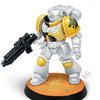
From the album: Fighting Furies Chapter
-
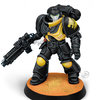
From the album: Fighting Furies Chapter
-
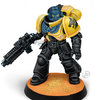
From the album: Fighting Furies Chapter
-
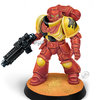
From the album: Fighting Furies Chapter
-
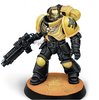
From the album: Fighting Furies Chapter
-
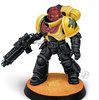
From the album: Fighting Furies Chapter
-
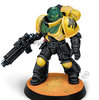
From the album: Fighting Furies Chapter
-
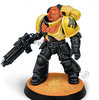
From the album: Fighting Furies Chapter
-
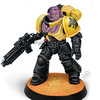
From the album: Fighting Furies Chapter
-
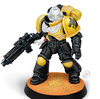
From the album: Fighting Furies Chapter
-
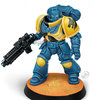
From the album: Fighting Furies Chapter
-
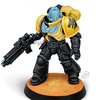
From the album: Fighting Furies Chapter
-
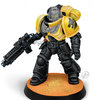
From the album: Fighting Furies Chapter
-
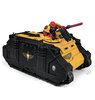
From the album: Fighting Furies Chapter
-
'SOVA NOCTIS' The Space Owls Chapter, or the ‘Sova Noctis’ as the warriors of the chapter often refer to themselves, are a non-codex compliant chapter of space marines. Inheriting the Gene-Seed of the Raven Guard’s Primarch, Corvus Corax, the Space Owls are supernaturally stealthy warriors who excel in stalking their prey, then unleashing sudden ambushes and devastating close quarter assaults. Links for PDF Download MEGA Bolter&Chainsword Name: ‘Space Owls’ or the ‘Sova Noctis’ Founding: Unknown - suspected Unstated Founding in M36, sometime after the climax of the Reign of Blood Primarch: Corvus Corax Primogenitor Chapter: Unknown - suspected Raptors Chapter successor Successors: None Chapter Master: Davor Venatus – presently elected ‘Warleader’ by the Chapter Conventa Fortress Monastery: Former Age Dark Orbital Prison-Labour Facility renamed the ‘Hollow’ Homeworld: Umbra Minor Designation: Feral World Gravity: Near Earth Standard Temperature/Climate: Temperate and Cold, Volcanic Equatorial Zone Population: Unknown – suspected high thousands Planetary Governor: Chapter Conventa - assembled council of Chapter Captains and Specialist Chamber Masters System: Stolas Sector: --REDACTED-- Segmentum: Tempestus Tithe Grade: None - Adeptus Astartes World
-
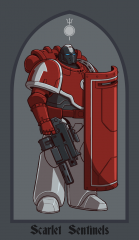
From the album: Miscellaneous Images
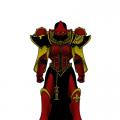
A piece of art work I had commissioned from Blazbaros on DeviantArt (as part of his Chapter Approved 2: Approved Harder multi-piece work), depicting a member of my British Redcoats-inspired DIY Chapter from the Liber Cluster thread, the Scarlet Sentinels. -

From the album: Nova Hawks
-
-Except from Administratum database: Index Astartes- -Clearance Level: Inquisition- -Access: Granted; Limited- The Praetorians (Chapter) The Praetorians are a Chapter believed by the Imperium to have been created in the Thirteenth Founding. They are noted for daring strikes at the heart of the enemy and precise disruptions of enemy infrastructure. They have been declared Lost twice and have been brought to the brink of annihilation on innumerable occasions, but have endured due to the resourcefulness and pragmatism of the Astartes. Colours and Chapter Symbol http://i42.photobucket.com/albums/e319/Kelbeef/Praetoriantactical-1.jpg http://i42.photobucket.com/albums/e319/Kelbeef/ChiRho.jpg Origins Records Lost The early history of the Praetorians has been lost to all but themselves. This is not an uncommon occurrence, especially for Dark Founding Chapters, but also due to the Age of Apostasy, which resulted in the loss or destruction of many records. The loss of records regarding the Void Stalkers Chapter and its demise may not have been caused by the Age of Apostasy, but rather a result of deliberate intent. It is believed by members of the Ordo Scriptus that only one Chapter was involved in their destruction and that the Chapter was the newly-formed Praetorians. Solid evidence still eludes them, but why this would be the case remains to be discovered. They suspect that the revolt was a much more serious affair than the limited Inquisitorial reports suggest. Like all of the Chapters founded during the Dark Founding, the reason for their founding have either been deleted from Imperial records or have been lost in time. The only hint to the reason being an early incident regarding the destruction of the renegade Void Stalkers Chapter not long after the Praetorians Founding. The records of the forces involved in the conflict do not name the Astartes Chapter that was present, but the Praetorians own records state they were involved in the conflict. The equipment and fleet of this 4th Founding Chapter vanished after this event, with only past Gene-Seed tithe and scant records of their past remaining to substantiate their existence. Homeworld Byzantium is a Feudal World that is located in the centre of a major cluster of systems that form the Byzas Subsector. Aside from the period which trapped the Praetorians in the Sector it is one of the few relatively safe routes for Warp travel in the Northern Segmentum Obscuris. It is a planet where fortified city-states and republics constantly rise and fall across the habitable regions of the planets equator. The planets population is focussed on the main continent, with a large inland sea where the most powerful city-states and republics reside along the coast. This inland sea is dotted with large volcanic islands, the home of port-cities and pirates. This sea is almost divided by a peninsular into two seas. Historically, the city-state or republic who controlled the city built on the peninsular was the most influential (and wealthy) on the planet. The Byzantines have a classical warrior culture, with the greatest ambition for every boy being to be granted command of their city-state or republics military. However soldiers are almost useless against the sophisticated fortifications of the major towns and cities on the major continent. The generals must rely on subterfuge, sabotage and assassination to allow their armies any chance of occupying these fortresses. As such, each State and Republic have extensive spy networks, as well as highly trained assassins that are recruited from orphans as soon as they can stand to be brilliant, but silent killers. These methods are the only way to have any chance of taking these fortresses without destroying the military, as losing excessive numbers of troops will result in the generals own rapid replacement and disappearance. The population is renowned throughout the Sector as ruthless and cut-throat, happy to murder anyone if it would help to improve their social status. The population is therefore constantly fighting each other, either for the honour of their city-states and republics or for social promotion. As such a strict code of honour has been necessary in the prevention of assassinations, with no-one allowed to go within an arm's length of each other. This has resulted in forging a scheming, deceptive and politically-minded population, very happy to get their hands dirty but also very good at not being caught doing so. To rule in the City-States or Republics is to live a hard and fast existence, with the entire nobility constantly looking for ways to gain greater privileges, usually via a well-placed knife in the dark. The Byzantines view the Praetorians the same way they view each other; with great suspicion, but with a general acknowledgment that their presence provides long term protection against a Galaxy of horrors. Finding a population with similar ideals that the Chapter upholds, the Praetorians established their Fortress-monastery; Castra Praetoria. The Fortress and city that surrounds it is situated on the peninsular which forms a bottleneck of the major inland sea, allowing the occupant of the city to control all trade between the major city-states and republics. The location was formerly controlled by the rebels of the planet when the Praetorians arrived, and thus received their highest level of attention. Castra Praetoria is now viewed by the Byzantines as a reminder of who holds supreme power over the population, but also of the glories and majesty of the Imperium. Early HistoryThe Praetorians built a reputation as a ruthless fleet-based Chapter, famed for their flexibility and on destroying their opponent's leadership structures rapidly. The first know Imperial record of the Chapter in action being the cleansing of Nerus, a rebel Forge World in the Segmentum Obscurus. In this they won great renowned for their rapid assault on the Ad Mechs headquarters early into the campaign, disrupting the rebel Skitarii legions, resulting in a fast conclusion and surrender of the rebels. Prior to this, there are Imperial reports that suggest they took part in the conflicts revolving around the Age of Apostasy and Plague of Unbelief. Another notable campaign in their early history was a crusade into the Halo Stars region. They wished to bring the Halo Stars region into the Imperium, and hopefully re-discover lost human colonies. Here they lost contact with the Imperium for two centuries, only to resurface below half-strength to declare only the dead reside in those stars, giving no other explanation for their absence or heavy losses. The reason for abandoning their fleet-based past was due to the events now remembered as the Pacification. The Praetorians were requested by Lord Solar Theodosius to spear-head the assault on the Byzas Sector; only infamous for being a hotbed for Xenos, rebels and pirates on the Northern edge of the Galaxy. The campaign was a drawn out affair due to the sheer number of different rebel factions, but ended with great success for the Imperial forces. However during the campaign, the Chapters Librarians and Astropaths felt great turbulence in the Warp, which was confirmed by a Warp storm erupting into existence, engulfing the entire sector, cutting them off from the rest of the Galaxy. Undaunted, they continued their mission until completion. This period of isolation from the Imperium was to last for over a Millennia. What exactly transpired during this period of isolation, just like the Halo Stars incident remains a complete mystery to the Imperium, and is never openly discussed by this reserved Chapter. Upon the Warp storm abating, the Inquisition moved into the Sector and assessed the Chapter. Finding the Chapter to still be completely loyal despite their isolation from the Imperium, the Inquisitors recommended that the Praetorians be gifted the Byzantine System formally and charged with garrisoning the Sector. This the Chapter were granted and to this day the Praetorians now garrison one of the few reliable routes through the Northern reaches of the Segmentum Obscuris. Since the end of their isolation, to continue their tradition as a fleet-based Chapter the Prefect Heraclius started a two-Company crusade to last for a century a time. This has resulted in their involvement in conflicts all across Imperial space, but in particular the conflicts surrounding the Eye of Terror, including the Gothic War. Details of the conflicts these Crusades fight in are fragmentary at best, at worst result in the disappearance of two whole Companies for a whole century before returning to Byzantium. Recent History Centenary Crusade The Chapters past is a strong source of pride for the Praetorians, and their past as a fleet-based Chapter is of particular importance. Indeed if it was not for the fact that they were granted the planet and had resided among their population for over a Millennium, they almost certainly would have taken to their old ways again. They still retain a particularly large fleet, alongside the Imperial Navy stationed in the Subsector. To not be found idle, each Century two Companies from the Chapter, alongside the entire Scout Company take part in a Centenary Crusade. In this they feel they can send aid to other Sectors, or even different Segmentum when the need is particularly dire elsewhere, such as during the Macharian Crusade, and also the ensuing Heresy. The greatest threat to the Byzas Sector in the last century was a revolt against Imperial rule, believed to have been instigated by the Alpha Legion two solar years after the Justinian Plague ravaged the Sector, resulting in the death of the Guard Stratagos Justinian. Initial conflict led to substantial losses, mainly due to the rebels hitting simultaneously on many different key planets throughout the Sector, which overwhelmed the Praetorians and Guard Regiments. Captain Apollyon of the 3rd Company was elected to the position of Prefect, mainly due to his Company getting results against the uprising. The Prefects more patient hit and run policy, designed to probe the rebels bases for weaknesses soon put the rebels onto the back-foot. This resulted in a swift conclusion to the conflict, however in the final days of the campaign, the Alpha Legionnaires escaped the battle and the Sector. In the final years of the M41, the Praetorians have been charged by the Ordo Hereticus and Xenos with the pacification of the neighbouring Pergamus Sector, since it has largely fallen into rebellion. Upon hearing that this rebellion is fronted by a Chapter located in the Sector, Prefect Apollyon has issued the mobilisation of six of the Chapters Companies with the intention of destroying the rebel Astartes in this Sector, supported by the regiments of Guard raised on the planet Thassalos, the other inhabited planet in the Byzantine system. At the same time, as is tradition within the Chapter two Companies are on a century long Crusade. This is a tradition to remind the Praetorians of their past as a fleet-based Chapter. Currently the IV and V Companies are en-route to the Eye of Terror to help the desperate defence of the Cadian Gate from the 13th Black Crusade. Timeline M36 Early M36 - War of Brothers: The Praetorians records state involvement in the renegade Void Stalker Chapters destruction. All Imperial records remain classified regarding the conflict. Early M36 - Age of Apostasy & Plague of Unbelief: Conflicting reports suggest Praetorians took part in these conflicts. 516.M36 - Nerus Rebellion: Forge World Nerus revolts, Praetorians commit the II Company. Rebel leaders killed in there first assault. First known engagement of Praetorians to the Imperium. M37 209-513.M37 - Halo Crusade: Entire Chapter deployed to search the Halo Stars for human occupation. Contact is lost with the Imperium for two centuries; Chapter declared lost 342.M37. Praetorians re-emerge from the Halo Stars with only four Companies remaining. Contact re-established with Imperium. Praetorians report that the Halo Stars are only inhabited by the dead. Despite the losses, they immediately offer aid to the Iron Knights Chapter, with their howeworld under siege by an unknown Xenos threat. 550-560.M37 - Occlusiad Wars: Chapter played some part in the war against the Apostles of the Blind King. Exactly what role remains a mystery. M38 101.M38 - The Watch: Chapter spends several centuries patrolling the Eye of Terror, aids in the defence during 9th Black Crusade. 877.M38 - The Pacification: Lord Solar Theodosius requests Praetorians aid in purging the Byzas Sector. When the campaign is near completion, a Warp storm erupts, trapping Imperial forces in the Sector for over a Millennia. Declared Lost to the Imperium. M39 M39 - Insolation: The Chapter is not seen or heard from for the entire M39 due to the Warp storm. What transpires in the Sector remains a mystery to the Imperium. M40 131.M40 - Isolations End: Warp storm abates, and reveals the Praetorians in control of the Byzas System. Formally gifted Byzantium as a Homeworld for remaining loyal. 139.M40 - Crusaders Legacy: Prefect Heraclius declares century long fleet action on the boarder of the Eye of Terror. The V & VIII Companies are the first dispatched. 619.M40 - Wraagh! Gorgotha: Ork invasion sweeps the Byzas Subsector. It is halted and crushed on Byzantines moon, Constance II, but not before the II & IX Companies were wiped out. M41 139.M41 - Gothic War: Companies III & IV take part in the Gothic War against the Despoiler. Heavy losses suffered during the battles in the Schindlegeist system. 979-981.M41 - Insurrection: Revolts break out all across the Byzas Subsector, two years after the start of the Justinian Plague. Heavy initial losses. Captain Apollyon declared Prefect. Tide turns against the rebels. Finally beaten above the planet Megara, but Alpha Legion cell responsible escapes. 997-present day.M41 - Pergamus Purging: Beginning of a crusade against the Pergamus Sector, after it fell to revolt and xenos invasion. Conflict on-going. 999-present day.M41 - 13th Black Crusade: IV & VI Companies dispatched to aid in the defence of the Cadian Gate. Gene-Seed The Gene-Seed is stable and exceptionally pure, with the only mutation being to the Occulobe, causing the iris of all Marines to turn orange or red. The Neophytes produced by this Chapter are renowned for their relatively rapid development into Astarte form, and the quality of the Marines that are produced. This is at complete odds with the Praetorians claimed descent from Corax, the Primarch of the Raven Guard, with a Gene-Seed that is known to be deteriorating. As such, there Gene-Seed has been analysed on numerous occasions by the Adeptus Mechanicus. Their findings have publicly concluded that the Gene-Seed is indeed descended from the Raven Guards, but the actual reports have never been made available. The Raven Guard themselves have never acknowledged the genetic link to the Praetorians. Whether this is because they just do not want any link to be known, or because they do not believe there is a link remains a mystery. Beliefs Like most Astartes, they do not view the Emperor as a God, but as the greatest example of Humanity, a pinnacle whose example all should strive towards. As with most Chapters who share this view, this puts them at odds with the Ecclesiarchy, but there is little ill-will between the two organisations. They maintain strong contacts with the Mechanicum, despite finding the worship and hoarding of technology distasteful. Reports suggest that the Praetorians secured a working STC in their reclamation of the Byzas Sector and gifted it to the Mechanicum upon the end of their isolation. These reports remain unsubstantiated, but it would explain there armoury being particularly well-stocked even after extensive periods of isolation. The Praetorians have always been renowned throughout the Imperium as being ruthless and efficient, even before their isolation. Recruiting from the Byzantine population has only heightened this sense of identity and their secretive nature. They were greatly influenced by the Chapter Master Scapula, who adopted Byzantium as there Homeworld, and with it adopted many of the Byzantines cultural practices, such as the Byzantine code of honour and the local language. Organisation The Praetorians broadly follow the tactics presented in the Codex Astartes, though like the Raven Guard they do not see the Codex as infallible and emphasise more flexibility in interpretation to suit their own fighting preferences. The Chapter deviates from the Codex in the structure of its Companies; most notably that there Battle Companies have there own Veterans. The I Company are specialised in boarding actions, so still maintain the Tactical Dreadnaught Armour and most of the Centurion War suits, though its members are not considered "Veterans." The X Company is a standard Scout Company, however when the Neophytes are close to completing their training and development they are selected by a Company to finish training alongside there future Battle Brothers depending on their mentality and skill set. This is a legacy of their isolation, with all Companies being required to fight on multiple planets and systems with no hope of outside support. To honour their past as a fleet-based Chapter, two Companies are launched into a Century-long crusade which has seen the Chapter fight all over the Galaxy. The two Companies selected also take the Scout Companies entire collection of Neophytes with them to maintain there numbers during the Crusade, meaning that once every Century the X Company has to be completely replaced with fresh recruits. Titles also differ from Codex Chapters, the Chapter Master being referred to as the Prefect though their function is usually identical, other titles for Codex units are referred to by the Byzantine languages interpretation, such as the Honour Guard being the famed Varangian Guard. The Kataphraktos make up the land vehicles of the Chapter, including Bikers, tanks and Land Speeders. Recruitment Each Company is responsible for completing the training of Neophytes. This is done to allow the Companies to focus on there specialty, and recruit appropriately. As the population of Byzantium is in a state of constant war among themselves, they make for brilliant recruits for the Astartes. Those that reside among the city-states where most recruits originate from, are trained as soon as they are able to fight. The only time the Byzantines will trust another being when they are marching to war together. Hypnotherapy is only utilised to ingrain trust for their fellow Battle Brothers to temper the populations cutthroat nature. The most notable quirk of there recruits is the speed with which they mature into their Astartes form, and the individual quality of the neophytes. The reason for these quirks are unknown to all outside of the highest ranking members of the Adeptus Mechanicus considering the Chapters claimed descent from the XIX Legion. Combat Doctrine The Codex Astartes is viewed with high regard by the Praetorians, even if they do not follow it to the letter. They see the Codex as a great guide, but not infallible and thus open to interpretation and change if the situation demands it. Many speculate this unpredictability originates from there conflicts with renegade Chapters and Traitor Legions, who are either ingrained with the teachings or have experience fighting against its teachings. The Praetorians put greatest emphasis on eliminating command and supply structures, resulting in the rapid collapse of the opposing military. More emphasis was put on this maxim during their periods of isolation, where they had no hope of reinforcements or resupplies and therefore had to plan every use of resource with meticulous detail. Thus their attacks initially involve stealth and reconnaissance, followed by rapid insertion of forces to key positions. When on the back-foot, they utilise sorties, hit-and run tactics, though this is usually intended to be a precursor to getting back on the offensive. They are known to have the uncanny ability to hit an opponent where they are most vulnerable, which is achieved through the diligent work of their Scouts. The Praetorians take the lessons they learn while Neophytes very seriously, allowing them to approach an enemy without alerting them. Usually the first moment the enemy notices the Praetorians is the flash of their Bolters at close range. Equipment Due to their periods of isolation from the Imperium, the Praetorians do not count on being resupplied for long periods of time. This has resulted in the recycling of armour, weapons and vehicles, and with the loss of most of their Land Raiders. Only a single Land Raider Redeemer, Byzantines Flame is still in service. The Prefect himself must sanction its use; such is its importance to the Chapter. Notable Members of the Praetorians Prefect Apollyon - Current Chapter Master, formerly Captain of the III Company. Ended the Cultist insurrection in the Byzas Sector, currently leading the Pergamus campaign. Known for being calculating, patient and resilient; he was seen as the best option for leadership during the insurrections. Prefect Heraclius - Former Chapter Master. Began Century long crusading tradition after Isolation period. Chapter Master Scapula - Former Chapter Master. Reorganized the Chapter after the Pacification events. Codicier Garro - Librarian, earning distinction in the 13th Black Crusade. Notable Elements of the Praetorians Megara - Flagship and former Fortress-monastery. Details as to when the Praetorians acquired this Battle-Barge is unclear, it was first sighted in the Nerus Rebellion. Byzantines Flame - Land Raider Redeemer, earned distinction during the period of Isolation in the Byzas Sector. Blade of Valens - Polearm that dates back to the Chapters campaign in the Halo Stars, this has been the Prefects symbol of office since there return to Imperial space. Motto Per ardua. (Through adversity).
-
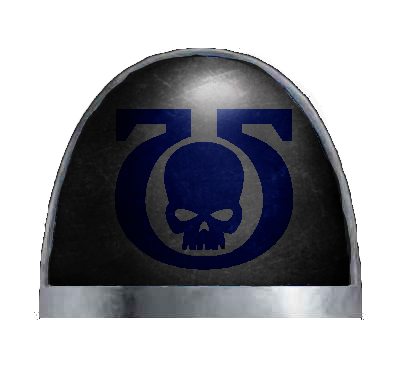
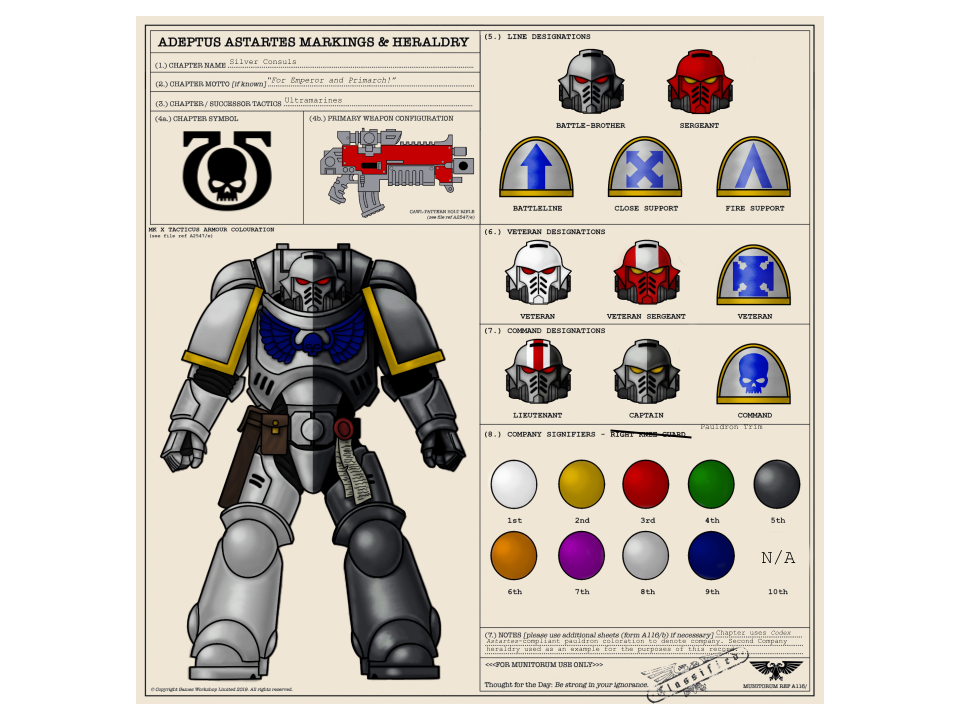
Origins: The Silver Consuls are a Chapter of the Adeptus Astartes raised during the 25th "Bastion" Founding in the latter years of the 40th Millennium. Successors of the Ultramarines Chapter, the Consuls are distinct among other Chapters of their line in that they worship the Emperor of Mankind as a divine being. The battle-brothers of the Chapter are devout adherents to the doctrines and practices laid out in the Codex Astartes, cleaving closely to the culture and rich martial traditions of their progenitors. The Silver Consuls have been noted to be highly tactically flexible, capable of prosecuting war in all its forms and adapting as mission parameters dictate, but they have also exhibited a bias towards shipborne fighting and boarding enemy vessels. Aiding with these close-quarters engagements are specialized Assault Squads equipped with great ablative shields and power shortswords, known within the Chapter as Emissary Squads. With the advent of the Indomitus Crusade and the Great Rift cleaving the Milky Way into two, the Silver Consuls have received Primaris reinforcement and the means to produce this newer breed of warrior. However, the Chapter was a lower priority for reinforcement by the torchbearer fleets of the Lord Regent; the Consuls had recently rebuilt to almost full Codex strength following a campaign of crippling losses. As such, while the Silver Consuls gratefully accepted the gifts of Archmagos Dominus Cawl, Primaris-pattern Astartes are still a small minority in the Chapter, filling out support squads or serving as other specialists. Only recently have fully-Primaris battleline squads begun to appear within the Consuls' companies. Homeworld: Owing to their nature as a fleet-based roving Chapter, the Silver Consuls do not lay claim to a permanent homeworld. Instead, the battle-barge Argent Herald serves as the Chapter's fortress-monastery. Though it boasts the full complement of facilities, assets, and weapons that can be expected of an Astartes flagship, the Herald contains some minor alterations to better fit the needs of the Consuls. The ship's aft bears the Chapter's personal chapel, the Sanctum Consularis, which holds shrines to both of the primary loci of the Chapter's worship, and is far more ornately furnished than the comparatively spartan remainder of the vessel. Furthermore, though largely plain and unadorned, the halls of the Herald have rows upon rows of gently fluttering parchment seals hanging from the ceiling, given by battle-brothers who upheld oaths in battle. In addition, the grand hall of the ship is lined with the gladii of fallen officers, in memory of past heroes of the Chapter. Beliefs: The Silver Consuls proudly adhere closely to the traditions and culture laid out by their forebears, albeit with some notable exceptions. They unflinchingly obey the tenets and strictures laid out in the Codex Astartes, which they believe to be divinely inspired, and any perceived blasphemy against its words is punished harshly. However, this deeply Codex-reverent nature is coupled with the "Theoretical-Practical" strategic architecture espoused by their genefather and progenitor Chapter, permitting for a higher degree of tactical flexibility and lateral thinking than is commonly assumed. While the Consuls hold their heritage as a point of pride, they separate themselves from their parent Chapter in some ways. The first is that the Consuls have a marked sense of humility; they hold no arrogance for being scions of the Ultramarines, and view themselves simply as another Chapter in a galaxy of unknown hundreds. This leads them to be more diplomatically inclined when interacting with other Astartes, though this has not held universally true for every Consul across the Chapter's lifetime. Furthermore, this diplomatic tendency is not always extended to mortal humans; the Consuls do value human life in a largely similar manner to their parent Chapter, though campaigns early in the history of the Consuls dealing with recidivist human forces have led them to approach any dealing with mortals with a sense of due caution. Additionally, the Silver Consuls are among those rare followers of the Imperial Cult within the Chapters of the Adeptus Astartes, slaying the foes of humanity in the names of their divine God-Emperor and their demigod genefather, Roboute Guilliman. Their Chapter cult emphasizes piety and measured wisdom, with battle-brothers spending the eve of battle in prayer and deep meditation, and scholarly study of the holy Codex Astartes is encouraged instead of blind adherence to its every letter. The warrior-monks of the Silver Consuls do not fling themselves into battle with the frothing fury of half-blind zealots; instead, they allow their faith to temper their hate into a honed blade wielded with skill and precision-shaped by centuries of experience. Organization: As befitting a Chapter of adherents to the Codex, the Silver Consuls' structure holds closely to the tenets of that great text. The Chapter maintains the standard structure of ten Companies of ten squads of ten Astartes, following the traditional pattern of veteran, battle, reserve, and Scout companies. The Chapter also makes use of all the traditional ranks found in a Codex Chapter, incorporating the use of Lieutenants after the creation of the Nova Codex Astartes. Ranking officers in the Chapter also wear a power gladius as a half-ceremonial sidearm, as a form of homage to their heritage. Furthermore, with the introduction of Primaris Astartes following the opening of the Great Rift, Chapter command elected to instate the rank of Judiciar as a parallel office to that of Chaplaincy, instead of the former being a stepping-stone towards the latter, with both roles still falling under the purview of the Reclusiam. Additionally, the Chapter uses all of the different squad variations outlined in the Codex, though they have been known to field Assault Squads equipped with bolt pistols, power swords, and towering ablative shields when boarding hostile spacecraft or pushing through close-quarters environments. It is speculated that these squads are a less resource-intensive substitute for Terminator squads when such assets are unavailable or unwise to deploy. Senior warriors with extensive experience fighting as an Emissary will be inducted into the ranks of the elite Platinum Host; these veteran Astartes clad in void-hardened armor are often seconded to the honor guards of Captains. Some Imperial scholars have also noted that these squads also bear more than a passing resemblance to the Praetorian Breacher Squads fielded by the XIII Legion of the 31st Millennium, though whether this is by design or sheer coincidence will likely never be known. Combat Doctrine: The Silver Consuls are highly tactically flexible, capable of prosecuting war in any of the disparate manners that can be expected of the Space Marines. The venerated Codex Astartes guides many battlefield decisions. However, they have come to exhibit certain preferences in their approach to battle. In the decades and centuries following their inception, the Consuls participated in a string of engagements against renegade and heretic Human forces; separatist uprisings, underground cults, turncoat Astra Militarum regiments, and more. As a result, the Chapter gradually came to appreciate the value of shows of force, putting the fear of the Emperor into those who had spurned His grace. Some proponents of these strategies have referred to them as "shock-and-awe warfare" or "high-visibility rapid assault"; detractors of the Chapter have less charitably described them as "terror tactics". Semantics aside, these methods of warfare have been proven undeniably effective, with small task forces of battle-brothers disrupting enemy ranks and paving the way for a larger assault. Furthermore, battlefield intelligence has reported sightings of Primaris Reiver Squads clad in the Consuls' black and silver in recent years, indicating this style of warfare is still evolving within the Chapter. Additionally, the Silver Consuls are notably proficient at boarding actions and close-quarters combat aboard voidcraft. This is partly a result of necessity; the Chapter's nomadic nature, unbound from a specific homeworld, means that threats often find their way to them while sailing the boundless blackness of space. As such, the Consuls were almost forced to master the arts of boarding and breaching, with small teams of Astartes crossing the open void to embed their boarding craft in the hull of a hostile vessel, allowing it to disgorge its heavily armed and armored cargo. Passing through a breach point first has also come to be seen as a great honor within the Chapter, though it should be noted that the Consuls' relatively limited supply of Terminator armor makes these engagements highly dangerous. The Consuls have adapted with deliberate wargear selections meant to bolster survivability and combat effectiveness in the tight confines of ship corridors, from shields and power weapons to chainfists and meltaguns. Some reports even allege that Silver Consuls boarding parties have deigned to wield chainaxes on rare occasions, though these are largely unconfirmed. Furthermore, campaigns often pull Chapter vessels far away from forge worlds or other resupply points, so the Consuls have occasionally been known to seek out derelict craft and harvest equipment. However, This practice is deeply unfavored by the Chapter and is only employed in dire circumstances. Consuls salvage parties pray for their Primarch's benediction before boarding their craft, and are often accompanied by a Chaplain as well. Geneseed: For all intents and purposes, the Silver Consuls are a successor of the Ultramarines Chapter, their gene-seed being markedly stable and free of mutation. However, while their lineage can be easily traced back to the Ultramarines, some rumors persist about the Consuls being more directly descended from the Novamarines. In all likelihood, these rumors are due to the Chapter's possession of an ancient collection of war treatises allegedly dating back to the time of the Second Founding. Battle Cry: "For Emperor and Primarch!"
- 1 reply
-
- 1
-

-
- DIY Successor
- Ultramarines Successor
- (and 2 more)
-
Well now, this had been a very, very long time since I posted an IA here for you Liberites to feast over and tear to pieces. () But I am back with all of this 13th Black Crusade nonsense going on and figured I should bring back an IA from the Archives and see if I can refine and complete it anew. Some of the old hands may remember these guys. Anyway, onto the article! Decimators My brothers, we live in a universe of apathy, greed, corruption and power. Xenos attack our Imperium’s every front and heretics attack from within. Humanity is weak against this perpetual fight of survival, we see it in their flesh and in their actions. They require protectors that reside above such weaknesses of the flesh, and in this nature we serve. For we are the Decimators, the sons of the iron fisted Ferrus Manus, pure in thought and action. We are the hammer that strikes against the anvil of war. We cleanse the xenos, purge the heretic and eradicate all who attempt to destroy us. May our enemies fear our name, for we are their destruction! - Chapter Master Fernos during the siege of Garosh. The Decimators have a long history of executing justice upon the enemies of the Imperium. Forged from the gene-seed of one of Ferrus Manus’ successor chapters, the Brazen Claws, the Decimators were raised up to be a great hammer to strike against and annihilate the enemies of mankind. Created during the 17th founding, the young chapter was trained in the Segmentum Obscurus by their parent chapter in battles against the Eldar and Orks. Captain Anton Grevius of the Brazen Claws’ 3rd Company was bestowed the honour of becoming the leader of a new chapter, his blunt and direct style of warfare being key to creating the Decimators’ battle doctrine over its growth as a chapter. After just over a century of fighting under their parent chapter’s tutelage, the Decimators had built up their numbers and resources to become a fully-fledged chapter with the strength of four Companies. To fully declare the chapter independent, Chapter Master Grevius declared a campaign against Ork Warboss ‘Eadkruncha’s building Waaagh!, which had begun to plague the Imperial worlds of the Nexus Ring. Leading his chapter as an example of heavy hitting annihilation, Grevius and his Decimators destroyed ‘Eadkruncha’s Orks with devastating ease. This doctrine grew into the Decimators’ most favoured method of war, using overwhelming brute force to utterly annihilate a foe. Striving for perfect eradication, the chapter would not declare their most righteous work done until every last enemy they faced had been destroyed. Campaign after campaign, the Decimators proved their aptitude and skill as the Emperor’s avenging angels of war. But, like all chapters of the Adeptus Astartes, the Decimators also learnt harsh lessons during their history which would shape their outlook on warfare and the Imperium. The greatest lesson being the loss of their homeworld, Kairus at the hands of those who were once allies. The Desolation of Kairus Chalice Knights The Chalice Knights descended from the geneseed of Sanguinius’ Blood Drinkers. The Decimators had worked alongside them in a number of key campaigns, within the Segmentum Obscurus against a variety of foes, both Xenos and Chaos. The two chapters held a close bond for over two millennia prior to the Desolation, aiding each other when required and openly sharing their knowledge of current threats within the Segmentum Obscurus. The Chalice Knights’ betrayal, falling to Chaos and to Khorne, cut the Decimators deeper than any blow an enemy could inflict, leading to great changes in the outlook of the sons of Ferrus on the inhabitants of the Imperium of Man. The fall of the Decimators’ home planet, referred to as the “Desolation” occurred at the start of the 874.M37. A large force of the Chapter, including a large amount of its command staff were engaged in the retaking of the Calanus Gulf from an Ork incursion, leaving the Fourth, Seventh and Tenth Companies to guard and protect their homeworld of Kairus. When the expedition force returned from their campaign, they found their home system to be desolate, Kairus itself scoured clean of all life. As the stunned and battle-weary fleet searched through the wreckage of a space battle above Kairus, it was clear that their planet’s defenders were annihilated by Space Marines. It was soon identified the force responsible were those whom Decimators had once regarded as close allies. Discovering the distinctive chalice symbol with an eight-pointed star behind it upon shattered enemy ships, it was insurmountably clear to the Decimators that the Chalice Knights had turned their back upon the Imperium. Stunned and close to despair, Chapter Master Harmun ordered his Chapter to investigate the ruins of the Decimators’ fortress monastery. Mercifully, the chapter’s geneseed vault was found to be left intact, its hidden location deep underground protecting the vault from the destruction above. For the three companies guarding Kairus however, the same could not be said; each and every corpse found had been butchered and robbed of their geneseed. Enraged further by this callous act, Harmun declared the Decimators would engage in a crusade to find and eradicate every trace of the Chalice Knights from the galaxy, avenging the loss of their homeworld and to bring justice for the desecration of their battle brothers. Harmun then declared that he would slay the leader of the Chalice Knights personally to truly eradicate the taint of the renegades. Reporting the heresy of the Chalice Knights and recovering whatever they could from their planet, the Decimators began their crusade to purge all traces of the now traitor Chapter. Over the next century, the Decimators searched for and destroyed any trace of wherever the Chalice Knights had been with elements of the Ordo Hereticus in tow, baptising their crusade as the ‘Cleansing Hunt’. The now renegade chapter had left increasingly frenzied assaults upon planetary systems they found, as they began aligning themselves further to the Blood God, Khorne. The two former allies, now hated enemies, eventually faced each other in full force, ironically, within the Calanus Gulf, where the Decimators had been deployed when Kairus fell. The controlled, righteous fury the Decimators brought to bear in the void and upon the surface of a number of worlds eventually overwhelmed and defeated the bloodthirsty and frenzied attacks of the Chalice Knights. The Chaos renegades were dealt a final blow upon the planet of Grimhold, where Chapter Master Harmun finally faced off against the Daemon Prince that now led the once honourable and loyal Chalice Knights. Engaging each other in singular combat as the battle raged around them, Harmun eventually felled the Daemon Prince with his mighty hammer, ‘Ironfall’ at the cost of his own life as the Daemon Prince speared its warped blade through the Chapter Master’s hearts in a final, hate filled strike. The Huntsmen After the sundering of the Chalice Knights on Grimhold, a handful of Decimators felt that any remnant of their enemy’s existence was a stain upon the galaxy to be cleansed. Requesting that they band together as a group, whose sole purpose was to destroy all remnants of the Chalice Knights, the new Chapter Master of the Decimators acquiesced to their request. Naming themselves the Huntsmen, this small group of twenty Astartes headed for the Eye of Terror, intent on finding any trace of the Chalice Knights and destroying it utterly until nothing was left of their existence. Each Huntsman altered their armour’s colour by replacing the red of their helms, chest Aquilas and gauntlets with an all consuming black. Contact with this band of Decimators was lost a decade after they had reached the Eye of Terror. The fate of the Huntsmen is unknown to the chapter, some believing they died as glorious martyrs, whilst others hold the belief that the Huntsmen still fight within the Eye of Terror, eradicating all traces of the Chalice Knights. The Decimators keep a constant vigil for any sign of their crusading brethren, should the Huntsmen ever return with their deed done and oath fulfilled. As the Daemon Prince was cast back into the warp, the few still sane remnants of the Chalice Knights began to fall back towards the small rift the death of their master had created, as the malefic body was sucked back into the realm of Chaos, knowing that the battle was lost and more slaughters awaited them in the future. With the battle over, the Decimators felt their duty to destroy the Chalice Knights had been done, the traitor Astartes having splintered into small warbands as they fled into the warp rift before it closed. However, the Decimators were dismayed to discover that the body of Chapter Master Harmun was lost to them, having been sucked into the warp with the Daemon Prince he had felled. All that remained of Harmun was his thunder hammer, ‘Ironfall’ and his broken helm, which had been knocked aside in the battle earlier. Reverently recovering these items of wargear with pride for Harmun’s achievement in fulfilling his oath, the Decimators returned to Kairus to choose their new leader and prepare for their next action. Having acted as a fleet based chapter whilst hunting for the Chalice Knights and seeing its benefits, the newly appointed Chapter Master Kell began preparations for the Decimators to become a permanent fleet based force. The High Council of the chapter decided that Kairus’ now desolate surface was a perfect place to train the recruits they would need in future and their Fortress Monastery was to be used a crypt for their fallen. As the Decimators regained their strength and reflected upon the horrific events of the Desolation and the Cleansing Hunt, the chapter grew an increasing wariness of those descended from Sanguinius geneseed. The chapter became convinced that the flaws within The Blood Angels’ geneseed were a major weakness that could be utilised by the ultimate enemy of the Imperium. This wariness also flowed on to a mild distrust of other chapters who have descended from what the Decimators regarded as “flawed and impure” geneseed. In more recent centuries after the Desolation, the Decimators have faced the forces of Chaos repeatedly, seeking to purge any trace of its twisted mutations and weaknesses from the Imperium’s worlds. Their location within the Segmentum Obscurus has also seen the chapter face the numerous Black Crusades the Despoiler has unleashed since their founding. The Decimators have always committed their entire chapter strength against the Chaos armies during these crusades. The greatest and most hard fought defence the Decimators participated in was the 12th Black Crusade, when Abaddon’s forces emerged into the Gothic Sector, close to the region the Decimators’ protect. The chapter suffered heavy losses, but their duty in cleansing the region of the forces of Chaos was achieved with the aid of their fellow loyal Astartes chapters and the further armies and Ordos of the Imperium. The Decimators have now developed their combat methodology to specifically counter the power armoured forces of the Traitor Legions. Beliefs Descending from the seed of Ferrus Manus’ Brazen Claws, the Decimators inherited the belief of the flesh being weak from their parent chapter. When a recruit is blessed with his black carapace, it is traditional the recruit also has bionics implanted into his body to ensure that he lacks weakness. The most common body parts that are replaced are the arms and hands, so that the initiates appear and feel closer to their Primarch and Legion of origin. As well as developing a wary mistrust towards chapters with mutated geneseed, the Decimators have grown to hold a far greater contempt towards what they regard as “impure” humanoids, such as the Imperial Guard’s Ogryn and Ratling soldiers. The chapter has been known to refuse to fight alongside any abhumans in a number of campaigns when possible. As a result of one infamous event; the Decimators are remembered with disgust by the Tarnus 12th Imperial Guard Regiment, after the chapter executed a large cohort of Ogryn from the 12th in the aftermath of their defeat on the planet Sarrim. The Decimators came to the conclusion that the impurity of the Ogryn had been one of the factors of the campaign’s loss. When the Inquisition was made aware of this incident by the Regiment’s high command, the Decimators were issued a warning by the Ordos. When a similar incident occurred 5 years later under similar circumstances, the Decimators were sent on a penance crusade in the far edges of the Segmentum Obscurus for three decades. The chapter still refuses to fight alongside abhumans of any kind, but the memory of their penance crusade by the Inquisition reminds them to keep their views in check, or they will suffer greater consequences for their actions. The Decimators see the Emperor as the greatest warrior in the history of mankind and that they should all strive to be warriors following the Emperor’s example. The chapter view their Primarch as being the great fabricator of the war machines of the Imperium and they believe that their wargear possesses the mark of Ferrus’ soul within the machine spirit. Thus, the Decimators revere every piece of equipment they possess, seeing it as a direct link to their gene-father. Since the events of the Desolation, the chapter have developed an enormous hatred for the dark armies of Chaos. On the armour of the Decimators, verses of loyalty and purity are embossed in gold script, to remind them that their belief in the Emperor is absolute and that they will remember to keep their perturbation towards what they regard as impure allies in check, lest they suffer the consequences. In the chapter’s ten year cycle, there are two great markings of remembrance; the first being the Feast of the Founding, where the Decimators celebrate their creation and it is regarded as a time to reflect on the past year’s events and their achievements and losses. The second event is the Night of the Heresy, where the chapter remembers the great betrayal of Horus and the ten legions that cast their oaths of loyalty to the Emperor into the dust, turning away from His light. It is during this time that the chapter claim their oaths of loyalty once more and they punish themselves for their actions over the past decade if they had sinned. The traditional punishment is that a fellow battle-brother takes a whip with lead ball bearings on the tails and the sinner is given 10 lashings for each sin they have caused, which is placed in a log over the decade and is called out during their punishment. Since the loss of Kairus and the turning of their brother chapter, the Decimators are even more stringent in choosing new members and their Librarians constantly examine their brothers for any sign of taint before, during and after a campaign. Organisation The Decimators follow the Codex Astartes with little deviation from it, bar some of the names in their rank structure. But the chapter’s battle brothers are encouraged to not follow the codex by the letter, focusing on their own knowledge and initiative. In terms of wargear, the Decimators notably rely heavily on Predator Destructors in lieu of the Annihilator variant, after losing a large amount of their Annihilators during the Gothic War. A larger amount of Vindicators populate their armoury than what is considered the norm, with each Battle Company proudly containing their own Linebreaker squadron. Land Raider Gladius The Land Raider Gladius is a rare variant of the mighty vehicle and six are known to exist within the Segmentum Obscurus. It consists of a twin-linked autocannon tank turret atop the Land Raider’s hull, with twin-linked heavy bolters on its sponsons and frontal turret. Troops cannot be deployed within the Gladius, due to the amount of ammunition needed to be stored, but it has proved to be an effective battle tank against masses of Orks and other xenos with light armour. Their use against power armour however, has not proven to be as effective, but the variant has stood its ground on more than one occasion during sieges and assaults against the forces of Chaos. The Decimators’ 9th Company withholds most of the extremely heavy and rare vehicles of the chapter. These include at least one of the Land Raider Terminus, Ares and Achilles variants. It is also known that the Decimators created a unique variant of the Predator and Land Raider chassis, as a result of two separate, vicious campaigns. The first being the Land Raider Gladius, created in M36 from the damaged remains of the Chapter’s Predator Destructors and a Land Raider Prometheus, during their fight against the Ork’s Goff clan. Four are known to exist within the chapter’s armoury, after the first Gladius proved its effectiveness against the Orks. The unique Predator variant created by the chapter is aptly named Predator Decimator. Created during the 11th Black Crusade by High Techlord Heran, the Techmarine built a Predator wielding a twin-linked autocannon turret with plasma cannon sponsons, its use against the advancing forces of Khorne’s forces, at the defence of the hive-city Brasshold. The tank proved to be lethal with its plasma cannons paired with the autocannon turret annihilating the power armour of the Chaos Marines. The variant has been adopted by a number of chapters the Decimators had fought alongside during and after the 11th Black Crusade, notably the Crimson Fists, Sons of Doom and the Swords of Orion. Recruitment Geneseed The Decimators use the seed of Ferrus Manus and there are currently no known mutations with their geneseed. The tithes with the Mechanicum have always been kept up to date, it is known for the Decimators to ask for their geneseed to be analysed more often, to ensure that it is as pure as it can be for the next generation of Astartes. Being fleet based, the Decimators recruit new warriors from a number of planets varying in their geography, including desert planets and hive worlds. The process for recruitment is one that begins with the hopeful aspirants being told that if they chose to join the Decimators, they would serve the Emperor and the chapter no matter what would happen. They are then taken off their homeworlds to the deathworld of Dermur, where the aspirants face the most gruelling and toughest challenges where failure means death or eternal slavery aboard the ships of the Decimators as servitors and chapter serfs, thus keeping the promise that the aspirants would serve the chapter and the Emperor. The first challenge is a great march through the mountain ranges on Dermur’s largest continent, a region filled with vicious predators that stalk the ridges of the mountains. Those who fall are left where they are and the survivors are picked up later by the sergeants to convert them into servitors for the chapter’s fleet of ships. Other challenges and tests taken include tests of faith and skill, such as the aspirants being required to defend themselves from fast approaching targets whilst answering questions from their tutelage, on the history of the Decimators and the legacy of their gene-father, Ferrus Manus. The second major test is one of combat expertise, where the initiates are scattered across the remains of Kairus’ surface, the now inhospitable land providing the perfect challenging environment. Each recruit is given a sword, krak grenade and a shield before being ordered to return to the ruins of the Fortress Monastery. Many initiates fail at this point, either by the harsh climate of the Decimators’ former homeworld, or from myriad of predators that still roam the harsh wastelands, but those who pass are taken to the crypts of the Decimators, still intact beneath the fortress monastery, to make the final test before the statues of the great fallen commanders of the chapter and of their Primarch. The initiates must chisel their name into the “Stones of Kairus”, placing their name alongside the many warriors who have served the Decimators over its history. When they have finished this task, the initiates are sent back to the Decimators’ flagship, the Divine Eradicator and become full members of the Scout Company, blessed with a bionic implant to bring them closer to their gene-father’s legacy. Combat Doctrine Battlecry The battlecry of the Decimators is commonly where the senior commanders shout “In the name of Ferrus!” and the rest of the chapter bellow in response “Hammer down the foe!“. In some cases, though the marines simply shout out the latter cry as they rally their brothers for a charge against the enemy. The Decimators are generally a codex-oriented chapter when it comes to their combat doctrine, but they have a tendency to use Devastator Squads and heavy weaponry more than their Assault Squads. The chapter do however use Landspeeders and Bike Squadrons often, utilising their speed to strike at an enemy whilst they are being bombarded by the heavy weaponry brought to bear. Due to their origins from the Iron Hands, the Decimators utilise a large amount of exotic and rare technological weaponry, such as the use of plasma guns and meltas being favoured in most engagements. The Devastators typically use the more exotic Lascannons and Plasma Cannons over their other options, having grown used to dealing with the heavy armour of Chaos Marines. Due to their constant battles against mechanised forces in offence and defence, the 6th squad of every Battle Company is regarded as the “Tank Hunters”, in which the squad is armed with melta weaponry. The squad is always attached to a heavily armed and armoured Rhino, ensuring that their mobility is at maximum to deal with any armoured threats quickly and effectively. The chapter excel at destroying fortified defences more than fighting in close quarter combat, but after a number of engagements against the forces of Khorne, led primarily by the remnants of the Chalice Knights, the Decimators have developed a unique fighting style for the frenzied attacks of the Bezerkers, the chapter’s developed method proving useful against the Ork menace. The chapter’s recent actions has seen them face an array of xenos, including the sadistic Dark Eldar and the ever marauding Orks, but their most common enemy is the forces of Chaos. As a result, many of the bolters and other weaponry of the chapter have been painted gold to reflect the Emperor’s light and have been anointed with holy oils, to ensure the purity of the machine spirit within. Thunder Hammers are the most common close combat weapon amongst the veteran sergeants of the chapter and the Assault Terminators commonly prefer the use of them over a pair of lightning claws. ++++++++ And there you have it! As always, any and all Comments/Critiques/Ideas are greatly welcomed, so I leave the floor to you all! Damn is it good to be home. Cambrius
-
(Part I) Chapter Datafile: Venerators of Korumani Founding - M.34 Progenitor Legion - Dark Angels Known Descendants - None Homeworld - Korumani III Allegiance - Loyalist Notable History The Venerators of Korumani Chapter was more commonly known simply as "The Venerators." The Chapter amassed a respectable battle record in the six hundred years of its existence, including the Paramon Crusade, the Vandressen Punitive Expedition, and the Defense of Ferotas IV. The Chapter is most well known, however, for sacrificing itself in order to ensure the defeat of the daemon prince known as “Doombreed” when that fell being led a bloody black crusade in early M35. Despite being descended from the Dark Angels Chapter, the Venerators of Korumani followed the dictates of the Codex Astartes quite closely and aren’t known to have deviated from that tome in terms of organization and heraldry as commonly followed by the other Unforgiven Chapters. In addition, there is no evidence that the Chapter maintained a close relationship with its predecessor during its six hundred year existence. Some speculate that the Dark Angels Chapter turned its back on the Successor on the basis of the High Lords’ decision to create the Venerators of Korumani despite the severe losses the Dark Angels had suffered during the Fourth Black Crusade of Abaddon the Despoiler. Livery The Venerators of Korumani wore silver armour. The Chapter badge depicted a black shield with a yellow winged lion passant in chief bearing a sword upright in one hand. Company affiliation was indicated by the addition of the company number in white at the bottom of the shield in the Chapter badge, an uncommon practice, but one within the broad interpretations of the Codex Astartes. Squad affiliation was indicated by the squad number in white upon the black squad badge, with the Chapter using the style of squad badges most commonly used by those Chapters that adhere to the Codex Astartes. When wearing tactical dreadnought armour, the Chapter badge was worn upon the right shoulder and the number upon the shield indicated the squad to which the terminator-brother belonged (since the Venerators of Korumani followed the dictates of the Codex Astartes and only allowed the trained veterans of the 1st Company to wear the rare tactical dreadnought armour). The veterans and officers of the Chapter often wore black tabards, though this practice was by no means universal. The winged lion image is used by kind permission of Mike Harpin. You can see more of his work at http://dribbble.com/cre8ivmike. I've been debating whether to post this in the Dark Angels forum or in Liber Astartes. In the end, I decided to post it within the Dark Angels forum because the Chapter was developed as part of the Brotherhood of Angels project and is posted as a continuance of that project. I will probably take the steps to link to it from the Liber Astartes forum later. As the "(Part I)" at the top indicates, there's more to come (wheels within wheels...).
-
Part One: Enter Caduceus The pirate frigate had first tried to flee, but the first time it had reemerged from the Immaterium, the green clad Astartes frigate had been only moments behind. Each time after that, there was one more Astartes ship than before. Seeing the uselessness of running, the pirates had put up stiff resistance, but could never have hoped to out maneuver so many ships. The way they moved, like one long segmented vessel, seeking to encircle the pirates in a death grip, the Space Marines appeared to treat the battle with disturbing leisure. Three times the hapless vessel tried to fire on the more predictable escorts in the coiling Astartes formation, but each time the lead frigate would strike in the opening with its own lasers, followed by a torpedo, and to change targets only resulted in a blow from another unattended angle, every salvo obliterating gun batteries until none remained. Anticipating another attempt to flee, the Space Marines ships fired on the pirates’ engines, and after a number of shuddering internal detonations in the ship’s aft it began to drift listlessly. Moments later a much larger vessel broke through the warp, a strike cruiser bearing that same heraldry, the serpent, winged and crowned. No sooner did it appear then it had launched a single Thunderhawk which streaked across the void and came to rest on the hull of the disabled pirate frigate, clamping down near one of the breaches left by a destroyed laser battery. A dozen Astartes descended the ramp, their leader a Marine in identical armor save for the gray tabard covering it and the gold coloring of his helmet’s radio spine, unlike the red on his brothers. Three Marines immediately broke from the group and made towards the aft of the ship. The remaining nine briefly surrounded the mangled hole left by a destroyed gun emplacement. Through the sparks that pierced the darkness they could just make out the shape of the torpedo that had punched through. Apparently satisfied, the Marine leading the squad lowered himself into the opening, pushing off the rim until his boots could lock onto the deck. As his brothers followed into the dark, he crossed silently to the nearest hatch leading toward the bridge. It appeared to have been sealed prior to the chamber’s decompression…unusual. Cocking his head toward the rear of the ship a vox crackle finally cut the silence among the Astartes. “Brother Lorens,” the voice was low, hardly more than a whisper, and chillingly smooth, “We’ve encountered a sealed bulkhead. They may have been prepared for the virus warheads. Have you reached the environmental systems?” The voice that responded was deeper, and coarser, but equally cold, “Negative Captain, ETA in thirty seconds.” “Very well,” returned the Captain, checking that the eight marines with him had fallen in, “it will take us more time to reach the bridge, and if they sealed any more bulkheads, we’ll likely meet resistance. Introduce the agent with a five minute time release, then meet us at the bridge.” “Yes, Captain Vitras,” the line died with the simple reply, and the Captain returned to the sealed hatch blocking their path. He gestured at the nearest Marine, who held a plasma rifle, stepping back as the weapon unleashed its blue fire on the door. The blast dissipated before the vacuum could throw it back in their faces, and when the initial mixture of smoke and atmosphere cleared, there wasn’t much left of the hatch. Streaks of atmosphere still pulled at the ragged edges of the opening as the corridor on the other side continued to depressurize, and moments later a limp form slammed through the opening trailing a spray of red. If the pirate hadn’t already been dead, he was now, the limply held mask in his hand too little too late now that he and his right arm were drifting slowly apart, the silent marines looking on approvingly. Vitras wordlessly stooped through the now crimson rimmed opening, eyes and helmet optics accommodating for the deeper darkness. The marines filled almost the entire corridor as they followed it deeper into the ship. They reached the next bulkhead almost without incident, but just as the plasma gun was about to do its work, lights flickered on overhead, and a blast door came down behind them. With a pneumatic hiss the hatch before them unsealed and burst open, autogun fire already spilling through. With no door on hand, Captain Vitras let roar his chainsword and tore through the wall to his right, finding sleeping quarters on the other side. Four of his men further back found doors on the other side of the corridor, while two more followed after Vitras. The brother bearing the plasma gun, and the brother behind him made no move, already in the act of carrying out the order that followed. “Cover fire!” Barked Vitras just as the bolter fire began, “Brother Viboras, to ash with them!” Vitras and his men leaned into the corridor to fire as one while a pair of plasma blasts streaked into the flashing gunfire that was the enemy. The volume of incoming fire immediately dropped, and as it did Vitras thundered back into the corridor, the bulkheads shaking with the collective pounding of his ceramite form and the renewed roar of the chainsword. The rest of the squad followed after, though all they really had time to see was the Captain surrounded by a halo of autogun fire and viscera as the chainsword arched and slashed, cleaving everything before it. Seconds later, the corridor was silent again except for the quiet dripping of blood both from the chainsword and the ceiling. Brother Viboras stepped up behind the Captain and could see that the autoguns had chinked away enough armor on his arm to expose the bionics underneath. These whirred briefly as Captain Vitras gestured to his squad once more, and they passed through the scene of the carnage. “Captain,” the vox crackled with the incoming hail. “Speak, Brother,” Vitras’ voice remained disturbingly level. “The distributor is in place, as are we.” “Status of the bridge?” “The corsair is cowering here with his retinue, awaiting your arrival.” “Excellent. Trigger the distributor. How much time was left?” There was a chuckle on the other end, “A minute and thirty three seconds, Captain.” “Hm, best time yet.” An alarm began to sound, and the lights dimmed, replaced by pulsing red glow, a sign that the ships environmental systems had been compromised. Through the next unsealed hatch was the short corridor leading to the bridge. Visible through a small viewport, two of the pirates stood guard about thirty feet outside the door, though they seemed awfully relaxed for their situation. Both leaning almost casually against the walls, they at least gripped their weapons tightly. When the Marines appeared in the corridor…the pirates didn’t move, nor did the Marines react to their presence, but strode directly towards the bridge access doors. Around the necks of the brigands hung oxygen masks ready for use, but the dimness of the corridor made it difficult to distinguish their faces until they were close. Neither Vitras nor Viboras payed them any mind, but walked past the guards to the door controls, the Captain replacing his pistol on his leg as he went. Each Marine except the last ignored the guards as though they weren’t there, the brother in the rear removing his bolt from its maglock as he approached. As his brothers approached the door he leaned down to see the face of each pirate. Satisfied with the terrified, strained and even tearful faces he found, he put a bolt round into each one’s head, practically destroying their skulls. At the door, Captain Vitras had found to his surprise that the controls weren’t locked out, and the doors opened to the last echo of the bolt shots. The bridge was darker than the rest of the ship, lit more by the panels and instrumentation than anything, and as the hulking marines fanned out into the room they found that each of the stations was still occupied by a crewman, and the captain sat in his throne in the center of the chamber, facing the Astartes, his mask only half on. There were several other armed pirates around the room, but each lay on the ground in an awkward position, unmoving, but with apparently unwounded. As Captain Vitras stalked across the chamber to the captain the rest of his men drew their pistols, and when the Captain leaned down and spoke, gripping the back of the throne with a bionic fist, his words came with the staccato of the bolt shots executing his crew. “Your struggle against the Imperium is at an end, heretic,” breathed that cold, smooth voice out of the helmet, “I am Captain Vitras of the Basilisks. You have lived to this moment only so that the fear of our name can go with you into death.” He lowered his hand and tapped the arm of the throne, where the pirate captain was still depressing a rune with a white knuckle grip. An attempted transmission, or a successful one in truth, as the text on the tiny screen above it indicated that the corsair had opened a line to somewhere…and they were still listening. Whether a call for help, or last instructions to another clan of raiders, whoever was at the other end was hearing the grim last moments of the doomed ship. “Consider it a final act of loyalty to--” “Cap-tain,” the pirate had managed to speak! To resist the Basilisks’ nerve agent to that degree without the help of a mask would have required bionics in the lungs. Apparently this was not an average pirate, and Vitras soon discovered why, “I ha—mess-age,” with enormous effort, the pirate lifted his finger, releasing the rune to allow return communication. A garbled voice came hissing through the ship’s vox, barely distinguishable as Low Gothic. “Blood of the crowned snake! Vengeance for Bahl’s sons!” There were a number of flashing lights through the viewports and, crossing rapidly to the nearest, Captain Vitras peered out into the void. A sizeable fleet of Astartes-class ships had emerged from the warp, easily twice the strength of the circling Basilisk fleet, and from where he stood Vitras could already see guns turning on his brothers…as well as the disabled ship where they now stood. “Lorens, now!” he cried, voice turning ragged, drawing his pistol and unloading into the viewport, and in answer, a meltagun discharge struck it from the outside, bathing the room in white for a moment before the meter thick panes disintegrated and exploded into space. Vitras and his men inside barely had time to lock their boots, but no sooner had they done so than they charged out of the opening onto the ship’s hull, greeted by Brother Lorens and his two companions. Behind them the bodies of the crew and the still living pirate captain vented into the void, but the marines were already traversing the hull towards the Thunderhawk as fast as they could go. Flashes above them told Vitras that the enemy fleet had engaged them, and a shudder below told him something had struck the frigate. A violent buckle and a blossoming orange glow from behind followed promptly, and two of the Marines were swatted off the hull by the impact, no chance to react. The rest of the squad carried on, and they soon reached the boarding ramp of their ‘hawk. Detaching as soon as the last marine had a sure foot on the ramp, the Marines locked themselves in place and the Thunderhawk rocketed away from the frigate. The former pirate ship was already coming apart, wracked with explosions both internal and external. In the tense minutes since the appearance of the enemy fleet, the Basilisk’s hadn’t yet lost a ship, but as the Thunderhawk docked with its Strike Cruiser, Vitras leaping prematurely from its hold and making for the command deck, the voxes announced the destruction of the frigate Stone Fang. Bursting into the command center, Vitras’ gaze sought the ship’s commander. “D’selvus, status!” “Captain! The enemy is unkown! Our formations are dogged but holding, reinforcements enroute!” “Damned heretics! I want to know who these faithless traitors are!” “Vitras!” The Captain whirled to find Codicier Seranus striding into the command center, “I have your answer,” Vitras followed the Librarian to the viewport where both could clearly make out the dulled, dark red hulls of the enemy ships, the symbols at their prows all but erased for want of attention, save one. A red serpent coiled threateningly over the atlas ellipse of an unknown world, resting on a sand colored field…familiar, “They are Pythons,” Vitras’ head snapped back to the Codicier, revealing shock and disbelief, “That’s right, brother, the Baal Pythons have returned.” ~~~~~~~ Comments & Critiques very welcome, looking forward to refining and expanding this story.
-
http://i21.photobucket.com/albums/b257/alienbastard89/Warhammer/PAeECover.png At the same time the lighting systems failed, the firefight escalated, illuminating the corridors with the flashes of autogun and lasgun fire. The dim, stuttering light was punctuated by the brighter flash of plasma blasts and bolt explosions; whoever was returning fire was doing so with superior arms. Electrical fires gave flickering life to the corridors where the fighting had ended, or moved on, illuminating the upturned and grimacing faces of the fallen. The barge shuddered under another exterior barrage, its plates and its men groaning beneath the punishment. The ship was lost. From the black recesses of a ceiling vent a quartet of glowing red optics kindled to life, looking into the corridor below. A lithe form, feminine but otherwise indiscernible in the dark, dropped with trained silence onto the floor. The sounds of the battle were not far off, and as the figure edged cautiously to a corridor crossing, it cocked its head to listen. "Arrrgh!" "Cover fire, someone pick that shield up before we're broken completely," A defender, then, rallying the ship's crew, "If we don't give them enough time, it's all for noth---" Another voice, volume enhanced by a vox amp, cut through the rallying call, "It's over, heretics! Surrender and you may yet be redeemed!" At that, the volume of fire from the defenders appeared to redouble. There were no doubts as to what 'redemption' meant. Still the voice demanded acknowledgment, "Then die as the Emperor's enemies, and we will take them anyway!" Like a shadow, the red eyed figure flitted across the opening, pausing only a moment more to listen, but the two forces had resigned themselves to the fury of combat, and the only thing to hear were incoherent shouts and the grunt of life being extinguished by each true shot. A plasma bolt cleared the melee, traveling the length of the hall and flashing before the figure's face, leaving a scorch mark on the bulkhead as it struck. The flash revealed a full body suit of mostly white, with a few black panels, and the four glowing optics organized one each above and below where the eyes ought to be. The illumination was only momentary, as the plasma flash prompted the figure to turn and sprint into the darkness of the hall. The sounds of weapon fire faded as she ran, making one turn, then another, the sounds of battle replaced by the rasp of air recycling through her breathing unit, perfectly regular, timed with her every move. The barge shuddered again, more violently, and the ship listed slightly. Already at a turn, she compensated, footfalls finding purchase on the wall instead of the floor. She righted herself with the ship and went on without breaking pace. The floor panels shuddered again, but not from an external blow, and she stopped, straining to hear any sign of an approach. A security bulkhead somewhere between her and the fighting had been breached. After a moment, two rasped breaths, she took off again. Turning one more corner, a dim flashing red light ahead told her she had reached her destination. Too late, though. She could hear shouting now, on the otherwise of the wall beside her, and ran faster. "You'll never find her! They're gone, both of them!" And then that same vox-cast voice that made her blood boil, "You reveal too much. I'm close, aren't I?" She heard the thud, a body striking a wall, between her and the room, and then the wall set aglow for a second before exploding into the corridor in her path. She knew it was coming, and training cut off any instinct to scream or gasp. Instead she flung herself through the smoke and fire like a bolt. As if time had slowed, she saw a light blossom in the heart of the smokey opening, and could only hope to be through before the plasma found her in its path. She felt the heat, but no pain came, and she landed safely only meters from the room she'd come all this way to get to. The cruel voice echoed through the smoke, accompanied by hastening, but heavy footsteps, "Ah, and there you are. Almost too easy!" Optics flaring as she glanced over her shoulder, she saw first the boots, then the broad brim of the hat, the seal of the Inquisition breaking the smoke. There was the glow of a plasma pistol from one side, and at the sight of the flickering muzzle of an inferno pistol, she turned her attention back to the escape. In two bounds she passed below the flashing red glow and into the embrace of the shadows within. The Inquisitor pounded after, diving without hesitation into the darkness, only to be greeted by a metallic roar and the terrifyingly close whirring of a massive mechanical limb. A fraction of a second slower and the Inquisitor would have lost his head. As it was his hat disappeared beneath the giant’s swipe and the powered fist punched through the wall as the Inquisitor ducked beneath it and made to level the inferno pistol. Finally this elicited a response from his prey, as with a snarl the female dropped from the shadows above, slashing at his midriff with a glowing orange blade. The Inquisitor was forced to roll back towards the doorway. With speed belying its size, the owner of the powered fist wrenched it from the wall, circling with thunderous footsteps deeper into the room and leaving an electrical fire to spring to light behind it. The Inquisitor slowly rose, staring down the two forms before him in the new, flickering glow. Towering above him was a Dreadnought, one of its arms missing- not damaged, but removed. The ancient shell was white, while the sarcophagus in its center was yellow, along with a single stripe that rose from its center up over the hull, with identifying markings in black, most of which differed from standard Astartes patterns. Silently, the female dropped again from her vantage point above, landing astride the dreadnought, and staring unyieldingly back at the Inquisitor. His pale face was given stark contrasts by the fire light, and his crooked, self-satisfied smile was broken by a neat scar beginning below his chin and crossing the bridge of his nose, over his left brow and into dark hair, currently matted with sweat. At last he spoke, this time foregoing the vox amp. "Both together, eh? The Emperor has truly smiled upon me. Look," he leveled both his weapons at the pair, then slowly lowered them to the deck, "we can help each other. No need for you both to perish here. If you aren't heretics, turn yourselves in, and I can protect you from the repercussions. You must know there is no way to escape, but I can spare you! The secrets that must lie in your minds," his eyes flashed hungrily as he looked at each of them, "I have laid down my weapons. As a token of good faith...why not tell me who sent you?" The female raised her hand towards the Hereticus operative, as though about to strike, but a voice rumbled from the dreadnought, not loud, but firm,"No, Jacqueline." Slowly, her hand lowered. The Inquisitor took this as license to continue, "Yes, very good, just come quietly. We want you ali--" She brandished a spherical object, no doubt explosive, and the Inquisitor's eyes widened. If it were possible, a smile could be heard in the dreadnought's voice. "Now. Do it." ~~~[/intro] So I've decided to try and piece this idea together, detailing the Cerberus Chapter's Operation Shingle . I enjoyed how this first bit came out, for being typed on the phone during the 20 hour drive to Utah. I'd love to get C&C, both on the story and the 'cover' I'm working up, if the artist permits me to use the subject piece I have in mind. Anyway, more to come before too long, I hope. Edit: original cover art image by .