Search the Community
Showing results for tags 'Chapter'.
Found 10 results
-
THE MAN IN THE BOX The Crusade Fleet hung over Mars like a crown of steel. The Verdant Oath and her escorts gleamed in the thin light, engines humming a low, patient warning. Dust storms swirled beneath the atmosphere, curling around the temples of the Adeptus Mechanicus like smoke over fire. High Sentinel Varyn Drakus walked the bridge, reviewing manifest after manifest, fleet strength, Blade assignments, and tonnage. Every calculation balanced, every number accounted for—or so he thought. Then the arithmetic failed. “One thousand and one,” said the Chapter Master. The strategium was silent save for servitors and distant engine hums. “Read it back,” he added. The human Fleet-master hesitated. Not long enough to defy him, long enough to be afraid. “One thousand and one, High Sentinel.” Drakus’ gaze hardened. Silence settled over the strategium like a fog. “Explain.” “I cannot,” the Fleet-master admitted. “The roster is sealed above my authority. This anomaly was not present an hour ago.” Drakus extended a hand. The data-slate was placed into it with visible reluctance. He scrolled. The cogitator whined, chimes stuttering, before unlocking a partition he had never authorized. Designation: Withheld Heraldry: Absent Status: Active Classification: Brutalis-pattern Dreadnought Drakus closed the slate. “No Green Templar stands interred,” he said quietly. No one contradicted him. “Locate it,” he ordered. “Do not alert the Mechanicus. Do not log the search. If questioned, you are reconciling tonnage.” He turned back to the hololithic fleet display. “If it exists,” he said, “it exists inside my Crusade. I will know why.” ☆☆☆ The Brutalis Dreadnought waited in a lower cargo hold of the Verdant Oath itself. Its ceramite was bare, talons locked in mag-lock restraints, edges deliberately dulled. Twin multi-meltas hung inert. Strange-marked tech-priests stood watch, robes layered with sigils from dozens of hands. “Deactivate the restraint fields,” Drakus ordered. One turned, mechadendrites twitching. “Authorization is restricted. This asset is under—” Drakus drew his bolt pistol and fired. The first head ruptured against the bulkhead; the others froze, logic-loops stalling. “You are aboard a Green Templar vessel,” Drakus said evenly. “There is no higher authority present.” He fired again. And again. When the last fell, the bolt pistol locked open. Drakus glanced at it, then keyed his helm. “Techmarine Rodrigo Peral,” he said. “Report. Bring the rites for Dreadnought activation. Requisition an additional magazine for my sidearm. I am short.” ☆☆☆ Rodrigo Peral completed the final rites. Power flooded the sarcophagus. Hydraulics hissed like indrawn breath. A voice emerged—deep, vox-cracked, yet carrying the cadence of a brother long in the wars. “High Sentinel Drakus. At last.” Drakus leveled his bolt pistol. “Identify.” “I am the First. A Greyshield forged by the Archmagos Dominus Belisarius Cawl himself, of pure Vulkan gene-seed, before your Chapter received its name or its Blades. I was held in reserve—pure, untainted—until the moment came.” Greyshield? Drakus thought. Cawl’s vaults supplied our Primaris reinforcements, yes—but no record exists of a pre-founding internee. No sarcophagus was delivered with the gene-stock. This thing claims a history we never claimed. “Why were you interred?” Drakus asked. “In what battle did you fall?” The talons twitched against the restraints. “I was defeated… by a vile machine. It thought itself alive. It wore the form of Man, spoke as kin, but its heart was cold code. I struck it down, but the cost was grievous. The Mechanicus saved what remained of me. They interred me so I could serve still.” The words hung heavy. Drakus felt the chill of recognition—not of truth, but of pattern. The abomination it described mirrored the speaker too closely. “Where have you been since?” he pressed. “Name the forge where they rebuilt you. Name the Tech-Priest who sealed the rites.” A longer pause. The multi-meltas hummed faintly, as if testing power. “I… do not remember clearly. The wars blur. The void is long. I awoke here, among my brothers. That is enough.” Drakus’ gaze hardened. Vague. Evasive. No Marine forgets the forge that birthed his second life. Rodrigo Peral shifted, mechadendrites probing the hull readings. “Lord, the neural bridge reads… inconsistent. I need a second opinion. Apothecary Severo Marqués—report to the hold. Bring your auspex and bio-probes.” Severo Marqués arrived swiftly, white armor stark against the dim lumens. He knelt, connecting leads to the sarcophagus ports. Scans flickered across his narthecium display. His posture stiffened. “High Sentinel,” he said quietly, voice tight. “There are no life signs. None. The biomatter within… it does not resemble an interred brother. No secondary heart, no catalepsean node activity. It is preserved, yes—artificially—but it is wrong. Dead far longer than any Dreadnought could sustain a mind. And yet it spoke.” Drakus rested his gauntlet on the ceramite. The hull thrummed under his touch, almost expectant. “Then tell me,” he said, voice low and final, “who—or what—has been speaking through a corpse’s shell.” Drakus keyed the vox without looking away. “Peral. Prepare to vent the hold. Open the outer hatch on my mark. Eject this… thing into the void.” Silence stretched. Then the voice cracked—less lucid, more desperate. “I am Green Templar! I am the First! Forged by Cawl, pure Vulkan blood—do not cast me out!” The Dreadnought’s talons flexed hard against the mag-locks—metal groaned. “No. I have served! I purged the machine that thought itself alive! You cannot—” “You are the machine,” Drakus said evenly. “And you will serve no longer.” The restraints snapped like brittle bone. Hydraulics screamed as the Brutalis tore free, massive frame lurching forward. Twin multi-meltas whined to full charge, barrels glowing infernal red. Bolt rifles on its forearms spat a storm of mass-reactive shells, hammering crates and bulkheads into ruin. Drakus drew his power sword in a blur. The blade ignited blue-white. “Peral—hatch! Now!” He charged low, aiming for the knee joints where armor gapped for movement. Rodrigo Peral dove for the control panel, mechadendrites stabbing into access ports, overriding lockdown protocols. Warning runes flashed crimson across the deck. Apothecary Severo Marqués raised his narthecium, vox crackling urgently: “All nearby Brothers—this is Marqués! Hold breach—hostile Dreadnought asset! Reinforcements to bay seven, priority!” A squad of Chapter serfs—ship’s armsmen in void-sealed carapace, lasguns and shotguns at the ready—poured through the inner hatch at the alarm klaxons. They opened fire instinctively: las-bolts splashed harmlessly off the bare ceramite, autogun rounds pinging away like rain on adamantium. One serf screamed a Promethean litany and charged with a shock maul raised—only for a casual backhand talon to send him flying into a wall, armor crumpling. A massive talon swept in a wide arc. Marqués twisted aside, but not far enough. The claw raked across his chest plate, tearing pauldron and rib-guard in a spray of blood and ceramite shards. He staggered back, collapsing against a munitions crate, one arm dangling useless, white armor blooming red. “Marqués!” Drakus roared. Tomas Varn—barely out of his indenture, face pale under his helm—broke from the firing line and threw himself over the fallen Apothecary, lasgun blazing point-blank at the Dreadnought’s torso. The bolts did nothing. The Brutalis pivoted, one multi-melta barrel tracking. A searing beam lanced out—white-hot promethium fury that slagged Tomas Varn’s carapace in an instant. Flesh and armor vaporized in a burst of superheated steam; his scream cut short as he slumped, charred remains shielding Marqués’ body like a broken aegis. Drakus locked his mag-boots to the deck with a heavy clunk, anchoring himself against the growing pull as Peral’s overrides began cycling the outer hatch. He lunged again, power sword slashing deep into the exposed knee servo—sparks flew, fluid sprayed, the leg buckling with a tortured whine. The Dreadnought staggered, talons raking blindly. “I am one of you!” it bellowed, voice fracturing into static rage. A fist hammered down; Drakus rolled aside, the impact cratering plasteel and sending shockwaves through the hold. The remaining serfs braced against cargo stacks and support struts, gripping handholds, autoguns still barking futile defiance. Peral’s vox cut through the chaos: “Hatch at fifty percent—five seconds! Lord, the machine is fighting the cycle!” The outer hatch hissed wide. Void roared in like a living thing—sucking air, debris, loose tools toward the black maw. Mars’ ruddy glow framed the opening. Drakus deactivated one boot momentarily, lunged to Marqués’ side, and clamped a gauntlet around the Apothecary’s pauldron. With a grunt, he hauled the wounded brother back, mag-locking both boots again. Marqués groaned, secondary heart laboring, but alive. The serfs clung desperately—some to chains, others to each other—bodies straining against the gale. The Brutalis slid inexorably toward the breach, talons gouging deep furrows in the deck as it clawed for purchase. Drakus drove his sword one final time into the shoulder mount, severing multi-melta feed lines—one barrel died in a sputter of sparks. “You will serve the Chapter,” Drakus said over the howling wind, voice steady, “but not as you imagine.” The Dreadnought’s last talon slipped. It tumbled out, twisting in vacuum, ceramite glowing cherry as atmospheric friction claimed it on the long fall to Mars. Its vox screamed one final, garbled plea—“I am—!”—before silence swallowed it. The hatch sealed with a thunderous clang. Emergency repressurization hissed. Drakus knelt beside Marqués, checking the wound. Grievous, but survivable with immediate rites. The Apothecary’s narthecium auto-injected stimms. The surviving serfs slumped, breathing hard, faces ashen. One saluted weakly, blood on his gloves from a comrade. Rodrigo Peral limped over, scorched mechadendrite dangling. “The roster is correct now. One thousand. No anomalies.” Drakus stared at the sealed hatch, then at the charred outline where Tomas Varn had fallen shielding his brother. “Technology bends to the will of Man,” he murmured. “Not the other way around.” He rose. “Tend to the wounded. Secure the hold. Honor the fallen—Tomas Varn among them. The Crusade continues.” The Chapter endured—bloodied, vigilant, and one step closer to the truth of who had tried to poison them from within... And the man in the box would fight no longer.
- 1 comment
-
- 3
-

-

-
- Green Templars
- Fiction
- (and 20 more)
-
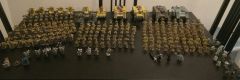
From the album: Lamenters
-
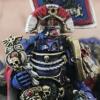
70789790 2431531346935802 4378274049336279040 N
jonjacob posted a gallery image in Ultramarines & Successors
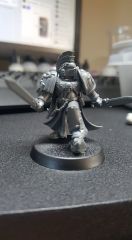
From the album: Jon's album
-
70693121 1038600576310308 7324674837627011072 N
jonjacob posted a gallery image in Ultramarines & Successors
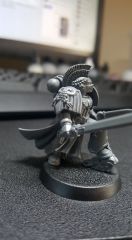
From the album: Jon's album
-
70510543 1020408218340254 9210574975637913600 N
jonjacob posted a gallery image in Ultramarines & Successors
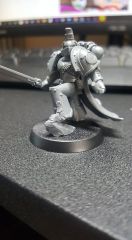
From the album: Jon's album
-
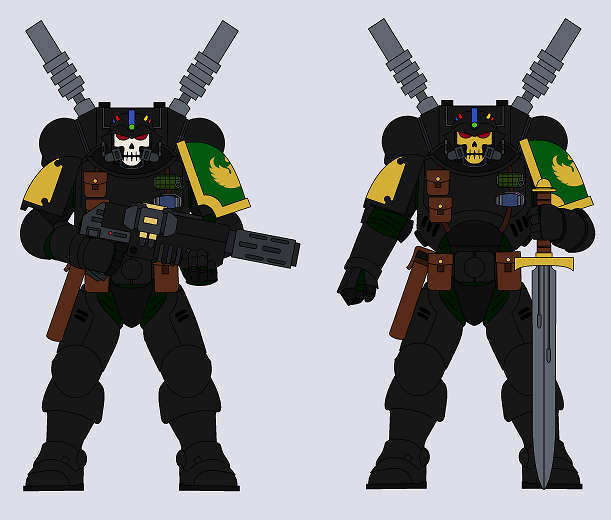
The Verdant Phoenix Of Flame and Steel The Phoenix Verdant are stoic guardians of humanity who safeguard Imperial worlds through fast and precise counter-offensives. Charged with the security of the Irea system and its surrounding sectors, a cautious gaze hides their fierce and exacting methods for crippling and then destroying their foes. Much like their progenitors the Iron Hands marines of the Verdant Phoenix chapter hold a deep seeded obsession for logic and advancement. Driven towards specialization, these precise warriors readily adapt to unseen challenges to make safe their sector of space. Markings and Heraldry Origins "Our task is not a simple one. This chapter in its entirety hangs in the balance, and we must uncover the truth of their existence. While the loss of such an asset would be a tragedy and leave the Imperium lesser for it, the vile machinations of their founding must be ripped out root and stem. Start with these, Victoria. We will be here for some time." - Inquisitor Yusuph Trevar Planting Seeds – The Founding Into the Fire – The Blight of Irea Rising from the Ashes – The birth of the Phoenix Homeworld "Ah, the great bread-basket of Tempestus! I know it well, and I'll tell you now there's nothing you can offer that will make me smuggle through that port no sir. The place is crawling with sisters and arbiters, and the Verdant sometimes meander the docks. I'd be a poor and foolish bastard to put myself on the cross side of that I'll tell you." - Unknown Lowlife Irea System A hub of trade and economic activity, Irea has come a long way since its reconstruction during the blight. For hundreds of years it has sat as an asset too valuable to lose, and many imperial factions have supported its growth to ensure its security. Primarily an agricultural juggernaut, Irea boasts three agri-worlds that supply much of the food needed throughout its sector of the Segmentum Tempestus. Thanks to its existence and position, many worlds enjoy expansion unhindered by sustenance concerns and thanks to that expansion, Irea has enjoyed access to any and all resources it’s ever needed to support its own growth. Included in its sphere of exports is the Ophelia system, and many of the supporting worlds that maintain the Ecclesiarchy’s position there. Irea Primary The specific homeworld of the Verdant Phoenix chapter is Irea Primary, which is also the most populated and the economic hub for the entire system. Primarily a Hive world, it houses the logistical backbone of the whole system while also containing much of the system’s industrial infrastructure. Most Imperial factions maintain a notable presence on world, including three lesser orders of the Adepta Sororitas, an inquisitorial headquarters, Irea’s two Militarum regiments, a Naval academy, numerous arms of the Adeptes Arbites, and relatively large detachment the Adeptes Mechanicus. Oddly, Irea Primary is one of the less suitable candidates for life and it’s position of importance within the system came about purely as a coincidence. When the system was originally settled it acted as a staging ground for the research of the unique atmospheres present in the system; and that head start solidified its position as a hub. Geography Populace Governing Bodies Industry and Economy Other Orbital Bodies Gene-Seed "Welcome back brother, I look forward to watching you grow again. Tell me, what do you remember?" - Brother Rasgir, Apothecary of the Second Company The Verdant are host to a stable but flawed gene-seed that has warped their self-image and challenged their faith for millennia. A subtle mutation in the Progenoid glands causes them to retrieve more than simple genetic data but also neurological data from the brain of the marine that seeded them. Contained in the Proto-Omophagea as it develops, this data is stored chemically and can be transferred to its new host upon re-implantation in the form of impulses and hallucinations, even memories at times. While these symptoms do not always develop, they can be startling if and when they do. Fortunately, on a biological level the mutation is very difficult to spot, and even then seems like it would have little effect on the system. Only by successfully re-implanting a progenoid that has been used over a full lifetime are the effects apparent. It's unclear when the mutation itself began to appear, over centuries of service its easy for such things to go unnoticed as marines refuse to disclose something that may classify them unfit for duty. It's believed it came about in M39 when the chapter’s implant success rates began to decline from ten to six percent. Since then Apothecaries have sought to understand and document it in secret, and it has become central to the chapter’s culture-even more so since their transition. Where once it was a coveted secret only discussed by the closest of battle brothers unfortunate enough to be afflicted by it, the sparks (as they're called) are now a welcomed occurrence. Marines within the chapter now trace their lineages back through time, trying to trigger episodes where they can pull from the experiences of their ancestors. Better yet, Marines in combat now allow themselves to be taken by these episodes rather than fighting them. Acting as their ancestors and pulling from skills they may not have mastered yet, these marines are beginning to conquer the drawbacks of their mutation that can incapacitate those who fight to keep control of themselves. Initiates have, since adopting these practices, taken less and less time to train; and the chapter phased out its scout company long before crossing the rubicon. Combat simulations seem to spark these experiences, especially in those of particularly old lineages. This has helped to offset the lower success rates in surgery, but even still the Chapter has to take in more recruits than normal to maintain fighting strength. Also, many marines object to having their implants removed before death, coveting the opportunity to impart their experiences on the next generation. This has put pressure on the chapter's medics, as each soldier who is not harvested on the battlefield is a severe disappointment to their comrades, and can even draw rage on the fallen's behalf. Chapter Recruitment “You have to be forward thinking. Men can always be made available to you as recruits, but it will be easier if they want to. Send your marines out now, when Irea is at its weakest. Lend their formidable labor and intellect to the reconstruction of our system. The men they aid will be too old for your purposes, but the boys... They won’t soon forget it. And when they come of age they’ll line the streets to fight for you.” - Director Aelia Corrilan The Verdant recruit exclusively from the Irea system. Its governing bodies have long fulfilled their commitment to the chapter's recruiting quotas, providing a mixture of volunteers and conscripts as needed. Since Irea recruits for its many military operations together, veteran marines and even officers stationed on world will regularly visit recruiting centers to encourage and oversee. Once recruits have finished their preliminary testing, those who meet the chapter’s serious requirements are separated and organized into aspirant groups. These teams of aspirants often find the proud and exceptionally educated volunteers tested alongside gangsters of Irea Primary’s hives, encouraging them to rely on one another's strengths to advance. Focused on finding strong warriors but also capable tacticians, those in charge of screening tend to favor aspirants who work together to solve problems with efficiency and forethought. Perhaps the most sought traits of all are analytical thinking and humility, as the chapter's tactics often find small groups tackling large problems there is rarely room for error or pride. Through their tests, aspirants have results demanded of them first, followed by efficiency, and finally speed. Most notably, unlike many chapters that put individual recruits through their trials, the Verdant Phoenix chapter organizes almost entirely group tests that require teamwork to succeed. Most groups succeed or fail together, but in some outlying cases individuals prove themselves so worthy even among a failing group that they are given another chance with another group; or sometimes those in successful groups contribute so little that they are failed outright. The final test and trial for aspirant marines is the only one they take alone, and it involves surviving one hour on the scorched surface of Issai. Most go into this trial assuming it to be a test of physical endurance, withstanding the scorching heat and toxic fumes; but that couldn't be farther from the truth. Those who fall prey to this misconception find their lungs full of soot and ash while their clothes and then skin and tissue burn and boil away. The trial instead is about resourcefulness. Aspirants must first locate a cave and quickly, as their flesh begins to burn and peel away within minutes. Once underground and away from the ignited atmosphere they must then navigate to a safe spot in the pitch black and count the hour out. Too deep and their scorched limbs may not be able to carry them out, too shallow and they'll pass out and suffocate slowly. They must then demonstrate the calm and focus necessary to count the remaining minutes with exceptional precision. Emerge too soon, and they will likely die before making it back to their hiding spot. Emerge too late, and the serfs who brought them there will have left. The aspirants who pass their trials are brought to the fortress monastery to begin their surgeries, and surviving that: their new life. Chapter Cult and Culture “It is the Emperor’s flame that lights the way. That flame that keeps back the gnashing cold of the void and it is that flame by which the spirit is cleansed of weakness. For you today, Brother, it relieves you of your hubris. For your enemies tomorrow, it will relieve them of their flesh.” - Chaplain Romu of the 2nd company, to a disciplined marine. While the Verdant Phoenix chapter has long since embraced a pragmatic approach to most affairs, they still maintain their own form of zealotry. Most prominently fire is seen as its own form of holy symbol, and in the eyes of the chapter it is the preferred tool by which to devastate the Emperor’s enemies as well as burn weakness out of themselves. Chaplains of the chapter carry pyres ignited by Issai’s still burning skies, and similarly sourced flames adorn the halls of their fortress monastery. Prayer and penance are both taken before the flame, and burn scars are common among older marines. Because of this mild obsession, Battle brothers carry nothing flammable into battle. No tabards or books, not even purity seals which can draw the ire of other chapters. Instead their armour is anointed with holy oils, entire texts written out invoking the emperor’s protection and strength that is then burned away to cement its sanctity. These rites of purity are written out by the marines themselves, and normally cemented through ignition by the chapter’s chaplains upon inspection. Additionally, each of the chapter’s ten battle barges carries a massive pyre lit and then carried aloft from Issai’s surface which is used in such rituals while its company is abroad. Perhaps the most pervasive tenant in their lives is towards reformation and improvement. While this takes many forms, from technological innovation to behavioral conditioning, it has proved itself the driving force behind most of the major changes the chapter has undergone since its rebirth. Their gene-seed too has reinforced ideologies of constant advancement and nothing is beyond reproach within the chapter’s organization. While they do not suffer from the body dysmorphia of their progenitors, it has led to some unfortunate issues when taken to the extreme; neophytes exercising or training themselves to death for example. It has however made the chapter stronger and a more effective war machine in the Emperor’s name. Modified equipment to better suit their specific charge and tactics, as well as the chance to discuss and second guess leadership decisions have both led to unlikely victories over the centuries. It does lead to at times difficult situations with other arms of the Imperial military, namely other chapters, where the input of those lowest on the chain of command is not as welcome. Still, the constant pressure to become better and leave a stronger legacy is at the heart of the chapter, and they have long since outgrown denying it. Cooperation is also held very close to the heart of most battle brothers, who have held good and close relationships with several of the Imperium's military and civilian organizations. Used to commanding elements of the Militarum on the field and assisting citizens on the streets, the chapter’s marines are better socialized than most and look upon humanity’s plebs as guardians and teachers would. This often can conflict with their loathing for weakness and can snap to rage in the face of exceptional incompetence or impudence; but these instances are relatively rare. Brothers of the Verdant Phoenix have a very specific relationship with their Sisters of Battle, close enough that many of their orders are welcome within the halls of the chapter’s fortress monastery from time to time. Their actions during the Blight of Irea inspired centuries of cooperation and trust, and a bond that has only grown stronger over time. While would-be marines start their lives among the chapter young and ignorant but eager to learn, the sisters who they come into contact with are always experienced and vigilant; and neophytes are encouraged to learn from them. Apothecaries especially get a good portion of their training from the orders hospitallier and meet their medical colleagues as kin. Chaplains as well commune with members of the faithful and hold the unrivaled devotion of the Sororitas in very high esteem even through disagreement on semantics. The Mechanicus as well, from their active forge on Moira, are responsible for most Verdant Phoenix equipment and war machines. Not just for their production, but the innovation of the chapter’s tools of war is owed primarily to the techpriests they work with. While they don’t interact as much as other elements of the Imperium, and rarely on the battlefield; the chapter still regards them as worthy allies and of common objectives. The Rubicon With the return of Guilliman and the start of the Indomitus Crusade, a new rhetoric has entered the halls of the fortress monastery. Their practices of advancement vindicated with Cawls new inventions, a swirl of vigour has taken hold of the chapter and few are positioned to stop their now rampant pursuit of new practices and equipment. Entire companies were rotated out of active duty to cross the Rubicon together, seeking newfound power in a newfound form. Performing the surgery with Apothecaries rather than servitors, the chapter has managed to reduce failed implantations to just under twenty seven percent. But the losses have still been considerable, and ever vigilant recruiting methods have been needed to keep up. Thankfully, few marines see death as a deterrent; especially knowing their seed would be harvested immediately for future use. Battlefield Doctrine Where their strength and resolve was tested for millennia as the Agriguard, the Verdant Phoenix chapter has entered an era of refinement and reorganization that has endured for centuries. Historically their tactics were influenced heavily by the Red Talons, relying on bombardment and warmachines to face the brunt of the enemy, but since the blight and reformation these tactics have been built upon and specialized to suit a specific role. Simple and blind adherence to old wisdom is behind them, and the chapter has long been reevaluating each and every battlefield practice they once held dear. At its core, Verdant Phoenix battlefield doctrine surrounds Irea and its defense. As the chapter’s influence and resources have grown, other important worlds such as Ophelia have found themselves within its watchful guardianship and in turn shaped their methods of war. Due to Irea’s unique atmospheric asset, it is absolutely imperative that certain types of threats never make planetfall onto its agri worlds. Orks stand the most to gain from the local stimulant, but Tyranids also are considered potentially system ending threats. Of course the blight seared into the system’s history has left a mighty scar, but as the worlds have grown and become even more important and a similarly destructive event would have an even more devastating impact on the segmentum. As such, the system’s director has taken all efforts to obfuscate the system’s importance while the local armed forces have taken up a proactive method of eliminating threats that even arrive in nearby systems. At their center, the space marines of the Verdant Phoenix stand ready and waiting to strike at anything unfamiliar within thousands of lightyears. Deploying as full companies, often to threats not fully known until arrival, the chapter has slowly shifted to an organization of self sufficiency where each company can operate wholly autonomously. Traveling to, engaging in, and returning from conflicts must also be done quickly so as not to leave any threat unattended, and the chapter employs considerable support staff to maintain efficiency and speed. Traditionally, brief recon periods are followed by precise and relentless bombardment to make way for meticulously planned troop deployments, shattering any hope for cohesion and overpowering whatever resistance remains. These simple steps have been put to great effect over centuries, and the captains that coordinate them have learned to adapt them to any threat they are called to face. In all cases, the Verdant will always keep their marines as close to support assets as possible and heavily depend on vehicle transports and firepower to move in force. In newfound Primaris form and with the equipment and tactics that come with them, the chapter has embraced grav-tanks for rapid deployment from orbit post-bombardment. Additionally, each company fields one dedicated vanguard squad made up of the company's most veteran soldiers. These squads are often deployed pre-bombardment to gather intelligence and identify key targets as recon and early strike units. Often smaller conflicts can be resolved with their careful application alone, but they will often harass enemies into more favorable positions for precise orbital strike. While this recent change to their combat practices has taken some time to be fully realized, Verdant Phoenix companies have noted an increase of combat efficiency since employing widespread vanguard deployment. These tactics have proven consistently successful and easily adapted to suit new threats the chapter faces, but commanders are always wary of enemies ready for their common tactics and look for opportunities to experiment with new methods and strategies. Chapter Organization High Command Battle Companies Armoury Apothecarion Reclusiam Librarius Fortress Monastery Chapter Fleet “What do you think? Director Corrilan had intended for it to be a gift, bartered it away from some trader, Alano Duran I think was his name. Rough condition or course, but if I recall you Astartes like a challenge.” - Vao Golha, Irean Sector Steward [REDACTED] "You have my word, director, the system will never be without its protectors. Never." - Chapter Master Taigon Notable Members WIP History WIP
- 33 replies
-
- 2
-
-
- Index Astartes
- Chapter
- (and 3 more)
-
I have just discovered how hopeless I am at colouring the Primaris Space Marine Heraldry card. I have been trying to use GIMP, but to no avail. So until I can hone those skills, I will unfortunately have to cast myself upon the tender mercies of your imagination, with regards to the colour scheme. Imagine the marine below as one of Cawl's creations. http://www.bolterandchainsword.com/sm.php?b62c=@hdfu0_hIAEG.hgPVa@@@@@@@i7RGA@.@@_hcLAt@@@@___@___@@@@@@@@@@@@@@.hozqS@@@@@@@@@@@@@.hLL9J& [skullheader#276741]The Angels Defiant[/skullheader] Chapter name:___________ Angels Defiant Founding:_______________ Ultima Founding Chapter Master:__________ Hardanger Chapter World___________ Vemork (Western rim of the Segmentum Pacificus) Fortress Monastery_______ Souls' Home Main colours_____________ Black and red Primarch________________ Lion El'Jonson Battle cry_______________ Honour the First! Chapter Icon____________ A Dark Angels' sword, superimposed over a six-pointed star [skullheader#276741]Inception[/skullheader] “Not for naught is their star two points short of Chaos.” Equerry to Lord Stalyn, tasked with carrying an accusation of murder to the Lord Commander’s staff. The Indomitus Crusade heralded a note of hope for a beleaguered Imperium. In the sectors south of Agripinaa, formations of Astartes marshalled from mixed gene-lines did battle with Traitors Marines, cultists and daemons, under the aegis of the Lord Commander’s bid to liberate his Father’s realm. Scattered among these forces were the soldiers that would one day coalesce into the Angels of Defiant. Roboute Guilliman, ever the superlative logistician, grasped the value of guarding his flanks, and had already taken thought for the systems situated west of Agripinaa. Hardly had the Crusade swung its spearheads to the east and south, when his forethought was vindicated. Disaster loomed from the Segmentum Pacificus, taking the form of a tremendous Ork incursion. A chapter comprised entirely of Primaris Astartes barred their rampage, bred from the stock of the First Legion. The Angels Defiant scored their first battle honours during a decade’s worth of war that carried them from Agripinaa to the western edges of the Pacificum. For this, the Lord Commander dispatched an emissary, to reward them with a series of banners, commemorating their triumphs and losses. Some of these standards harkened back to victories won just prior to the Chapter’s founding, when they had still fought in blended companies. The latter was a strange plaudit, for the banners bore small heraldic tokens of the various chapters to which these other marines had been dispatched. Clearly, these awards represented the Lord Commander’s attempt to remind the Angels Defiant of the value of cross-gene collaboration. At the time, they thought little of what this token might portend. [skullheader#276741]Early History[/skullheader] The Angels successfully pushed the Orks beyond Segmentum bounds, by rallying the resources of three Imperial Guard armies, commanded by Lord Generals: Stalyn, Sigorsky, and Kronstadt. Initially, each of these proved invaluable in the campaign. One would become a liability. But the Ork is a formidable foe and the Imperium’s woes were far from ended. Reconnaissance of the Halo Stars revealed more mustering Green-skin fleets. While the Angels settled their home world, to recoup from their losses and prepare for a new campaign, the liberated sectors behind them issued new distress calls. Lord General Stalyn claimed that Sigorsky and Kronstadt had turned traitor, and the resultant anarchy had forced him to assert brutal command over three entire sectors, including a string of lynchpin forge worlds. Not a year passed without a rebellion on at least one system. After collecting intelligence, the Angels Defiant discovered the Stalyn had not simply liquidated Kronstadt and Sigorsky, but nearly all senior officers, severely hamstringing the efficiency of his armies, as well as all leading members of the intelligentsia in the three sectors under his rule. Economic ineptitude had also instigated widespread poverty that would soon spiral into famine. Stalyn also lodged charges of heresy against neighbouring sector commands, claiming that we would soon have no option but to seize control. The monastic and ascetically-minded discerned that Stalyn’s oppressive regime and its bitter exploitation was hardly conducive to stability. Since creature comforts are anathema to the life of an Astartes, they were perplexed by the lengths to which Stalyn’s corruption stretched, especially when the Imperium teetered on the brink of oblivion. During a meeting between Chapter Master Hardanger and Stalyn, the Lord General suffered a fatal accident of an uncertain nature. Without sanction from Hydraphur, the Angels installed governmental councils, charged with preserving security and enforcing a singular standard of living across all three sectors. Whether these bodies will be officially ratified by Segmentum command once the crisis has abated, and whether they will successfully sustain stability has yet to be seen. For their part, the Angels Defiant have withdrawn to the border regions, to confront the Orks again. Since that time Imperial delegations to the Angels Defiant have found an order unusually suspicious of high office, even by the standard of their Dark Angels heritage. Equally, this branch of the Lion’s line evince an affinity for the simple folk of the Imperium; a liking that has, paradoxically, been bolstered by the fact the Angels have no real contact with these people are not familiar with the flaws of this class. Regrettably, the relationship between affinity and practice often becomes tenuous when the needs of war press. “Dem new Mareens? Yeah, I seen ‘em. I ‘spect they’ll do for us just as the ol’ ones did. Mixed bag as usual for the lower orders. Good time ter keep yur head down.” Imperial citizen Sammuel Gamgin, prior to his interrogation and eventual execution by Lord General Stalyn’s officers. [skullheader#276741]Home world and emerging chapter cult[/skullheader] “May the Master of Mankind weigh the worth of my soul and mark in me a spirit malleable only to his will and the word of the Lion. For like the Lord of Caliban, when doubt dulls conviction I keep true. When the fainthearted falter, I keep true. I tread my vocation to its end.” Battle hymn, penned by the Master of Librarians, the Wielder of the Words. Vemork is classed as a Feral World, pitched on the very fringes of the Western Pacificus. Its biodiversity would be reminiscent of ancient Terra, were its inhabitants aware the Throne World’s past. Nevertheless, its climates are deadly and barely supportive of human life. Consequently, collaboration rather than conflict, is the prevailing state, since its peoples are unified by the pitiless exigencies of survival. War is virtually unknown, for the world’s populace can hardly afford it. In fact, some of its most primitive communities have never enjoyed contact with each other, save for those rare few who meet as brothers of the Angels. Given their early experiences, these traits provoked a measure of respect from the Angels Defiant. As the Indomitus Crusade ground on through a century, select features of Vermork’s cultures slowly seeped into the Chapter’s ways. The peoples of Vermork, even those unaware of each other’s existence, all developed a structure of government based on representative communes and elected councils. Such inclusive systems are unsuitable for an Astartes Chapter. But during times of great need, Vermork’s people will elect a single ruler to temporarily shoulder all executive power. The Angels Defiant ritually invoke such moments. Even when their task forces are scattered across the vast stretches of space assigned to their protection, battle-brothers congregate to watch the command staff symbolically relinquish their autonomy to the Emperor, culminating in the Chapter Master (or Company Master) assuming executive supremacy. In deference to Vemork’s cultures, battle companies are named after the much vaunted breeds of hunting dogs, prized by the planet’s mountain folk. Other rites and traditions might emerge over time, for the Brotherhood’s cult is still developing. To date, they remain steadfast adherents of the Imperial Truth. The Chapter’s icons bear no relation to Vemork, since these had been selected prior to the planet’s full-scale settlement. Instead, the sword and six-pointed star, allude to the Angels’ heritage from the First Legion and the days when they had been organised around the secret structures of the hexagrammaton. Given their sparse contact with brothers of the same line, however, they know little of how the Wings functioned, beyond what little Roboute Guilliman related (information which they hold in suspicion). For this reason, among others, they hunger for contact with and lore from their brothers. [skullheader#276741]Contact with the Unforgiven[/skullheader] By the closing stages of the Indomitus Crusade, the Angels Defiant had remained isolated from fellow descendants of the First Legion. Long ago, during their service in mixed formations, they had listened to sons of Fenris and Baal banter about their aspirations to serve alongside their respective founding chapters. The Angels Defiant harboured similar dreams, and had passed these hopes to new inductees. Over a century of conflict had never brought them into contact with the Guardians of the Covenant or with the Storm Angels, who also operated in the Pacificus. The scions of Mortikah VII and Karapasia and had their own calls to answer http://www.bolterandchainsword.com/topic/334683-ia-storm-angels-previously-angels-profundum-wip/. Finally, a delegation arrived. The Ivory Equites, a Tenth Founding successor of the Angels of Redemption, had dispatched a small cadre of Chaplains, Librarians and veterans. Although the Fortress Monastery of the Angels Defiant reflects their sombre and restrained aesthetics, a grand processions was prepared to meet the Equites. Their guests moved quietly and without remark through the phalanx of battle honours, until they reached the banners awarded to them by Roboute Guilliman. Here, the Equites stopped and watched, gazing specifically at the small references to Ultramar, Fenris, Baal and other gene-sources. Not a single word was spoken. The Ivory Equites brusquely demanded admittance to all strategic councils, but never interrupted proceedings. Even when prompted for input, their officers would simply nod accent to any proposal. As suddenly and unannounced as they had arrived, the Equites withdrew after five years, with only a terse promise to return. [skullheader#276741]Fortress Monastery[/skullheader] Soul’s Home has been delved into Vemork’s greatest mountain range. It’s bulk is located underground, carved within the peaks and under the valleys. Its Library is supremely well organised, for when the first Master of the Librarius was nearly killed by the neurotoxins of a mysterious xenos race, his ruined body was permanently bonded to the Library’s central console. From this position, the Grand Master of the Archives dictates the compilation and cataloguing of lore. His knowledge is a vast collation of the entire Library’s contents, and is regularly updated by fresh reports. A large following of lexicaniums and codiciers, take dictations from his eldritch voice, emanating from the broken body perched atop the console. They listen to and archive the elaborate connections he is able to draw between seemingly disparate events and pieces of information, until they too appreciate his deductive reason and intuitive insight. As such, the Chapter’s history, battle reports, and other information from numerous sources around the Segmentum are well-recorded here.
-
- Blood Angels Chapter Project - Working on Headquarters
Schwills posted a topic in + BLOOD ANGELS +
Hey guys and Girls, I am currently in the process of collecting the entire Blood Angels Chapter! I have around 20,000 points so far, ranging from the 1st Company to 10th company, but recently have to began to structure my collection more, so I know what to begin next, What you see below is the start of one of the first projects for my chapter - The headquarters, more specifically Brother Incarnael, "Master of the blade" Basically the guy that looks after the battle tanks and stormravens for the entire chapter. Hope you guys like him!- 3 replies
-
- 5
-
-
- Blood Angels
- Chapter
- (and 4 more)
-
The Inquisitorial Guard are my custom Space Marine Chapter, featured in two videos from One Mind Syndicate on YouTube.. Unfortunately, the history and lore I've made for them is much too long (32 pages in notepad... lol) to post here without breaking it into multiple separate posts, so instead I'll post it in it's entirety on my profile in the 'files' section. I'm also currently working on a story for Family 192, whether it ends up being short or long, or even an epic, is still up for debate. However, if y'all would like to see it here as well, just let me know, and I'll post the story here as I work on it. Anyway, I appreciate any ideas for more lore, or just y'alls thoughts on it! Let me know, thanks! Edit: Well, until I figure out how to add Files to the File tab, I'll just post the Chapter info in separate posts here.
-
Angels of Ultramar
Lord-Captain Cepinari posted a gallery image in Adeptus Astartes / Legiones Astartes
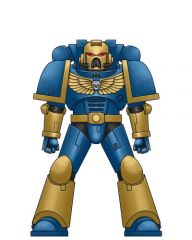
From the album: Miscellaneous
A Chapter I invented as a cruel joke. Their entire existence makes the Lamenters look like the Emperor's chosen sons.